Arobi Katha Umme Tabassum, Begum Yesmin, Mortuza Md Golam, Sharmin Sayma, Rafiquzzaman Md, Biswas Suvro, Saleh Md Abu
Department of Pharmacy, Southeast University, Dhaka, Bangladesh.
Department of Science and Humanities, Bangladesh Army International University of Science and Technology, Cumilla, 3500, Bangladesh.
Heliyon. 2024 Nov 28;10(23):e40728. doi: 10.1016/j.heliyon.2024.e40728. eCollection 2024 Dec 15.
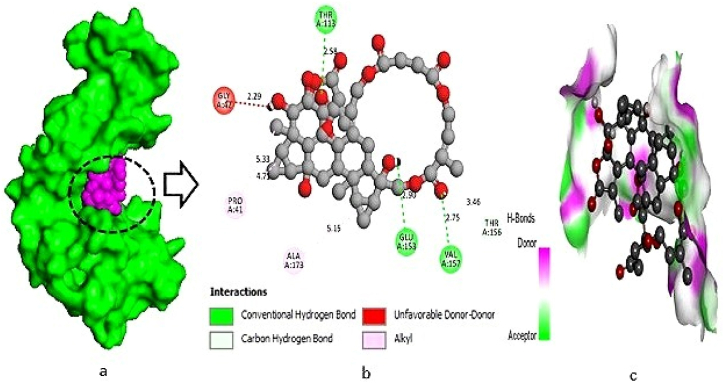
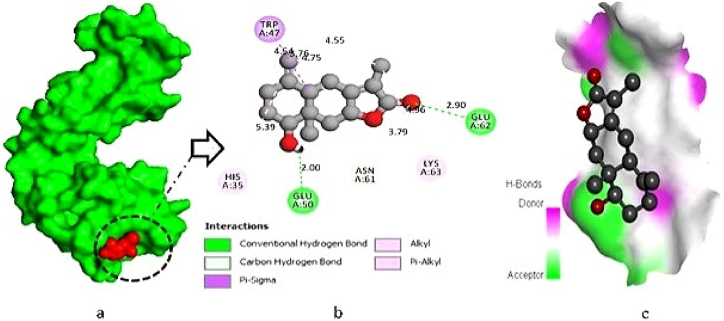
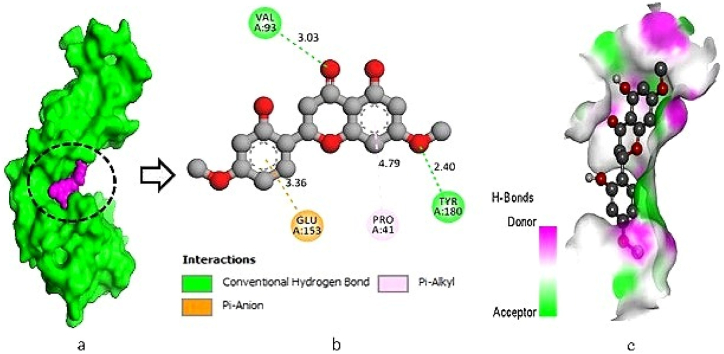
Traditional plants have played a vital role in civilization and medicine throughout history. , a plant used in South Asian traditional medicine, has various medicinal applications but limited research on its impact on the central nervous system (CNS). This study analyzed the methanolic leaf extract of (MECE) for secondary metabolites and conducted experiments to evaluate the sedative, and anxiolytic effect of MECE on a mice model. To assess anxiolytic effects, elevated plus maze (EPM) and light-dark box (LDB) tests were performed. Sedative effects were explored in open field and hole-cross tests. Additionally, investigations included molecular docking and ADME/T property assessments for 40 secondary metabolites. The phytochemical analysis of MECE revealed the presence of alkaloids, tannins, flavonoids, and glycosides. MECE exhibited significant anxiolytic effects in both the EPM and LDB tests, with statistical significance (P < 0.001). The open field and hole-cross tests demonstrated significant sedative potential (P < 0.05) compared to the standard Diazepam. Furthermore, molecular docking was performed to evaluate the potential of the compounds with a potassium channel protein. Among them, Chloramultilide C, 4-dimethoxyflavanone, and Neolitacumone B were identified as potential against the target protein with a binding score of -8.8 kcal/mol, -6.5 kcal/mol, and -6.4 kcal/mol, respectively. Additionally, pharmacokinetic attributes and ADMET analysis emphasized promising properties for drug development. These findings suggest that MECE possesses sedative and anxiolytic properties that could be valuable for addressing insomnia and anxiety associated with various psychiatric disorders.
传统植物在历史上的文明和医学中发挥了至关重要的作用。[植物名称]是一种在南亚传统医学中使用的植物,具有多种药用应用,但对其对中枢神经系统(CNS)影响的研究有限。本研究分析了[植物名称]的甲醇叶提取物(MECE)中的次生代谢产物,并进行实验以评估MECE对小鼠模型的镇静和抗焦虑作用。为评估抗焦虑作用,进行了高架十字迷宫(EPM)和明暗箱(LDB)试验。在旷场试验和穿洞试验中探究了镇静作用。此外,研究还包括对40种次生代谢产物的分子对接和ADME/T性质评估。MECE的植物化学分析显示存在生物碱、单宁、黄酮类化合物和糖苷。MECE在EPM和LDB试验中均表现出显著的抗焦虑作用,具有统计学意义(P < 0.001)。与标准地西泮相比,旷场试验和穿洞试验显示出显著的镇静潜力(P < 0.05)。此外,进行了分子对接以评估化合物与钾通道蛋白的潜力。其中,氯多利德C、4 - 二甲氧基黄酮和新里他酮B被确定为对靶蛋白有潜力,结合分数分别为-8.8 kcal/mol、-6.5 kcal/mol和-6.4 kcal/mol。此外,药代动力学属性和ADMET分析强调了其在药物开发方面的良好特性。这些发现表明,MECE具有镇静和抗焦虑特性,可能对解决与各种精神疾病相关的失眠和焦虑有价值。