Subramaniyan Vetriselvan, Lubau Natasha Sura Anak, Mukerjee Nobendu, Kumarasamy Vinoth
Jeffrey Cheah School of Medicine and Health Sciences, Monash University, Jalan Lagoon Selatan, Bandar Sunway, 47500 Subang Jaya, Selangor, Malaysia.
Center for Transdisciplinary Research, Department of Pharmacology, Saveetha Dental College, Saveetha Institute of Medical and Technical Sciences, Saveetha University, Chennai, Tamil Nadu 600077, India.
Toxicol Rep. 2023 Oct 12;11:355-367. doi: 10.1016/j.toxrep.2023.10.005. eCollection 2023 Dec.
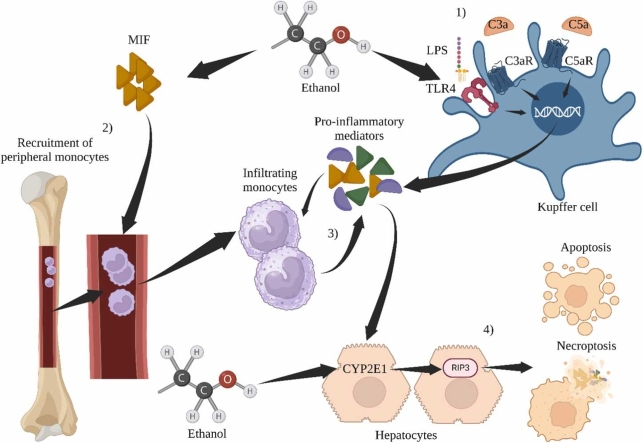
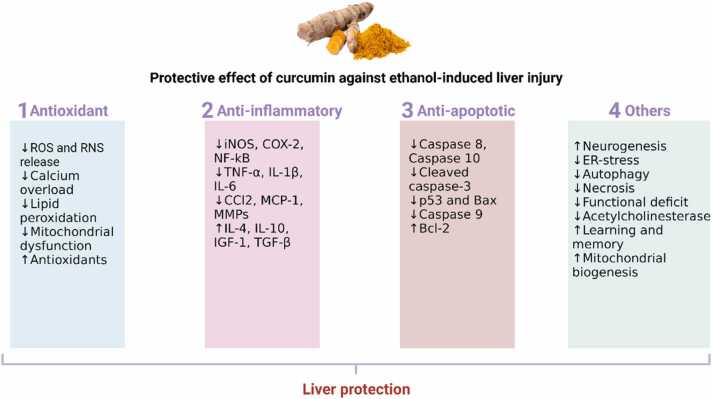
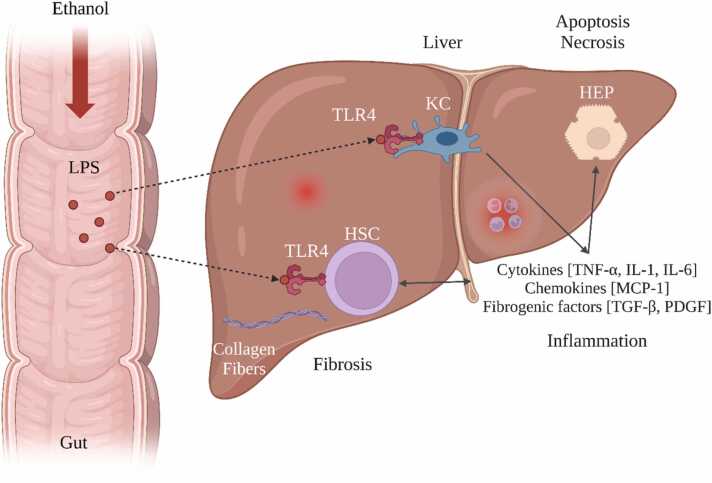
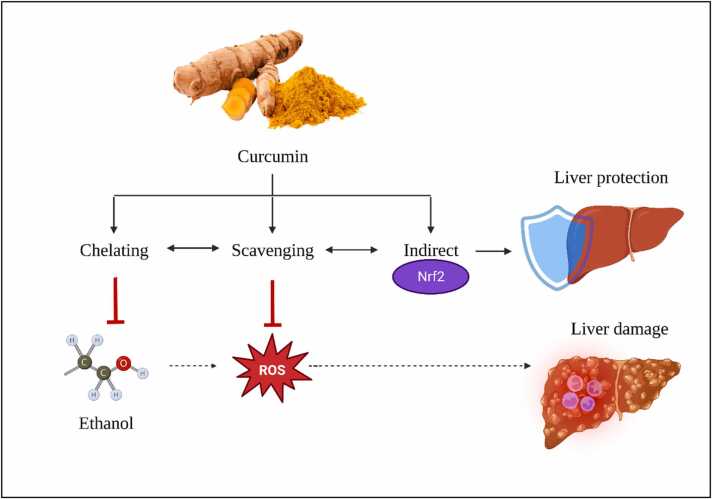
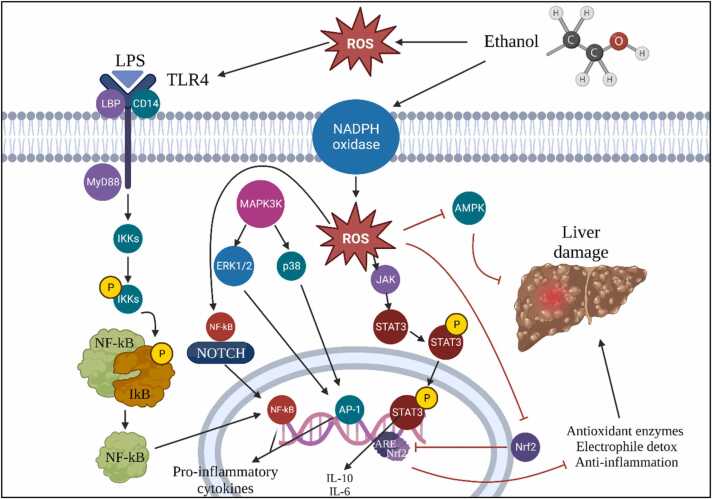
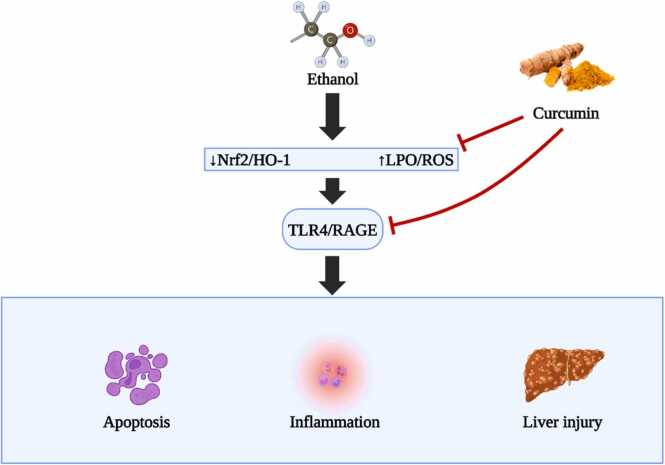
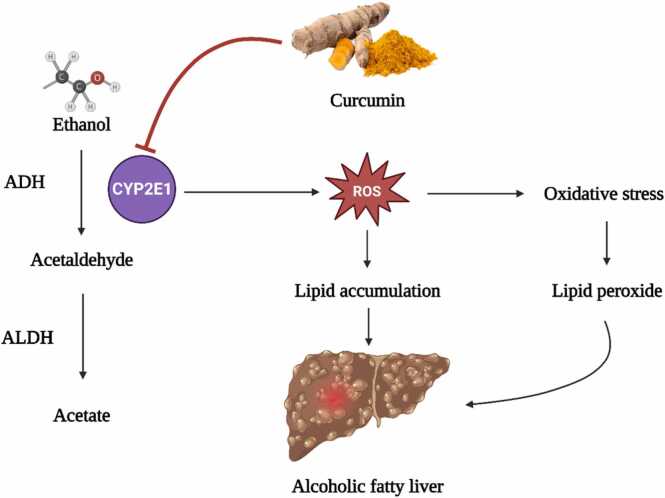
Confronting the profound public health concern of alcohol-induced liver damage calls for inventive therapeutic measures. The social, economic, and clinical ramifications are extensive and demand a comprehensive understanding. This thorough examination uncovers the complex relationship between alcohol intake and liver damage, with a special emphasis on the pivotal roles of the Toll-like receptor 4 (TLR4)/NF-κB p65 and CYP2E1/ROS/Nrf2 signalling networks. Different alcohol consumption patterns, determined by a myriad of factors, have significant implications for liver health, leading to a spectrum of adverse effects. The TLR4/NF-κB p65 pathway, a principal regulator of inflammation and immune responses, significantly contributes to various disease states when its balance is disrupted. Notably, the TLR4/MD-2-TNF-α pathway has been linked to non-alcohol related liver disease, while NF-κB activation is associated with alcohol-induced liver disease (ALD). The p65 subunit of NF-κB, primarily responsible for the release of inflammatory cytokines, hastens the progression of ALD. Breakthrough insights suggest that curcumin, a robust antioxidant and anti-inflammatory compound sourced from turmeric, effectively disrupts the TLR4/NF-κB p65 pathway. This heralds a new approach to managing alcohol-induced liver damage. Initial clinical trials support curcumin's therapeutic potential, highlighting its ability to substantially reduce liver enzyme levels. The narrative surrounding alcohol-related liver injury is gradually becoming more intricate, intertwining complex signalling networks such as TLR4/NF-κB p65 and CYP2E1/ROS/Nrf2. The protective role of curcumin against alcohol-related liver damage marks the dawn of new treatment possibilities. However, the full realisation of this promising therapeutic potential necessitates rigorous future research to definitively understand these complex mechanisms and establish curcumin's effectiveness and safety in managing alcohol-related liver disorders.
应对酒精性肝损伤这一严重的公共卫生问题需要创新的治疗措施。其社会、经济和临床影响广泛,需要全面了解。这项深入研究揭示了酒精摄入与肝损伤之间的复杂关系,特别强调了Toll样受体4(TLR4)/核因子κB p65和细胞色素P450 2E1(CYP2E1)/活性氧(ROS)/核因子E2相关因子2(Nrf2)信号网络的关键作用。由众多因素决定的不同饮酒模式对肝脏健康有重大影响,会导致一系列不良反应。TLR4/核因子κB p65通路是炎症和免疫反应的主要调节因子,当其平衡被打破时,会显著促成各种疾病状态。值得注意的是,TLR4/髓样分化蛋白2(MD-2)-肿瘤坏死因子-α(TNF-α)通路与非酒精性肝病有关,而核因子κB的激活与酒精性肝病(ALD)相关。核因子κB的p65亚基主要负责炎症细胞因子的释放,加速了ALD的进展。突破性见解表明,姜黄素是一种从姜黄中提取的强大抗氧化剂和抗炎化合物,能有效破坏TLR4/核因子κB p65通路。这预示着一种治疗酒精性肝损伤的新方法。初步临床试验支持姜黄素的治疗潜力,突出了其大幅降低肝酶水平的能力。围绕酒精性肝损伤的情况正逐渐变得更加复杂,将TLR4/核因子κB p65和CYP2E1/ROS/Nrf2等复杂信号网络交织在一起。姜黄素对酒精性肝损伤的保护作用标志着新治疗可能性的开端。然而,要充分实现这种有前景的治疗潜力,需要未来进行严格的研究,以确切了解这些复杂机制,并确定姜黄素在治疗酒精性肝病方面的有效性和安全性。