• 文献检索
  • 文档翻译
  • 深度研究
  • 学术资讯
  • Suppr Zotero 插件Zotero 插件
  • 邀请有礼
  • 套餐&价格
  • 历史记录
应用&插件
Suppr Zotero 插件Zotero 插件浏览器插件Mac 客户端Windows 客户端微信小程序
定价
高级版会员购买积分包购买API积分包
服务
文献检索文档翻译深度研究API 文档MCP 服务
关于我们
关于 Suppr公司介绍联系我们用户协议隐私条款
关注我们

Suppr 超能文献

核心技术专利:CN118964589B侵权必究
粤ICP备2023148730 号-1Suppr @ 2026

文献检索

告别复杂PubMed语法,用中文像聊天一样搜索,搜遍4000万医学文献。AI智能推荐,让科研检索更轻松。

立即免费搜索

文件翻译

保留排版,准确专业,支持PDF/Word/PPT等文件格式,支持 12+语言互译。

免费翻译文档

深度研究

AI帮你快速写综述,25分钟生成高质量综述,智能提取关键信息,辅助科研写作。

立即免费体验

非通气受试者吸入-呼出(I:E)比的非接触式监测

Non-Contact Monitoring of Inhalation-Exhalation (I:E) Ratio in Non-Ventilated Subjects.

作者信息

Addison Paul S, Antunes Andre, Montgomery Dean, Borg Ulf R

机构信息

Acute Care and Monitoring, Medtronic Edinburgh Scotland U.K.

Acute Care and Monitoring, Medtronic Boulder CO USA.

出版信息

IEEE J Transl Eng Health Med. 2024 Nov 11;12:721-726. doi: 10.1109/JTEHM.2024.3496196. eCollection 2024.

DOI:10.1109/JTEHM.2024.3496196
PMID:39698477
原文链接:https://pmc.ncbi.nlm.nih.gov/articles/PMC11655103/
Abstract

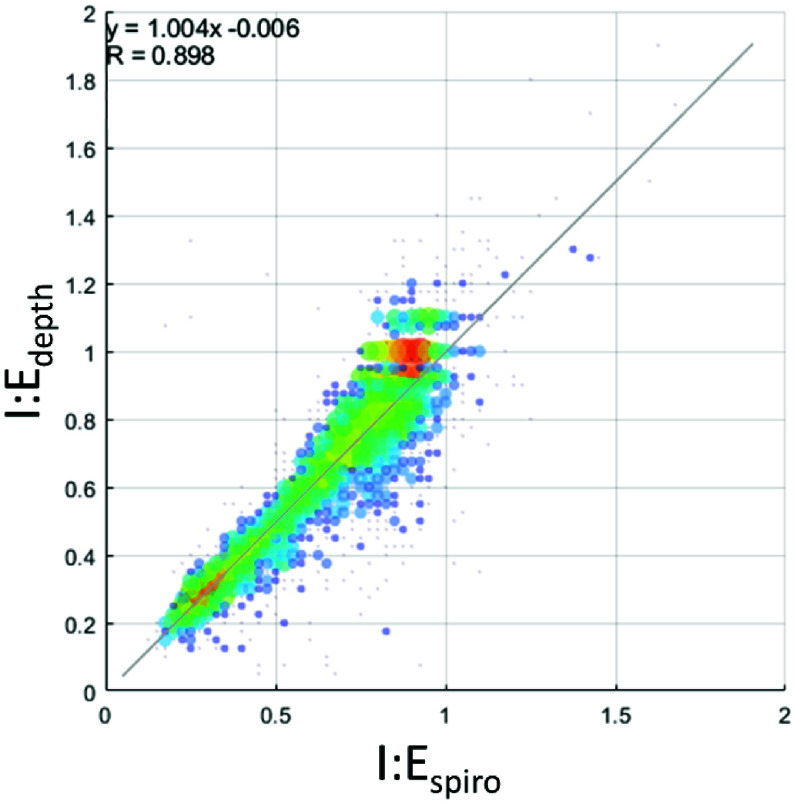
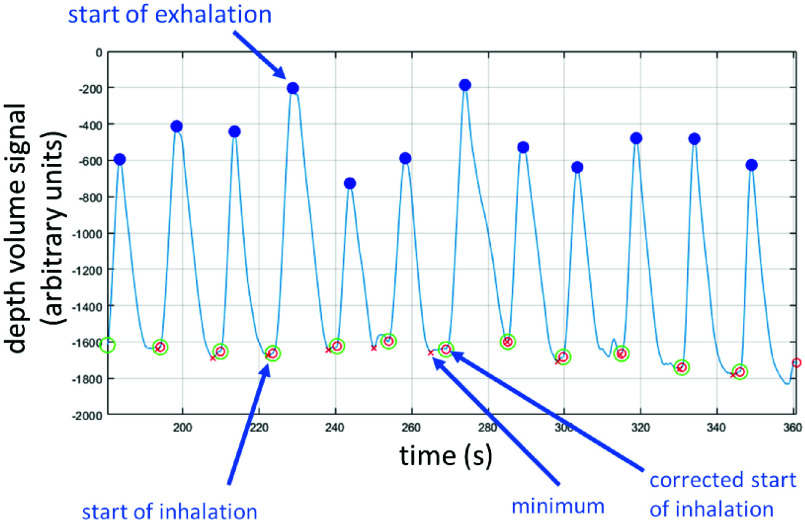
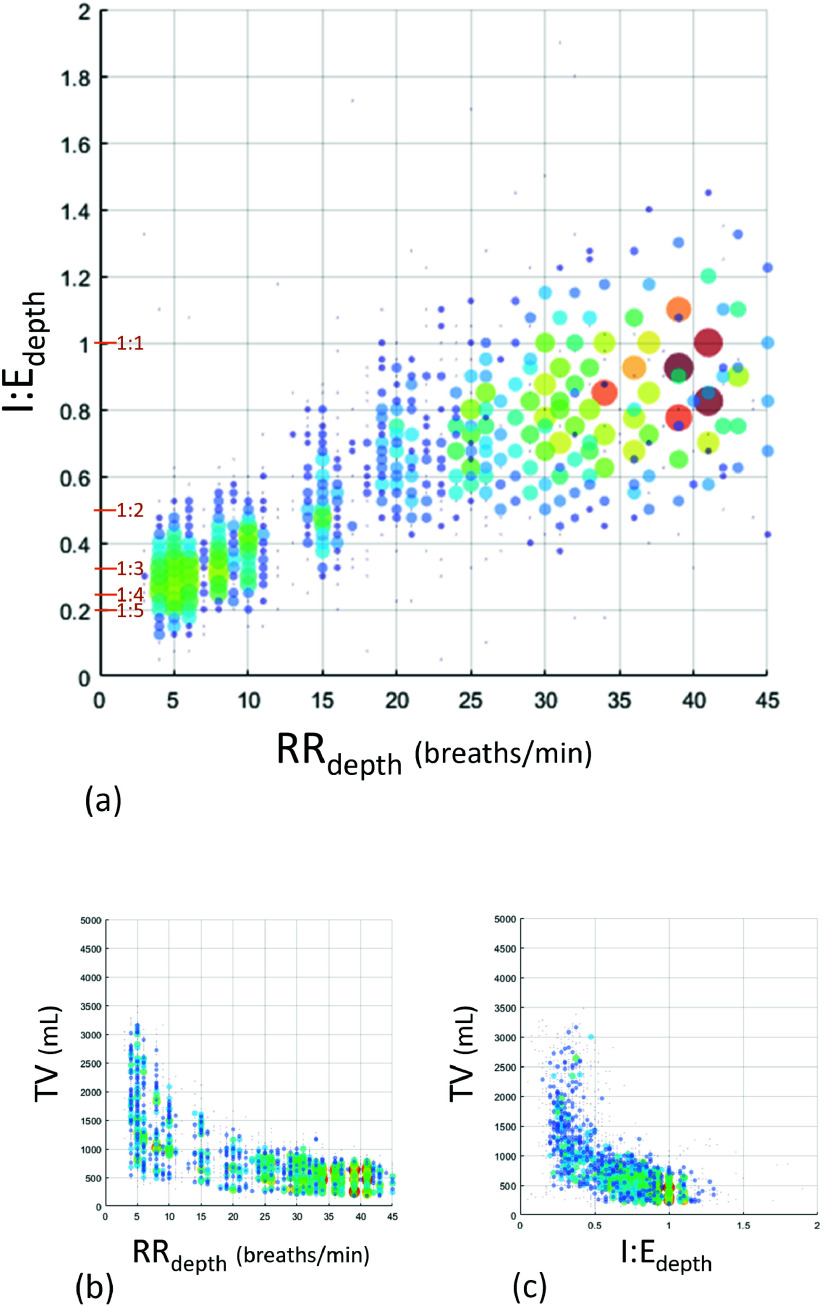
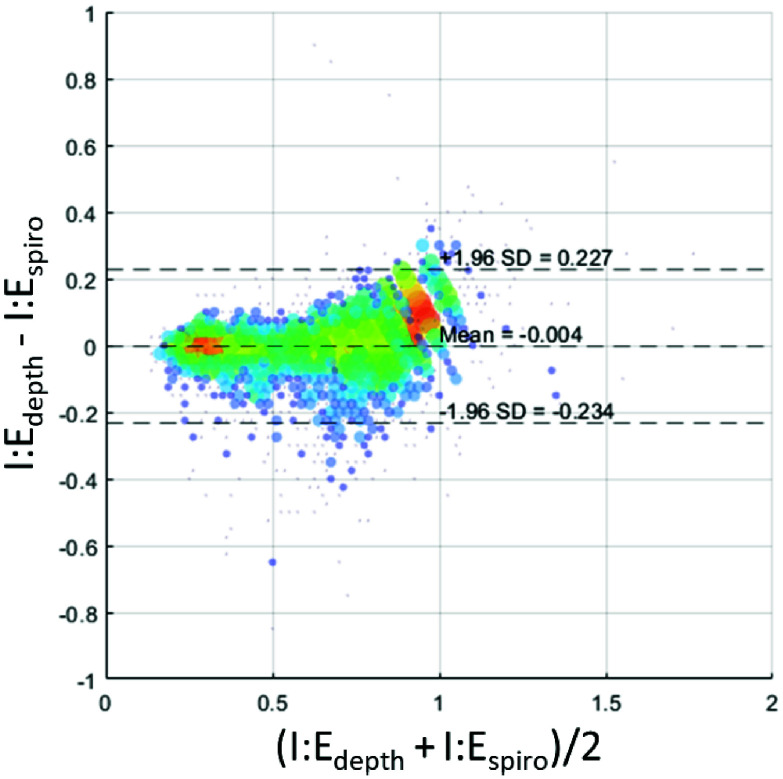
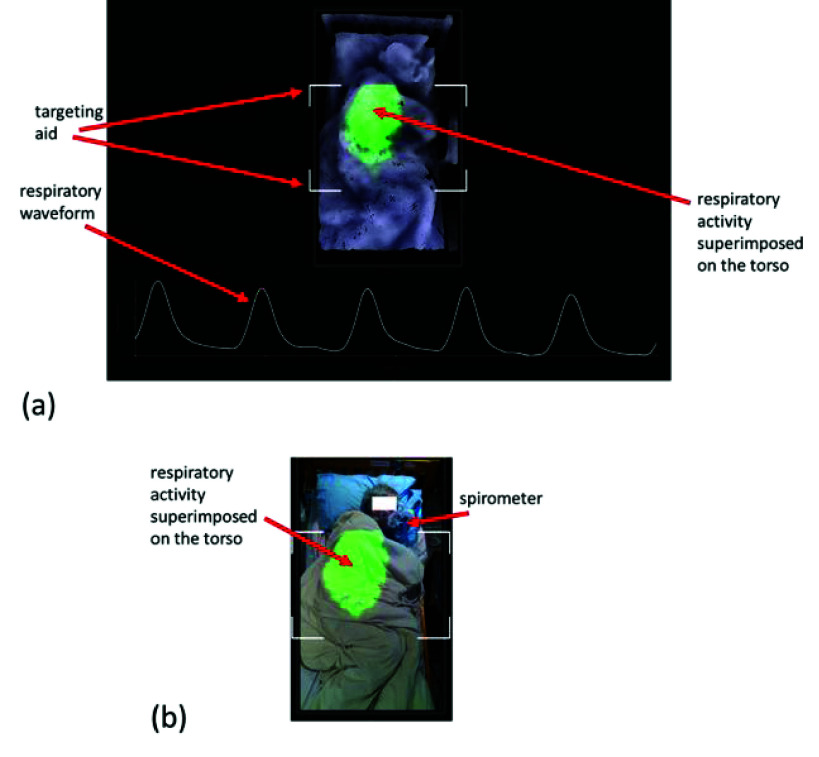
The inhalation-exhalation (I:E) ratio, known to be an indicator of respiratory disease, is the ratio between the inhalation phase and exhalation phase of each breath. Here, we report on results from a non-contact monitoring method for the determination of the I:E ratio. This employs a depth sensing camera system that requires no sensors to be physically attached to the patient. A range of I:E ratios from 0.3 to 1.0 over a range of respiratory rates from 4 to 40 breaths/min were generated by healthy volunteers, producing a total of 3,882 separate breaths for analysis. Depth information was acquired using an Intel D415 RealSense camera placed at 1.1 m from the subjects' torso. This data was processed in real-time to extract depth changes within the subjects' torso region corresponding to respiratory activity. This was further converted into a respiratory signal from which the I:E ratio was determined (I:E[Formula: see text]). I:Edepth was compared to spirometer data (I:E[Formula: see text]). A Bland Altman analysis produced a mean bias of -0.004, with limits of agreement [-0.234, 0.227]. A linear regression analysis produced a line of best fit given by I:E[Formula: see text] I:Espiro - 0.006, with 95% confidence intervals for the slope [0.988, 1.019] and intercept [-0.017, 0.004]. We have demonstrated the viability of a non-contact monitoring method for determining the I:E ratio on healthy subjects breathing without mechanical support. This measure may be useful in monitoring the deterioration in respiratory status and/or response to therapy within the patient population. Clinical and Translational Impact Statement - The I:E ratio is an indicator of disease severity in COPD and asthma. Non-contact continuous monitoring of I:E ratio will offer the clinician a powerful new tool for respiratory monitoring.

摘要

吸呼比(I:E)是每次呼吸的吸气阶段与呼气阶段之比,已知是呼吸系统疾病的一个指标。在此,我们报告一种用于测定I:E比的非接触监测方法的结果。该方法采用深度感应相机系统,无需将传感器物理附着于患者身上。健康志愿者在每分钟4至40次呼吸频率范围内产生了一系列0.3至1.0的I:E比,共产生3882次独立呼吸用于分析。使用置于距受试者躯干1.1米处的英特尔D415实感相机获取深度信息。对该数据进行实时处理,以提取受试者躯干区域内与呼吸活动相应的深度变化。这进一步转换为呼吸信号,从中确定I:E比(I:E[公式:见原文])。将深度测定的I:E比(I:Edepth)与肺活量计数据(I:E[公式:见原文])进行比较。布兰德-奥特曼分析得出平均偏差为-0.004,一致性界限为[-0.234, 0.227]。线性回归分析得出最佳拟合线为I:E[公式:见原文] = I:Espiro - 0.006,斜率的95%置信区间为[0.988, 1.019],截距的95%置信区间为[-0.017, 0.004]。我们已证明一种非接触监测方法对于在无机械支持下呼吸的健康受试者测定I:E比的可行性。该测量方法可能有助于监测患者群体中呼吸状态的恶化和/或对治疗的反应。临床和转化影响声明 - I:E比是慢性阻塞性肺疾病(COPD)和哮喘疾病严重程度的一个指标。对I:E比进行非接触连续监测将为临床医生提供一个强大的新型呼吸监测工具。
https://cdn.ncbi.nlm.nih.gov/pmc/blobs/6f29/11655103/f3be6eb34937/addis5-3496196.jpg
https://cdn.ncbi.nlm.nih.gov/pmc/blobs/6f29/11655103/fed1e69decbd/addis1ab-3496196.jpg
https://cdn.ncbi.nlm.nih.gov/pmc/blobs/6f29/11655103/34b823a33545/addis2-3496196.jpg
https://cdn.ncbi.nlm.nih.gov/pmc/blobs/6f29/11655103/36a74d6d7a72/addis3abc-3496196.jpg
https://cdn.ncbi.nlm.nih.gov/pmc/blobs/6f29/11655103/031c7c6c48a9/addis4-3496196.jpg
https://cdn.ncbi.nlm.nih.gov/pmc/blobs/6f29/11655103/f3be6eb34937/addis5-3496196.jpg
https://cdn.ncbi.nlm.nih.gov/pmc/blobs/6f29/11655103/fed1e69decbd/addis1ab-3496196.jpg
https://cdn.ncbi.nlm.nih.gov/pmc/blobs/6f29/11655103/34b823a33545/addis2-3496196.jpg
https://cdn.ncbi.nlm.nih.gov/pmc/blobs/6f29/11655103/36a74d6d7a72/addis3abc-3496196.jpg
https://cdn.ncbi.nlm.nih.gov/pmc/blobs/6f29/11655103/031c7c6c48a9/addis4-3496196.jpg
https://cdn.ncbi.nlm.nih.gov/pmc/blobs/6f29/11655103/f3be6eb34937/addis5-3496196.jpg

相似文献

1
Non-Contact Monitoring of Inhalation-Exhalation (I:E) Ratio in Non-Ventilated Subjects.非通气受试者吸入-呼出(I:E)比的非接触式监测
IEEE J Transl Eng Health Med. 2024 Nov 11;12:721-726. doi: 10.1109/JTEHM.2024.3496196. eCollection 2024.
2
Robust Non-Contact Monitoring of Respiratory Rate using a Depth Camera.使用深度相机实现稳健的非接触式呼吸率监测。
J Clin Monit Comput. 2023 Aug;37(4):1003-1010. doi: 10.1007/s10877-023-01003-7. Epub 2023 Apr 3.
3
Accurate and continuous respiratory rate using touchless monitoring technology.使用非接触式监测技术实现准确、连续的呼吸频率监测。
Respir Med. 2023 Dec;220:107463. doi: 10.1016/j.rmed.2023.107463. Epub 2023 Nov 20.
4
Monitoring Respiratory Rate Continuously Without Attaching a Sensor During a Challenging Ramped Protocol.在具有挑战性的斜坡方案期间,无需附着传感器即可连续监测呼吸频率。
Mil Med. 2024 Aug 19;189(Suppl 3):618-623. doi: 10.1093/milmed/usae200.
5
Monitoring of breathing phases using a bioacoustic method in healthy awake subjects.使用生物声学方法在健康清醒的受试者中监测呼吸阶段。
J Clin Monit Comput. 2011 Oct;25(5):285-94. doi: 10.1007/s10877-011-9307-z. Epub 2011 Sep 29.
6
[Standard technical specifications for methacholine chloride (Methacholine) bronchial challenge test (2023)].[氯化乙酰甲胆碱支气管激发试验标准技术规范(2023年)]
Zhonghua Jie He He Hu Xi Za Zhi. 2024 Feb 12;47(2):101-119. doi: 10.3760/cma.j.cn112147-20231019-00247.
7
Breathing at a rate of 5.5 breaths per minute with equal inhalation-to-exhalation ratio increases heart rate variability.以每分钟5.5次呼吸的频率呼吸,且吸气与呼气比例相等,会增加心率变异性。
Int J Psychophysiol. 2014 Mar;91(3):206-11. doi: 10.1016/j.ijpsycho.2013.12.006. Epub 2013 Dec 28.
8
Comparison of 7 Different Sensors for Detecting Low Respiratory Rates Using a Single Breath Detection Algorithm in Nonintubated, Sedated Volunteers.比较使用单呼吸检测算法在非插管、镇静志愿者中检测低呼吸率的 7 种不同传感器。
Anesth Analg. 2019 Aug;129(2):399-408. doi: 10.1213/ANE.0000000000003793.
9
The influence of respiration on biofeedback techniques.呼吸对生物反馈技术的影响。
Appl Psychophysiol Biofeedback. 2008 Mar;33(1):49-54. doi: 10.1007/s10484-007-9048-4. Epub 2008 Feb 1.
10
Increased exhalation to inhalation ratio during breathing enhances high-frequency heart rate variability in healthy adults.在健康成年人中,呼吸时呼气与吸气比值增加可增强高频心率变异性。
Psychophysiology. 2021 Nov;58(11):e13905. doi: 10.1111/psyp.13905. Epub 2021 Jul 20.

本文引用的文献

1
Accurate and continuous respiratory rate using touchless monitoring technology.使用非接触式监测技术实现准确、连续的呼吸频率监测。
Respir Med. 2023 Dec;220:107463. doi: 10.1016/j.rmed.2023.107463. Epub 2023 Nov 20.
2
Robust Non-Contact Monitoring of Respiratory Rate using a Depth Camera.使用深度相机实现稳健的非接触式呼吸率监测。
J Clin Monit Comput. 2023 Aug;37(4):1003-1010. doi: 10.1007/s10877-023-01003-7. Epub 2023 Apr 3.
3
Accuracy of noncontact surface imaging for tidal volume and respiratory rate measurements in the ICU.
非接触式表面成像技术在 ICU 中测量潮气量和呼吸频率的准确性。
J Clin Monit Comput. 2022 Jun;36(3):775-783. doi: 10.1007/s10877-021-00708-x. Epub 2021 Apr 22.
4
Continuous non-contact respiratory rate and tidal volume monitoring using a Depth Sensing Camera.使用深度感应相机进行连续非接触式呼吸频率和潮气量监测。
J Clin Monit Comput. 2022 Jun;36(3):657-665. doi: 10.1007/s10877-021-00691-3. Epub 2021 Mar 20.
5
Noncontact Respiratory Monitoring Using Depth Sensing Cameras: A Review of Current Literature.使用深度感应摄像机进行非接触式呼吸监测:当前文献综述。
Sensors (Basel). 2021 Feb 6;21(4):1135. doi: 10.3390/s21041135.
6
Telemedicine for preoperative assessment during a COVID-19 pandemic: Recommendations for clinical care.新冠疫情期间的术前评估远程医疗:临床护理建议。
Best Pract Res Clin Anaesthesiol. 2020 Jun;34(2):345-351. doi: 10.1016/j.bpa.2020.05.001. Epub 2020 May 14.
7
Remote Respiratory Monitoring in the Time of COVID-19.新冠疫情期间的远程呼吸监测
Front Physiol. 2020 May 29;11:635. doi: 10.3389/fphys.2020.00635. eCollection 2020.
8
Continuous respiratory rate monitoring during an acute hypoxic challenge using a depth sensing camera.使用深度感应相机在急性低氧挑战期间进行连续呼吸频率监测。
J Clin Monit Comput. 2020 Oct;34(5):1025-1033. doi: 10.1007/s10877-019-00417-6. Epub 2019 Nov 8.
9
Multicenter Study Validating Accuracy of a Continuous Respiratory Rate Measurement Derived From Pulse Oximetry: A Comparison With Capnography.多中心研究验证基于脉搏血氧饱和度仪得出的连续呼吸频率测量值的准确性:与二氧化碳描记法的比较
Anesth Analg. 2017 Apr;124(4):1153-1159. doi: 10.1213/ANE.0000000000001852.
10
Accurate measurement of respiratory airflow waveforms using depth data.使用深度数据精确测量呼吸气流波形。
Annu Int Conf IEEE Eng Med Biol Soc. 2015 Aug;2015:7857-60. doi: 10.1109/EMBC.2015.7320213.