Waratani Miyoko, Hasegawa Tatsuji, Shimura Koki, Tanaka Yukiko, Ito Fumitake, Takahata Akiko, Mori Taisuke
Department of Obstetrics and Gynecology, Graduate School of Medicine Science, Kyoto Prefectural University of Medicine, Kyoto, Japan.
Department of Pediatrics, Graduate School of Medicine Science, Kyoto Prefectural University of Medicine, Kyoto, Japan.
Quant Imaging Med Surg. 2024 Dec 5;14(12):9543-9551. doi: 10.21037/qims-24-682. Epub 2024 Nov 6.
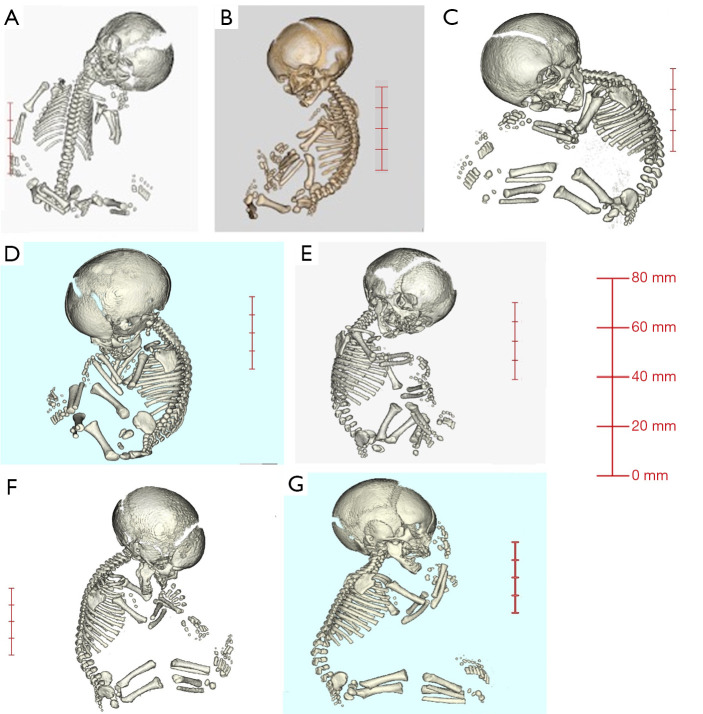
Fetal skeletal dysplasia (FSD) is a group of systemic bone and cartilage disorders that develop prenatally and can be detected using fetal ultrasonography. However, it is unsuitable for skeletal analysis because it is reflected by supersonic waves in the bone cortex. Three-dimensional computed tomography (3D-CT) is a suitable alternative and has improved the differential diagnosis of FSD during pregnancy. Achondroplasia (ACH) and hypochondroplasia (HCH) are the most frequent diseases in the FSD group. This study aimed to determine the efficacy of 3D-CT in the prenatal diagnosis of ACH/HCH.
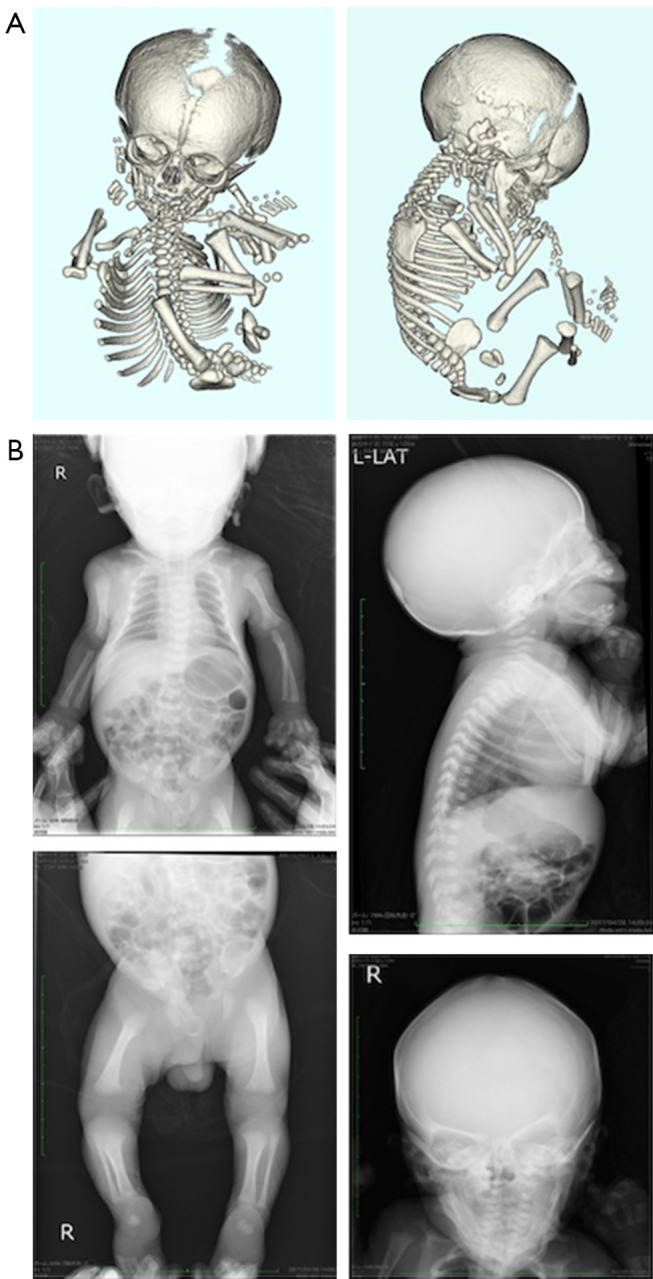
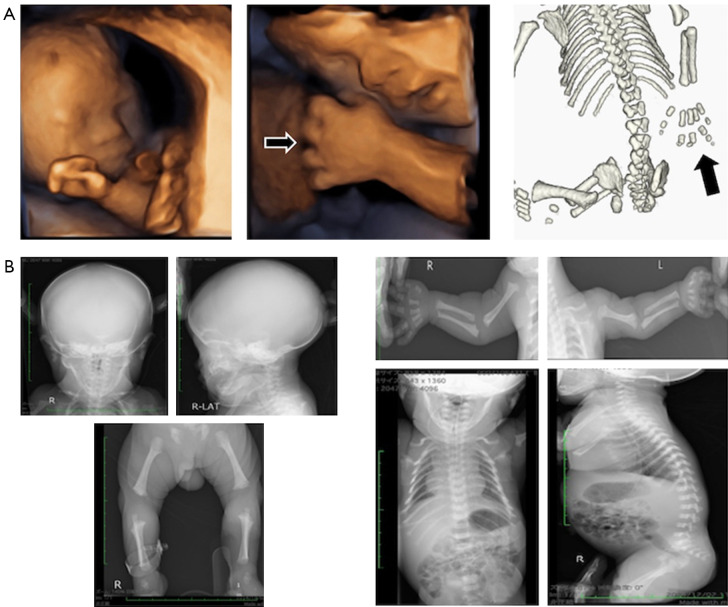
Patients were selected for the study non-consecutively. Pregnant women who met the following selection criteria were included: (I) pregnancy at age ≥20 years at the time of consent; (II) fetal ultrasonography showing a short femur (below the 10 percentile of fetal measurements) or an image of a long bone curvature or deformity; and (III) written informed consent to undergo 3D-CT. On suspicion of FSD based on ultrasonography, a 3D-CT scan was performed prenatally and an X-ray postnatally to obtain detailed skeletal information and to verify the shapes of all bones, respectively. A genetic examination was performed to confirm the diagnosis after obtaining informed consent from the parents. There were seven cases of prenatally diagnosed ACH/HCH. Genetic testing was performed in six infants postnatally, and a mutation in the fibroblast growth factor receptor 3 () gene was detected [c. 1138G>A (p. gly380Arg)]. In one case, the patient was diagnosed with ACH and Down syndrome by genetic and chromosomal testing (G-band: 47, XY, +21).
3D-CT is a valuable and efficient tool for diagnosing ACH/HCH. Accurate prenatal diagnosis by gene analysis is crucial for a definitive diagnosis in infants.
胎儿骨骼发育不良(FSD)是一组产前发生的系统性骨骼和软骨疾病,可通过胎儿超声检查检测到。然而,由于其在骨皮质中由超声波反射显示,所以不适合进行骨骼分析。三维计算机断层扫描(3D-CT)是一种合适的替代方法,已改善了孕期FSD的鉴别诊断。软骨发育不全(ACH)和软骨发育低下(HCH)是FSD组中最常见的疾病。本研究旨在确定3D-CT在ACH/HCH产前诊断中的有效性。
非连续选取患者进行本研究。纳入符合以下入选标准的孕妇:(I)同意时年龄≥20岁;(II)胎儿超声检查显示股骨短(低于胎儿测量值的第10百分位数)或长骨弯曲或畸形图像;(III)书面知情同意接受3D-CT检查。基于超声怀疑FSD时,产前进行3D-CT扫描,产后进行X线检查,分别获取详细的骨骼信息并验证所有骨骼的形态。在获得父母知情同意后进行基因检测以确诊。共有7例产前诊断为ACH/HCH的病例。6例婴儿产后进行了基因检测,检测到成纤维细胞生长因子受体3()基因的突变 [c. 1138G>A(p. gly380Arg)]。1例患者通过基因和染色体检测(G带:47,XY,+21)被诊断为ACH和唐氏综合征。
3D-CT是诊断ACH/HCH的一种有价值且有效的工具。通过基因分析进行准确的产前诊断对于婴儿的确切诊断至关重要。