Ornitz David M, Legeai-Mallet Laurence
Department of Developmental Biology, Washington University School of Medicine, St. Louis, Missouri, USA.
Imagine Institute, Inserm U1163, Université Paris Descartes, Service de Génétique, Hôpital Necker-Enfants Malades, AP-HP, Paris, France.
Dev Dyn. 2017 Apr;246(4):291-309. doi: 10.1002/dvdy.24479. Epub 2017 Mar 2.
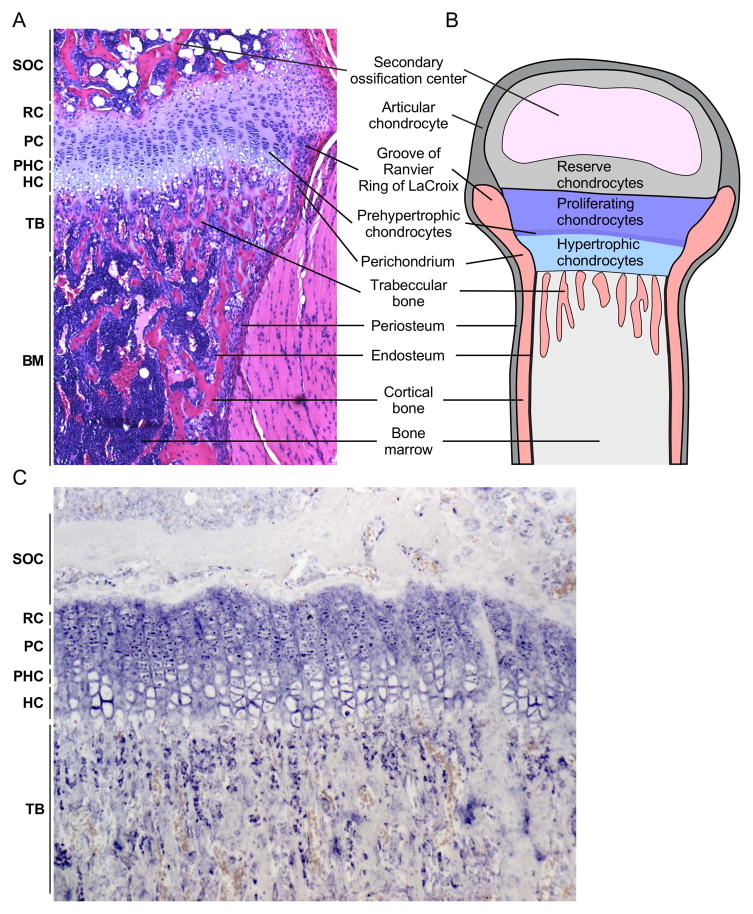
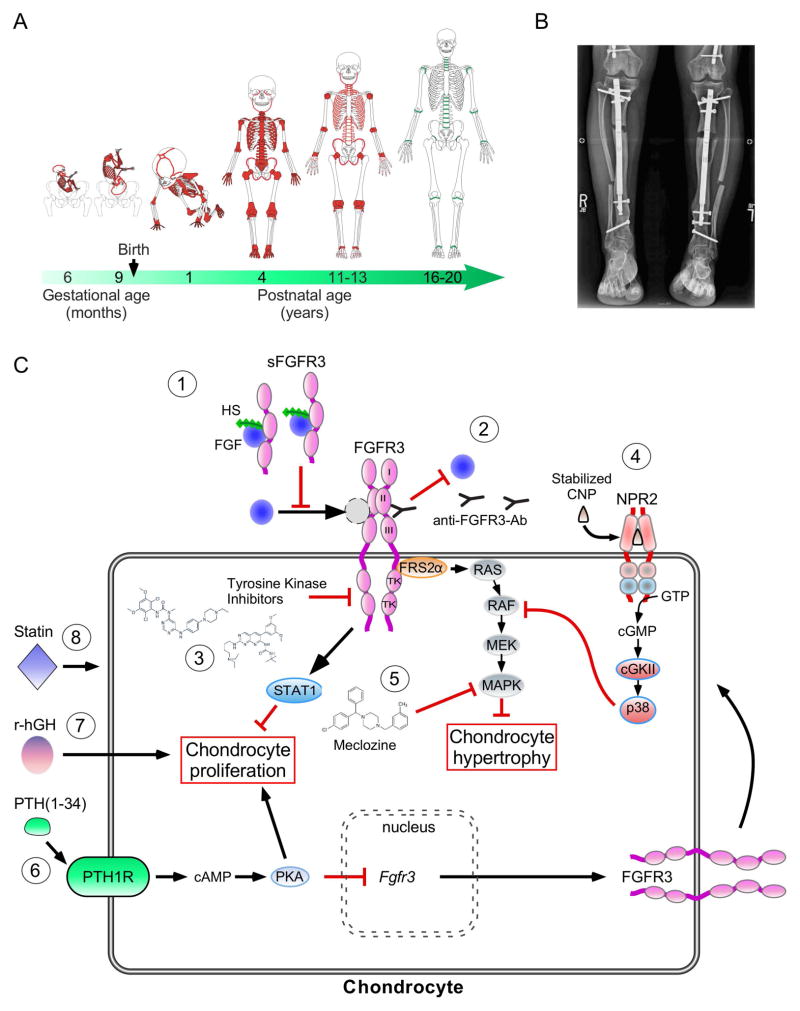
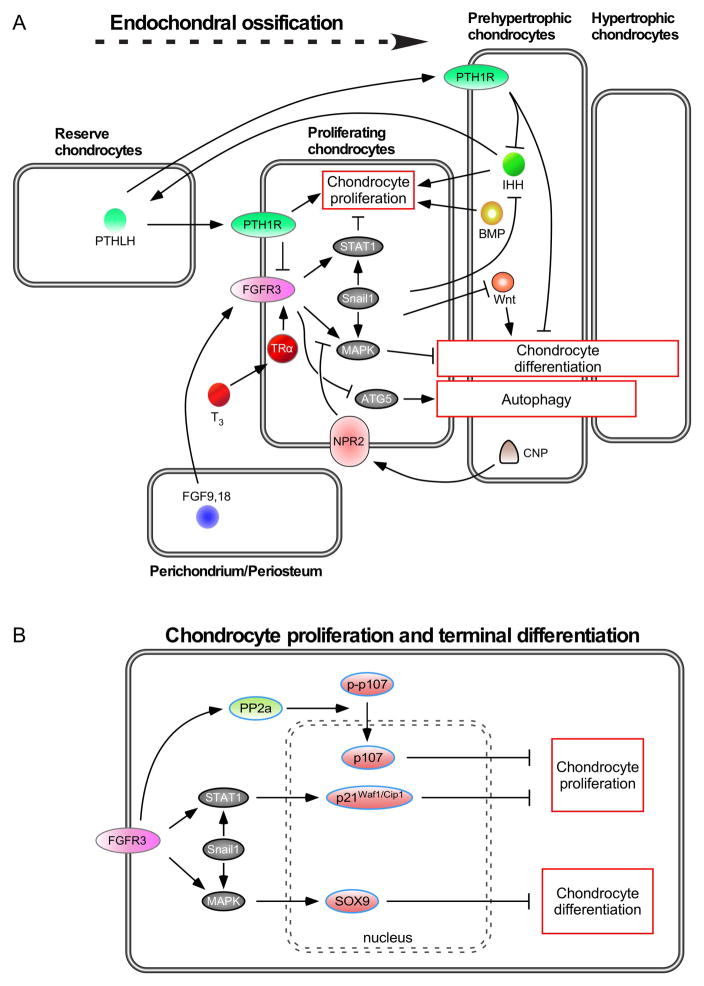
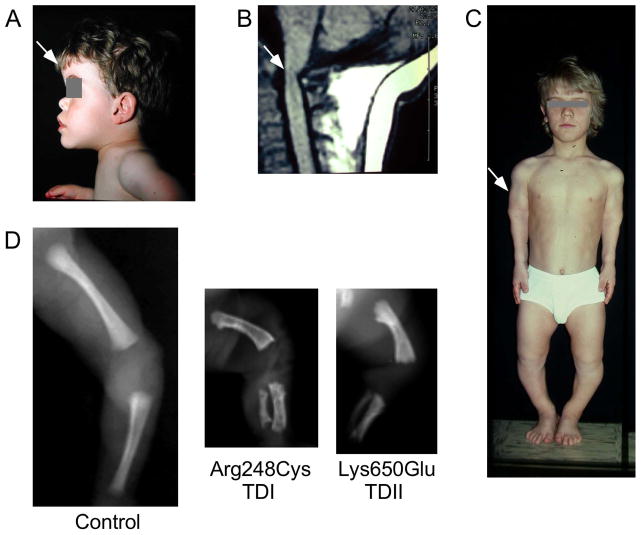
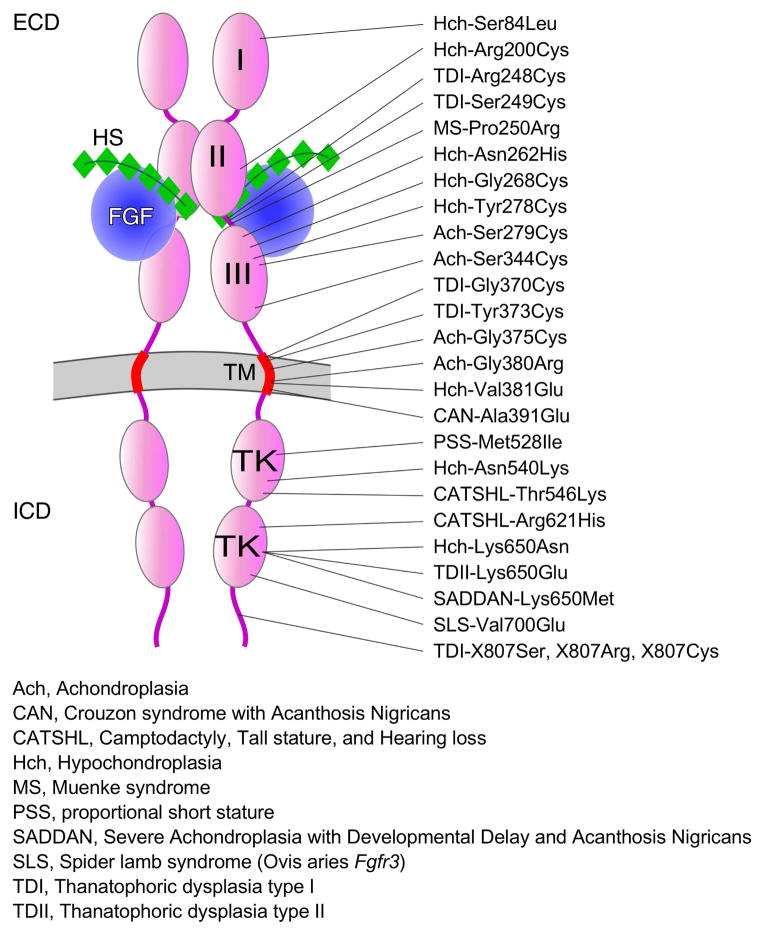
Autosomal dominant mutations in fibroblast growth factor receptor 3 (FGFR3) cause achondroplasia (Ach), the most common form of dwarfism in humans, and related chondrodysplasia syndromes that include hypochondroplasia (Hch), severe achondroplasia with developmental delay and acanthosis nigricans (SADDAN), and thanatophoric dysplasia (TD). FGFR3 is expressed in chondrocytes and mature osteoblasts where it functions to regulate bone growth. Analysis of the mutations in FGFR3 revealed increased signaling through a combination of mechanisms that include stabilization of the receptor, enhanced dimerization, and enhanced tyrosine kinase activity. Paradoxically, increased FGFR3 signaling profoundly suppresses proliferation and maturation of growth plate chondrocytes resulting in decreased growth plate size, reduced trabecular bone volume, and resulting decreased bone elongation. In this review, we discuss the molecular mechanisms that regulate growth plate chondrocytes, the pathogenesis of Ach, and therapeutic approaches that are being evaluated to improve endochondral bone growth in people with Ach and related conditions. Developmental Dynamics 246:291-309, 2017. © 2016 Wiley Periodicals, Inc.
成纤维细胞生长因子受体3(FGFR3)的常染色体显性突变会导致软骨发育不全(Ach),这是人类最常见的侏儒症形式,以及相关的软骨发育异常综合征,包括低软骨发育不全(Hch)、伴有发育迟缓与黑棘皮病的严重软骨发育不全(SADDAN)和致死性发育异常(TD)。FGFR3在软骨细胞和成熟成骨细胞中表达,其功能是调节骨骼生长。对FGFR3突变的分析表明,通过包括受体稳定、二聚化增强和酪氨酸激酶活性增强等多种机制的组合,信号传导增加。矛盾的是,FGFR3信号传导增加会深刻抑制生长板软骨细胞的增殖和成熟,导致生长板尺寸减小、小梁骨体积减少,进而导致骨伸长减少。在这篇综述中,我们讨论了调节生长板软骨细胞的分子机制、软骨发育不全的发病机制,以及正在评估的旨在改善软骨发育不全患者及相关病症患者软骨内骨生长的治疗方法。《发育动力学》246:291 - 309, 2017。© 2016威利期刊公司。