Rieger Lupann, Molina Thomas, Fabre Paul, Greffard Karine, Pellerito Ornella, Dort Junio, Bilodeau Jean-François, Dumont Nicolas A
CHU Sainte-Justine Research Center, Montreal, Quebec, Canada.
Department of Pharmacology and Physiology, Faculty of Medicine, Université de Montréal, Montreal, Quebec, Canada.
FASEB J. 2024 Dec 13;38(24):e70250. doi: 10.1096/fj.202401747R.
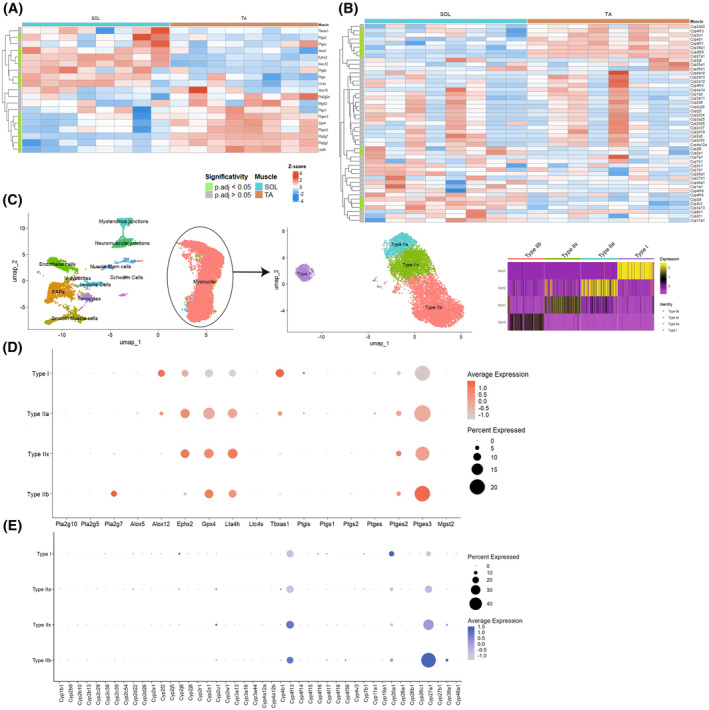
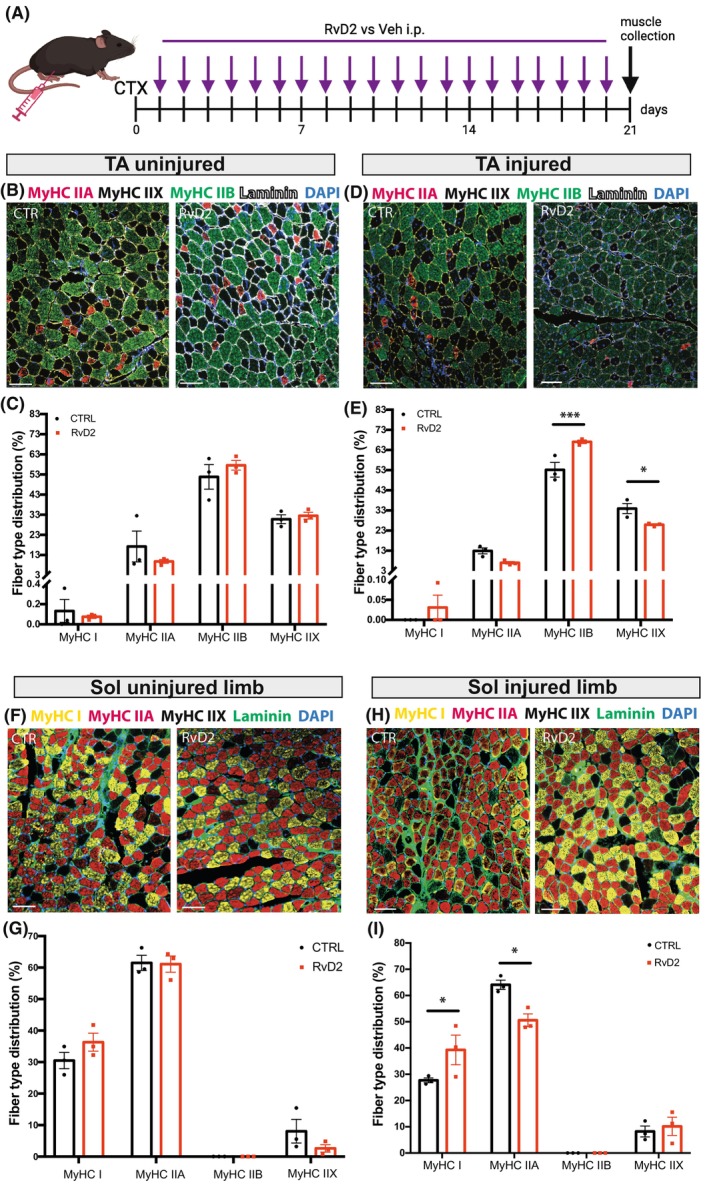
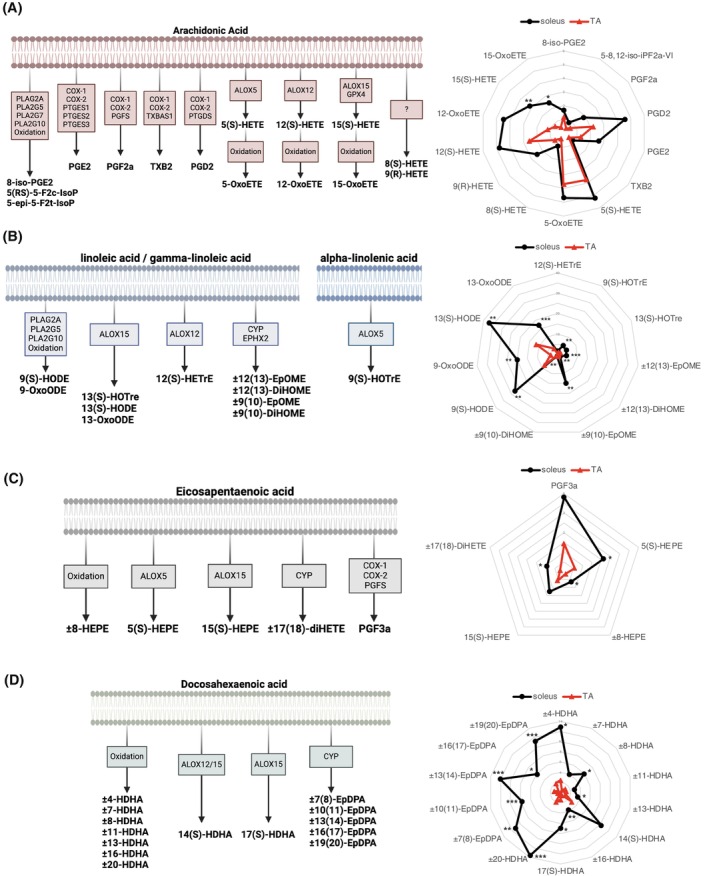
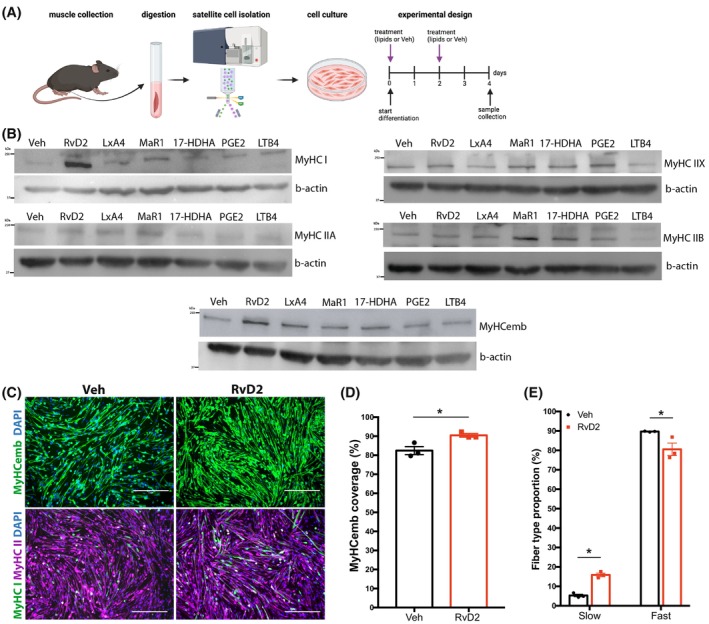
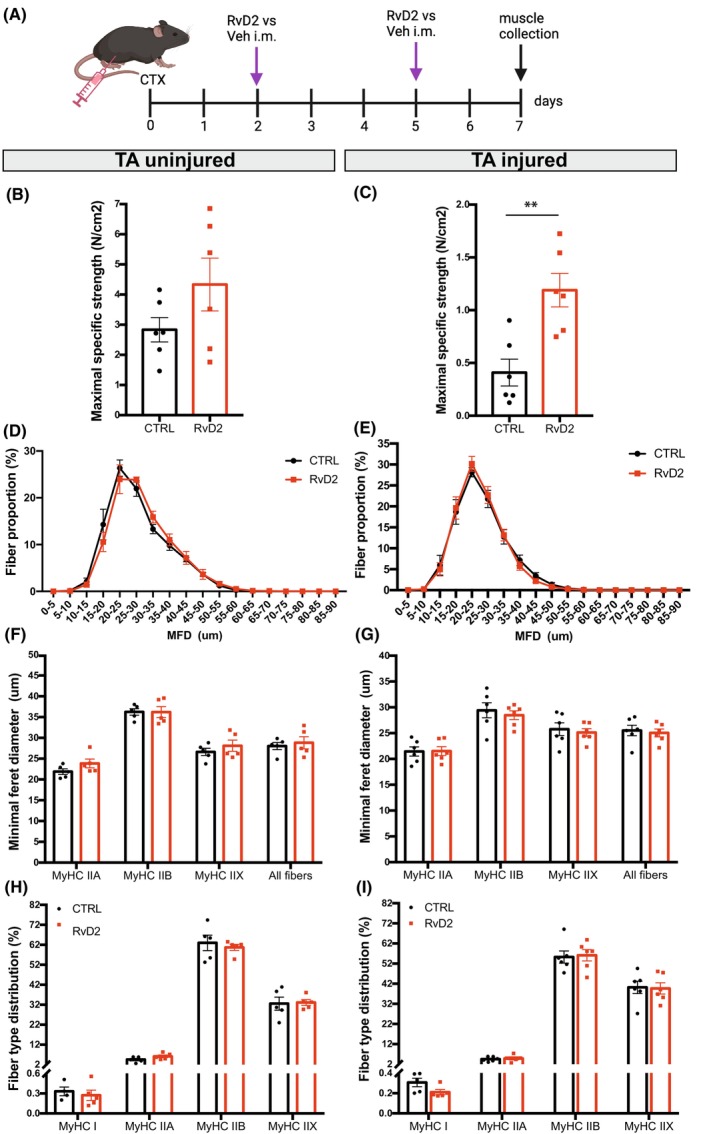
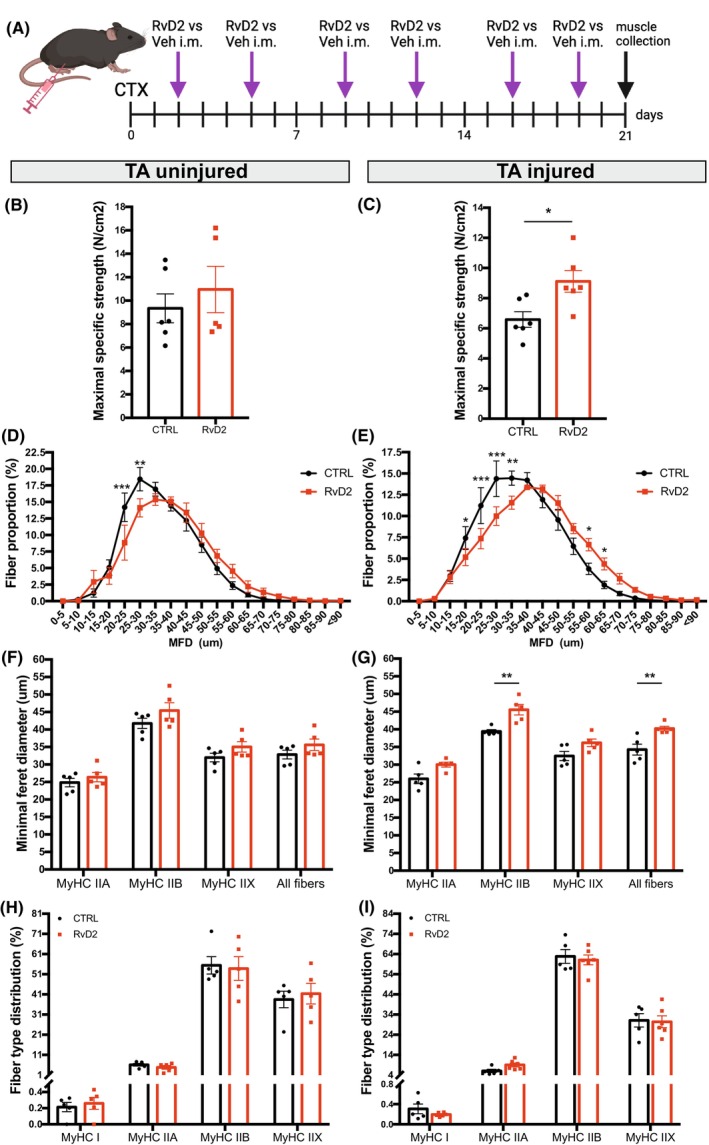
Skeletal muscles are predominantly composed of long, multinucleated muscle fibers, classified according to their metabolic and contractile phenotype. The determination of fiber types is influenced by various factors (e.g., innervation, hormones, physical demand). Our laboratory and others showed that resolvins, lipid mediators derived from omega-3 fatty acids, promote muscle regeneration and function after an injury or in models of muscular dystrophies; however, the effect of resolvins on the determination of muscle phenotype remains unknown. Here, we investigated the impact of lipid mediators on muscle phenotype during myogenesis. Transcriptomics analysis of single-nuclei RNAseq data sets revealed that the enzymes responsible for bioactive lipids biosynthesis are differentially expressed in slow fibers versus fast fibers. Lipidomics analysis of slow-twitch muscle (soleus) versus fast-twitch muscle (tibialis anterior) showed that the levels of lipids derived from arachidonic acid are similar between muscle groups, but lipids derived from alpha-linolenic acid, linoleic acid, eicosapentaenoic acid, and docosahexaenoic acid are enriched in slow-twitch muscle. Screening for different lipids in vitro showed that resolvin-D2 enhances the formation of myotubes expressing the slow myosin heavy chain isoform. In vivo, the administration of resolvin-D2 enhances muscle strength, increases myofiber size, and affects fiber typing in injured muscles but not in uninjured muscles. Resolvin-D2 promoted the transition toward the dominant fiber types in regenerating muscle (i.e., type I in the slow-twitch soleus and type IIB in the fast-twitch tibialis anterior muscle), suggesting its participation in fiber typing in conjunction with other factors. Overall, these findings identified new roles of bioactive lipids in the regulation of fiber typing, which could have therapeutic applicability in muscle injuries or dystrophies.
骨骼肌主要由长的多核肌纤维组成,根据其代谢和收缩表型进行分类。纤维类型的确定受多种因素影响(如神经支配、激素、身体需求)。我们实验室和其他研究表明,源自ω-3脂肪酸的脂质介质类消退素可促进损伤后或肌肉营养不良模型中的肌肉再生和功能;然而,类消退素对肌肉表型确定的影响仍不清楚。在此,我们研究了脂质介质在肌生成过程中对肌肉表型的影响。单核RNA测序数据集的转录组学分析显示,负责生物活性脂质生物合成的酶在慢肌纤维和快肌纤维中的表达存在差异。慢肌(比目鱼肌)与快肌(胫骨前肌)的脂质组学分析表明,花生四烯酸衍生的脂质水平在不同肌肉组之间相似,但α-亚麻酸、亚油酸、二十碳五烯酸和二十二碳六烯酸衍生的脂质在慢肌中含量丰富。体外筛选不同脂质表明,消退素-D2可增强表达慢肌球蛋白重链异构体的肌管形成。在体内,给予消退素-D2可增强肌肉力量,增加肌纤维大小,并影响损伤肌肉而非未损伤肌肉的纤维类型。消退素-D2促进再生肌肉向优势纤维类型转变(即慢肌比目鱼肌中的I型和快肌胫骨前肌中的IIB型),表明其与其他因素共同参与纤维类型的确定。总体而言,这些发现确定了生物活性脂质在纤维类型调节中的新作用,这可能在肌肉损伤或营养不良中具有治疗应用价值。