Zhang Jin, Ning Yangyang, Li Jingjian, Deng Yongbiao, Wang LiSheng, Mao Shizhong, Zhao Bo
Department of Pharmacognosy, Department of Pharmacy, Guilin Medical University, Guilin, 541199, China.
Guangzhou General Institute of Landscape Architecture Planning and Design, Guangzhou, 510420, China.
BMC Plant Biol. 2024 Dec 19;24(1):1198. doi: 10.1186/s12870-024-05892-x.
Numerous species of Ardisia are widely used for their medicinal and ornamental values in China. However, accurately identifying Ardisia species at the molecular level remains a challenge due to the morphological similarities among different species, the complexity of interspecific variation, and the limited availability of genetic markers. In this study, we reported 20 chloroplast genomes of Ardisia species from China and combined them with 8 previously published chloroplast genomes to conduct a comprehensive analysis for phylogenetic relationships and adaptive evolution.
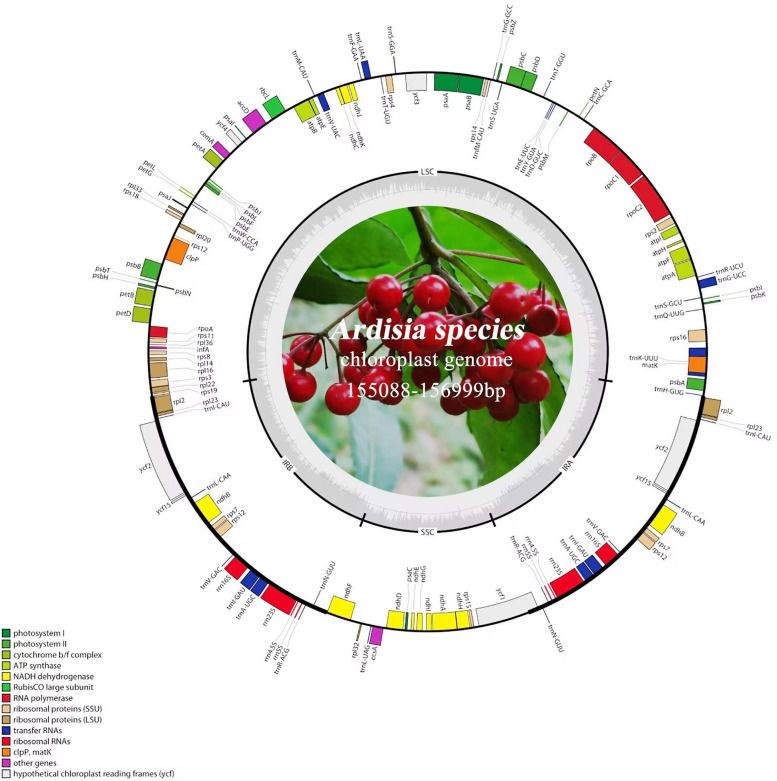
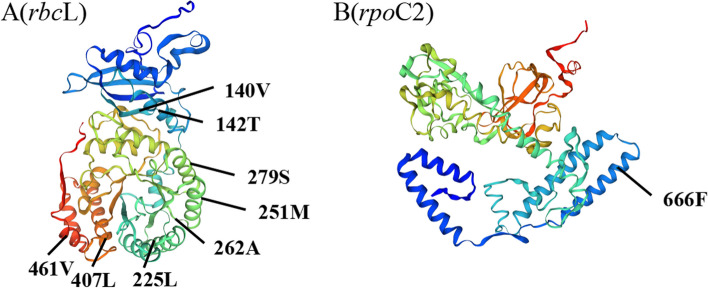
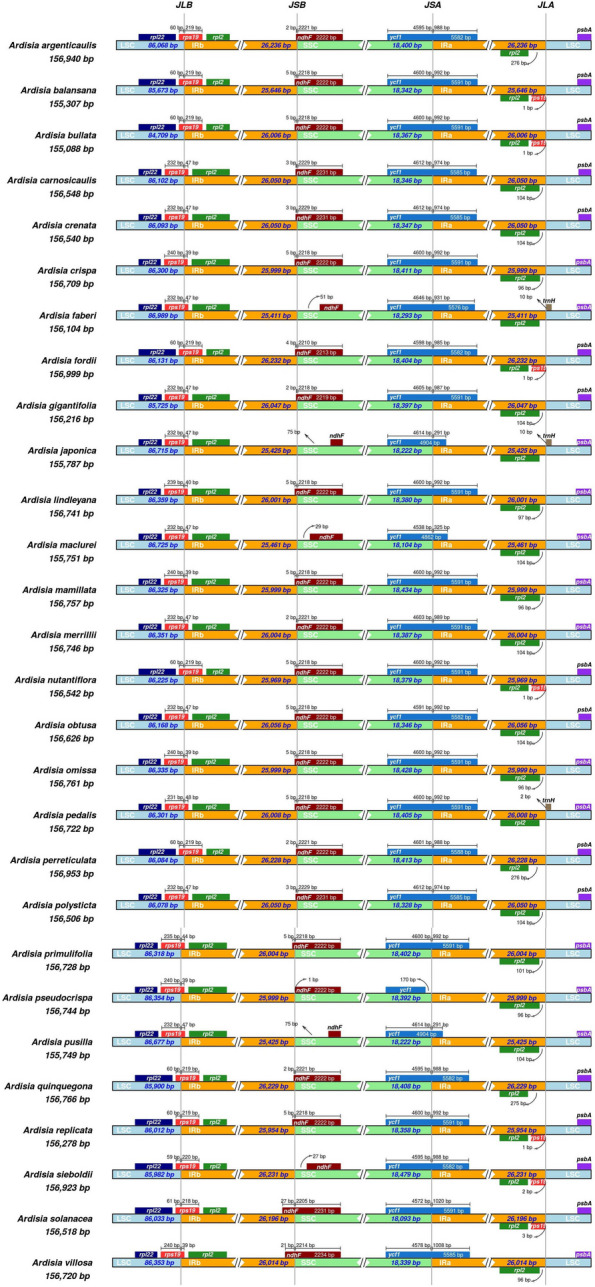
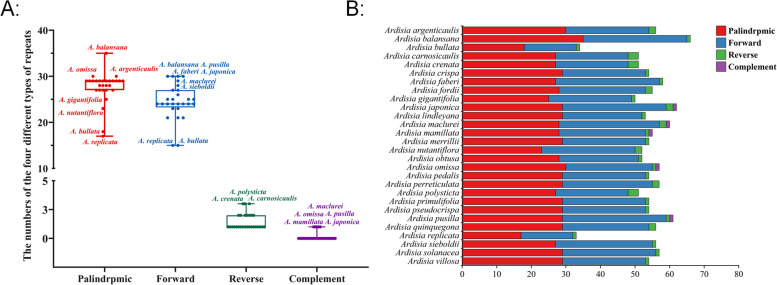
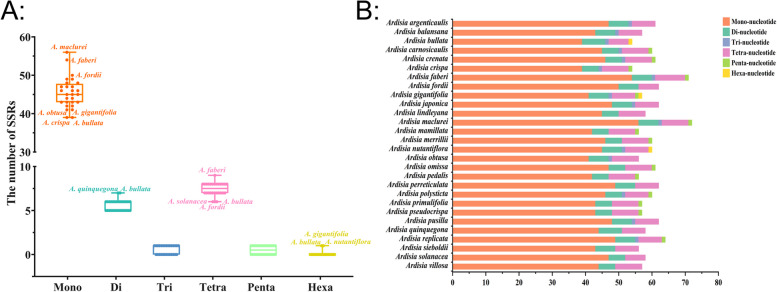
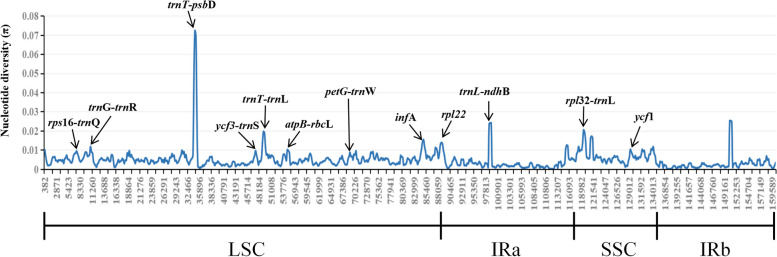
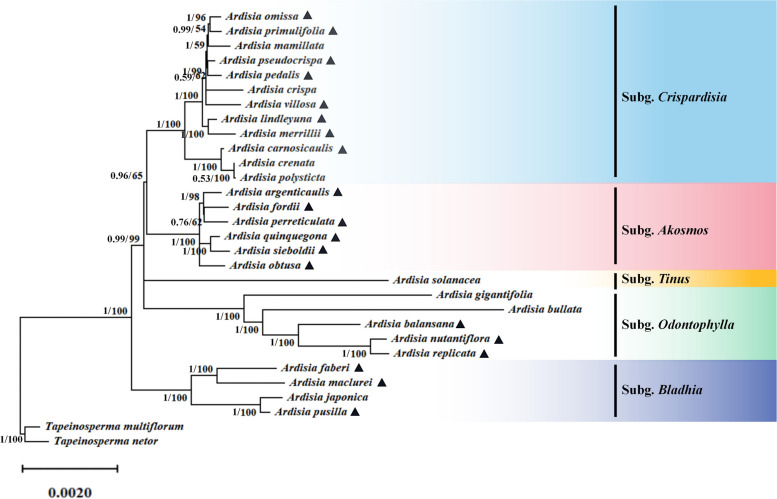
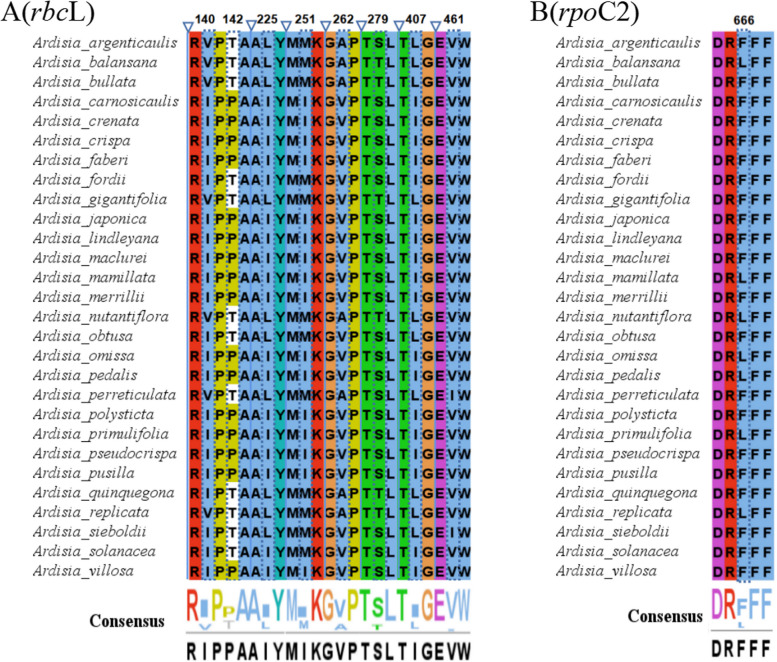
For the 28 Ardisia species analyzed in this study, the size of the chloroplast genomes ranged from 155,088 bp to 156,999 bp, and all exhibited a typical tetrad structure with conserved gene content and number. Each genome contained 85-88 protein-coding genes, 36-37 tRNA genes, and 8 rRNA genes. Comparative analysis showed that the genomic structures and gene order were relatively conserved with slight variations in the inverted repeat regions (IRs). Simple sequence repeats (SSRs) were predominantly single nucleotide repeats, while repeat sequences were mainly composed of palindromic and forward repeats. Twelve highly variable regions were identified as potential DNA barcodes for species identification and phylogenetic analysis of Ardisia. The phylogenetic tree supported the division of the subgenus Bladhia s.l. into two subgenera: Bladhia s.str. and Odontophylla (Yang) Huang. Further investigation revealed that two protein-coding genes (rbcL and rpoC2) were under positive selection and might be associated with the adaptation of Ardisia species to shaded environments.
Our study analyzed the chloroplast genomes of 20 Ardisia species from China to explore their phylogenetic relationships and adaptive evolution. By combining these results with data from eight previously published chloroplast genomes, the essential characteristics of Ardisia chloroplast genomes were clarified. The research establishes a theoretical basis for the classification, identification, and comprehension of the adaptive evolution of Ardisia species.
在中国,众多紫金牛属植物因其药用和观赏价值而被广泛应用。然而,由于不同物种间形态相似、种间变异复杂以及遗传标记有限,在分子水平上准确鉴定紫金牛属物种仍然是一项挑战。在本研究中,我们报道了来自中国的20个紫金牛属物种的叶绿体基因组,并将它们与8个先前发表的叶绿体基因组相结合,以对系统发育关系和适应性进化进行全面分析。
对于本研究中分析的28个紫金牛属物种,叶绿体基因组大小在155,088 bp至156,999 bp之间,均呈现典型的四分体结构,基因含量和数量保守。每个基因组包含85 - 88个蛋白质编码基因、36 - 37个tRNA基因和8个rRNA基因。比较分析表明,基因组结构和基因顺序相对保守,反向重复区域(IRs)有轻微变化。简单序列重复(SSRs)主要是单核苷酸重复,而重复序列主要由回文和正向重复组成。鉴定出12个高变区作为紫金牛属物种鉴定和系统发育分析的潜在DNA条形码。系统发育树支持广义的腋序组(Bladhia s.l.)分为两个亚组:狭义的腋序组(Bladhia s.str.)和齿叶组(Odontophylla (Yang) Huang)。进一步研究发现,两个蛋白质编码基因(rbcL和rpoC2)受到正选择,可能与紫金牛属物种对荫蔽环境的适应有关。
我们的研究分析了来自中国的20个紫金牛属物种的叶绿体基因组,以探索它们的系统发育关系和适应性进化。通过将这些结果与先前发表的8个叶绿体基因组数据相结合,阐明了紫金牛属叶绿体基因组的基本特征。该研究为紫金牛属物种的分类、鉴定和适应性进化理解建立了理论基础。