Wang Xin, Liu Yachen, Peng Zhongyan, Li Bowen, Liang Qingqing, Liao Shuting, Liu Ming
Faculty of Health Sciences and Sports, Macao Polytechnic University, Macao, China.
Peking University Health Science Center - Macao Polytechnic University Nursing Academy, Polytechnic University, Macao, China.
BMC Nurs. 2024 Dec 19;23(1):930. doi: 10.1186/s12912-024-02582-9.
To provide a comprehensive overview of situational leadership theory as applied to nursing management, outlining its relevant measurement tools, intervention modalities, and reporting gaps.
A scoping review of the literature was conducted according to the JBI guidelines.
Eight databases were used including PubMed, Embase, CINHAL, Web of Science, CNKI, WanFang, Cqvip, SinoMed. References of included studies were also searched. All literature published up to 9 September 2024 was included.
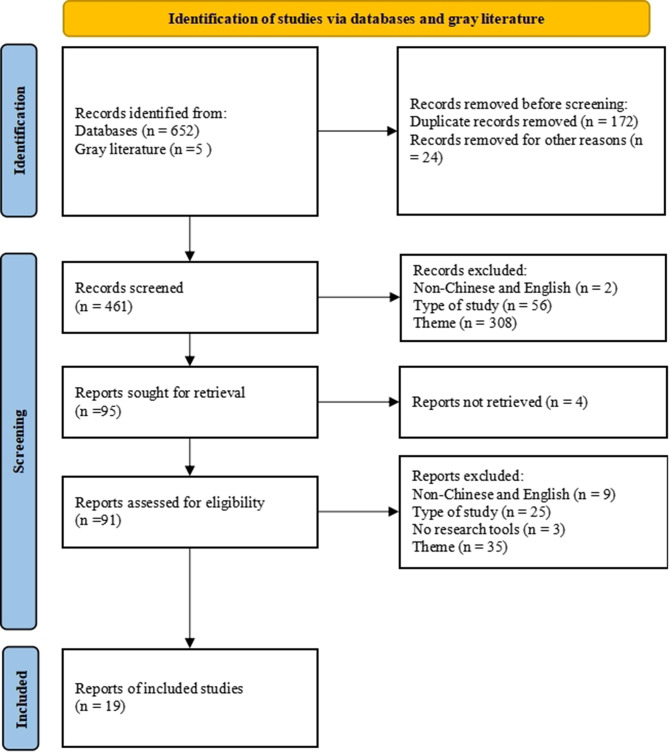
According to the PCC framework, the search formula was developed and a three-stage integrated search strategy was employed to search the literature. The titles, abstracts, and full texts were assessed by the reviewers followed by the data extraction and synthetization of results.
Nineteen articles were included in this study, including five cross-sectional studies, thirteen quasi-experimental studies, and one mixed study. The research identified that situational leadership theory has multiple applications in nursing management and plays an important role in the development of nurses' leadership and maturity. However, the studies were reported with low transparency and did not adhere to the relevant reporting guidelines. In addition, further validation of the relevant measuring instruments is needed.
Situational leadership is a follower-centred leadership skill that enables leaders to adapt their leadership style to achieve optimal management results, facilitate the achievement of organizational goals, and increase follower satisfaction and growth. Further research is needed to develop standardized intervention protocols to apply this theory effectively and enhance the reporting quality of relevant studies.
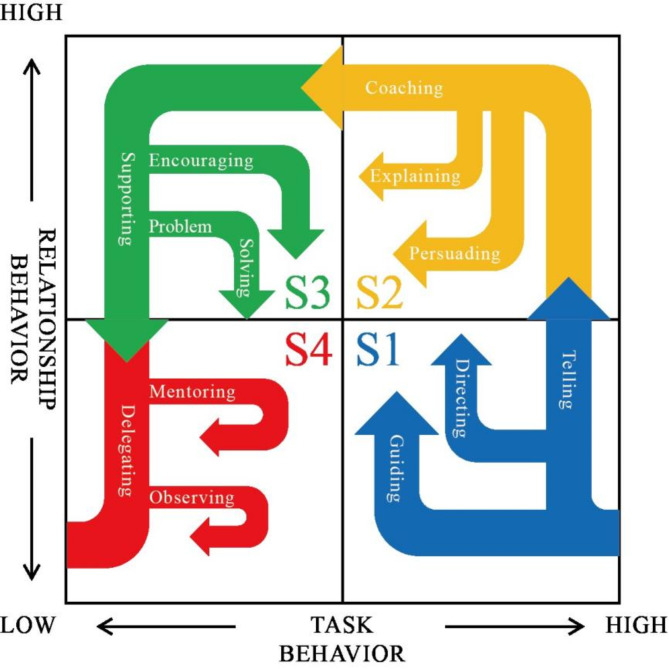
The situational leadership theory emphasizes the necessity for nursing managers to use different leadership styles depending on their nurses' maturity. However, the study suggests that it is necessary to further differentiate between different situational leadership models and to explore relevant research tools and interventions further. This could lead to a more standardized and effective clinical application of the theory.
全面概述情境领导理论在护理管理中的应用,概述其相关测量工具、干预方式及报告差距。
根据JBI指南进行文献的范围综述。
使用了八个数据库,包括PubMed、Embase、CINHAL、科学网、中国知网、万方、维普、中国生物医学文献数据库。还检索了纳入研究的参考文献。纳入了截至2024年9月9日发表的所有文献。
根据PCC框架制定检索公式,并采用三阶段综合检索策略检索文献。由评审人员评估标题、摘要和全文,随后进行数据提取和结果综合。
本研究纳入19篇文章,包括5项横断面研究、13项准实验研究和1项混合研究。研究发现情境领导理论在护理管理中有多种应用,对护士领导力和成熟度的发展起着重要作用。然而,这些研究报告的透明度较低,未遵循相关报告指南。此外,相关测量工具需要进一步验证。
情境领导是以追随者为中心的领导技能,使领导者能够调整其领导风格以实现最佳管理效果,促进组织目标的实现,并提高追随者的满意度和成长。需要进一步研究以制定标准化干预方案,有效应用该理论并提高相关研究的报告质量。
情境领导理论强调护理管理者有必要根据护士的成熟度采用不同的领导风格。然而,该研究表明有必要进一步区分不同的情境领导模式,并进一步探索相关研究工具和干预措施。这可能会使该理论在临床应用中更加标准化和有效。