Alhashimi Ali, Kamarova Marharyta, Baig Sheharyar S, Nair Krishnan Padmakumari Sivaraman, Wang Tao, Redgrave Jessica, Majid Arshad, Ali Ali N
University of Sheffield, Sheffield, UK.
Department of Neuroscience, Geriatrics and Stroke, Sheffield Institute for Translational Neurosciences, University of Sheffield, Sheffield, UK.
Syst Rev. 2024 Dec 19;13(1):308. doi: 10.1186/s13643-024-02725-8.
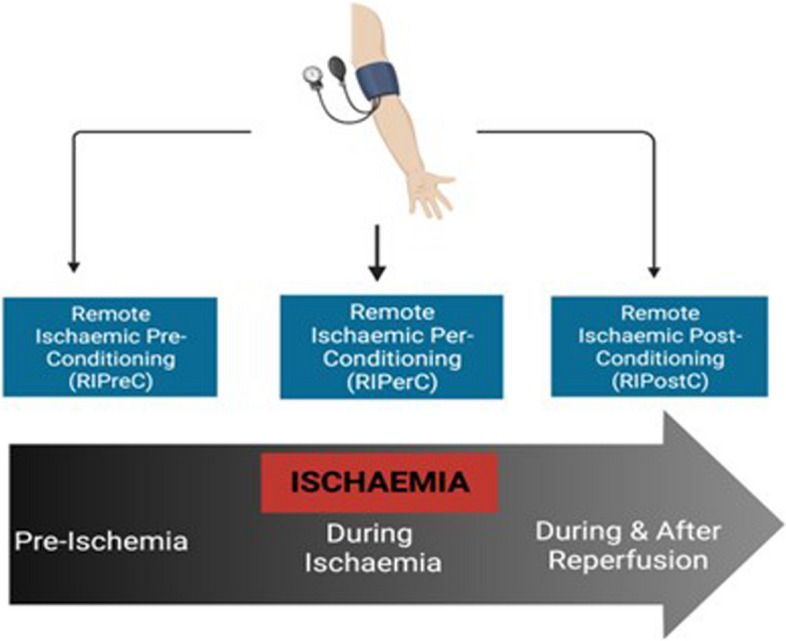
Remote ischaemic conditioning (RIC) refers to the use of controlled transient ischemic and reperfusion cycles, commonly of the upper or lower limb, to mitigate cellular damage from ischaemic injury. Preclinical studies demonstrate that RIC may have a neuroprotective effect and therefore could represent a novel therapeutic option in the management of neurological disorders. The aim of this review is to comprehensively describe the current clinical evidence of RIC in neurological disorders.
A computerised search of EMBASE and OVID MEDLINE was conducted from 2002 to October 2023 for randomised controlled trials (RCTs) investigating RIC in neurological diseases.
A total of 46 different RCTs in 12 different neurological disorders (n = 7544) were included in the analysis. Conditions included acute ischaemic stroke, symptomatic intracranial stenosis and vascular cognitive impairment. The most commonly used RIC protocol parameters in the selected studies were as follows: cuff pressure at 200 mmHg (27 trials), 5-min cycle length (42 trials), 5 cycles of ischaemia and reperfusion (24 trials) and the application to the upper limb unilaterally (23 trials).
The comprehensive analysis of the included studies reveals promising results regarding the safety and therapeutic effect of RIC as an option for managing neurological diseases. Particularly, the strongest evidence supports its potential use in chronic stroke patients and vascular cognitive impairment. The neuroprotective effects of RIC, as demonstrated in preclinical studies, suggest that this therapeutic approach could extend its benefits to various other diseases affecting the nervous system. However, to establish the efficacy of RIC across different neurological disorders, further trials with larger sample sizes and more diverse patient populations are warranted. Upcoming trials are expected to provide valuable evidence that will not only confirm the efficacy of RIC in neurological disease management but also help identify the most optimal RIC regimen for specific conditions.
远程缺血预处理(RIC)是指利用可控的短暂缺血和再灌注循环,通常作用于上肢或下肢,以减轻缺血性损伤导致的细胞损伤。临床前研究表明,RIC可能具有神经保护作用,因此可能是神经系统疾病管理中的一种新型治疗选择。本综述的目的是全面描述RIC在神经系统疾病中的当前临床证据。
对2002年至2023年10月期间的EMBASE和OVID MEDLINE进行计算机检索,以查找研究RIC在神经系统疾病中的随机对照试验(RCT)。
分析纳入了12种不同神经系统疾病中的46项不同RCT(n = 7544)。疾病包括急性缺血性卒中、症状性颅内狭窄和血管性认知障碍。所选研究中最常用的RIC方案参数如下:袖带压力为200 mmHg(27项试验)、循环长度为5分钟(42项试验)、缺血和再灌注5个周期(24项试验)以及单侧应用于上肢(23项试验)。
对纳入研究的综合分析揭示了关于RIC作为神经系统疾病管理选择的安全性和治疗效果的有前景的结果。特别是,最有力的证据支持其在慢性卒中患者和血管性认知障碍中的潜在应用。如临床前研究所证明的,RIC的神经保护作用表明这种治疗方法可能将其益处扩展到影响神经系统的各种其他疾病。然而,为了确定RIC在不同神经系统疾病中的疗效,需要进行更大样本量和更多样化患者群体的进一步试验。预计即将开展的试验将提供有价值的证据,这不仅将证实RIC在神经系统疾病管理中的疗效,还将有助于确定针对特定情况的最佳RIC方案。