Weiten Richard, Engler Theadora, Schorle Hubert, Ellinger Jörg, Saponaro Miriam, Alajati Abdullah, Nettersheim Daniel, Syring-Schmandke Isabella
Department of Urology and Paediatric Urology, University Hospital Bonn, Bonn, Germany.
Department of Urology Uro-Oncology, Robot-Assisted and Specialized Urologic Surgery, University Hospital Cologne, Köln, Germany.
J Cell Mol Med. 2024 Dec;28(24):e70314. doi: 10.1111/jcmm.70314.
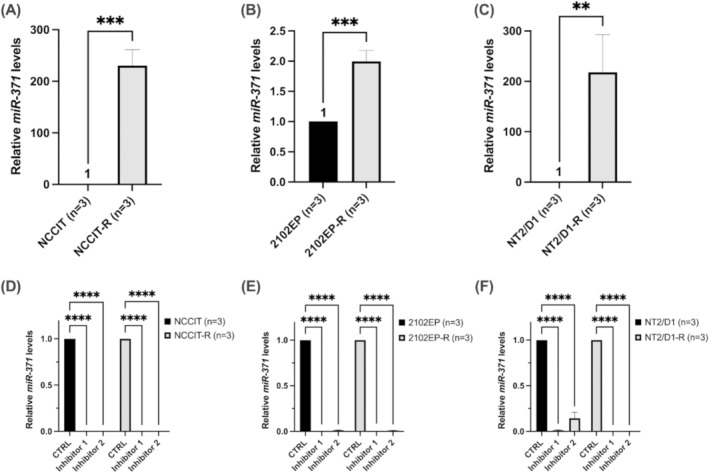
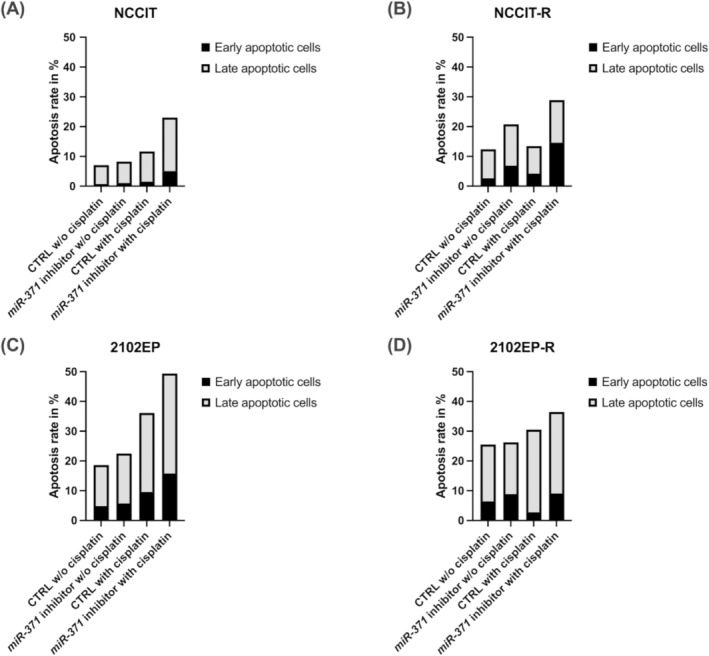
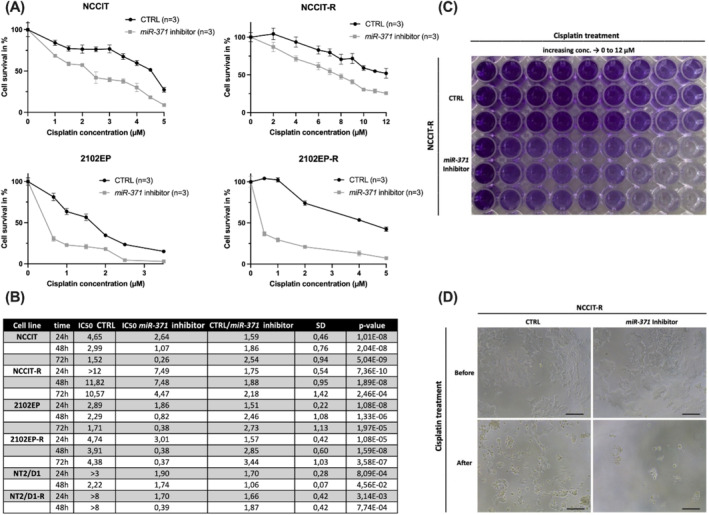
Cisplatin is used to treat a variety of malignancies, including testicular germ cell tumours (TGCTs). Although cisplatin-based chemotherapy yields high response rates, a subset of patients develop cisplatin resistance, limiting treatment options and worsening prognosis. Therefore, there is a high clinical need for new therapeutic strategies targeting cisplatin-resistant TGCTs. MicroRNA-371a-3p (miR-371), the new serum biomarker for TGCTs, shows significantly increased expression in cisplatin-resistant TGCT cell lines compared to sensitive parental cell lines. However, the functional impact of miR-371 on cisplatin sensitivity has not been investigated yet. To evaluate the impact of miR-371 on cisplatin sensitivity, antagomirs were used to inhibit miR-371 expression, resulting in a > 98% decrease in miR-371 expression. Cisplatin sensitivity was significantly increased after miR-371 inhibition in cisplatin-resistant and corresponding parental TGCT cell lines, indicating a strongly reduced viability and increased apoptosis after cisplatin treatment in miR-371-inhibited cells. Our results suggest that miR-371 may contribute to the development of cisplatin resistance in TGCTs. Interfering with miR-371 expression can increase the cisplatin sensitivity of tumour cells, which may represent a promising approach to improve future therapeutic outcomes in patients with TGCTs, especially those with cisplatin-resistant disease.
顺铂用于治疗多种恶性肿瘤,包括睾丸生殖细胞肿瘤(TGCTs)。尽管基于顺铂的化疗产生了较高的缓解率,但一部分患者会出现顺铂耐药,这限制了治疗选择并恶化了预后。因此,临床上迫切需要针对顺铂耐药TGCTs的新治疗策略。微小RNA-371a-3p(miR-371)是TGCTs的新型血清生物标志物,与敏感的亲本细胞系相比,其在顺铂耐药的TGCT细胞系中的表达显著增加。然而,miR-371对顺铂敏感性的功能影响尚未得到研究。为了评估miR-371对顺铂敏感性的影响,使用抗miR-371来抑制miR-371的表达,导致miR-371表达降低>98%。在顺铂耐药和相应的亲本TGCT细胞系中抑制miR-371后,顺铂敏感性显著增加,这表明在miR-371抑制的细胞中,顺铂处理后细胞活力显著降低且凋亡增加。我们的结果表明,miR-371可能在TGCTs顺铂耐药的发生中起作用。干扰miR-371的表达可以增加肿瘤细胞对顺铂的敏感性,这可能是改善TGCT患者,尤其是顺铂耐药患者未来治疗效果的一种有前景的方法。