Tan YinHu, Liang Xue, Ming Wei, Xing HuiMin, Wang Yang, Gao Yan
Changchun University of Chinese medicine, Changchun, Jilin Province, China.
The Affiliated Hospital to Changchun University of Chinese Medicine, Changchun, China.
BMC Palliat Care. 2024 Dec 20;23(1):290. doi: 10.1186/s12904-024-01626-w.
In the current era of rapid technological development, digital technology is progressively transforming the medical field. In palliative care, its integration is an inevitable trend, offering new possibilities for improving care delivery and patient outcomes.
This study aimed to review the application of digital technologies in palliative care, focusing on their advantages, challenges, and measurable impacts across diverse care settings.
A scoping review was conducted, evaluating studies published between January 1, 2000, and August 1, 2024. Searches were performed across PubMed, CINAHL, Web of Science, Scopus, and the Cochrane Library. Original studies assessing digital interventions within palliative care settings were included. Data extraction included study design, sample size, setting, intervention type, and outcomes. Methodological quality was appraised using appropriate tools for randomized controlled trials (RCTs), non-randomized studies, mixed-methods studies, and qualitative studies. Two independent reviewers conducted the data extraction and quality appraisal, resolving disagreements through discussion.
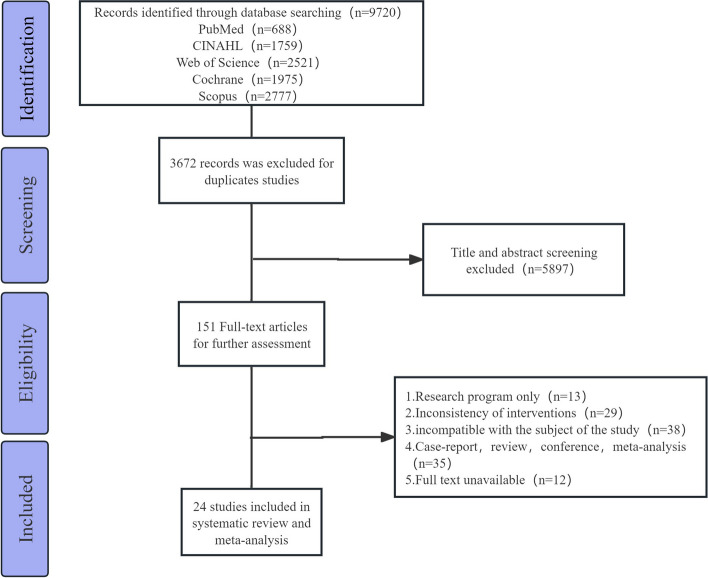
Twenty-four studies were included, examining digital technologies such as computer systems, virtual reality (VR), and wearable devices. Key interventions supported information provision, symptom monitoring, psychological support, and communication feedback. Digital tools demonstrated positive impacts on pain management, symptom distress, quality of life, and patient acceptability. Despite methodological strengths in most studies, limitations such as small sample sizes and inconsistent outcome measures were noted.
Digital technologies in palliative care demonstrate significant potential to improve patients' quality of life and alleviate symptom burden through remote monitoring, real-time feedback, and personalized interventions. These innovations address limitations of the traditional biomedical model, enhancing the accessibility and overall quality of palliative care.
在当前技术快速发展的时代,数字技术正在逐步改变医学领域。在姑息治疗中,其整合是一种必然趋势,为改善护理服务和患者结局提供了新的可能性。
本研究旨在回顾数字技术在姑息治疗中的应用,重点关注其在不同护理环境中的优势、挑战和可衡量的影响。
进行了一项范围综述,评估2000年1月1日至2024年8月1日期间发表的研究。在PubMed、CINAHL、科学网、Scopus和考科蓝图书馆进行了检索。纳入了评估姑息治疗环境中数字干预措施的原始研究。数据提取包括研究设计、样本量、环境、干预类型和结局。使用适用于随机对照试验(RCT)、非随机研究、混合方法研究和定性研究的工具对方法学质量进行评估。两名独立的评审员进行数据提取和质量评估,通过讨论解决分歧。
纳入了24项研究,考察了计算机系统、虚拟现实(VR)和可穿戴设备等数字技术。关键干预措施支持信息提供、症状监测、心理支持和沟通反馈。数字工具对疼痛管理、症状困扰、生活质量和患者可接受性产生了积极影响。尽管大多数研究在方法学上有优势,但也注意到样本量小和结局测量不一致等局限性。
姑息治疗中的数字技术通过远程监测、实时反馈和个性化干预,在改善患者生活质量和减轻症状负担方面显示出巨大潜力。这些创新解决了传统生物医学模式的局限性,提高了姑息治疗的可及性和整体质量。