Zhao Wei, Wang Yingsong, Xie Jingming, Zhou Jin, Zhao Zhi, Li Tao, Shi Zhiyue, Xiao Jie
Department of Orthopedics, The Second Affiliated Hospital of Kunming Medical University, 374# Dianmian Road, Kunming, Yunnan, 650101, P.R. China.
BMC Med Genomics. 2024 Dec 20;17(1):293. doi: 10.1186/s12920-024-02070-8.
Our previous study demonstrated that temperature-related microwave ablation (MWA) can safely modulate growth plates of piglets' vertebrae. Therefore, this study is designed to investigate the effects of different temperatures on chondrocyte viability and the underlying molecular mechanisms in vitro.
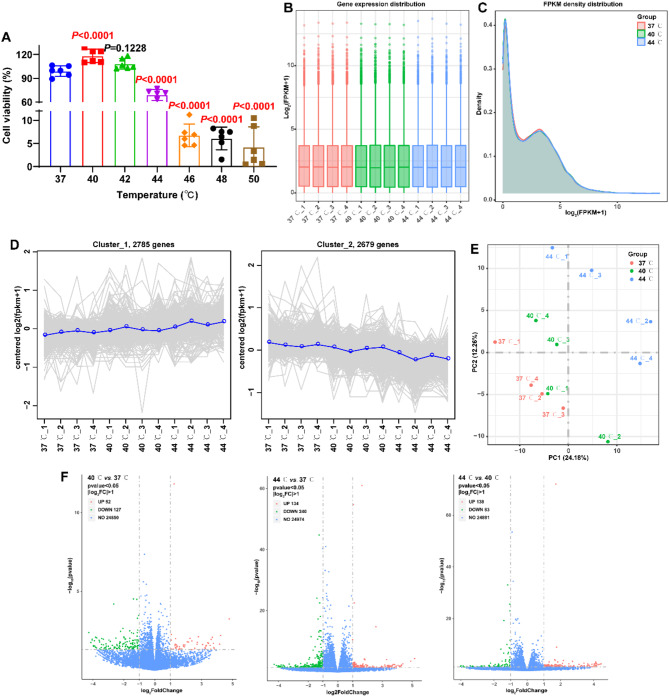
Following a 10-minute treatment at different temperatures (37 °C, 40 °C, 42 °C, 44 °C, 46 °C, 48 °C, and 50 °C), CCK-8 assay was used to examine the viability of ATDC5 cells at 12 h. Differentially expressed genes (DEGs) and the hub genes in ATDC5 cells treated at 37 °C, 40 °C and 44 °C were identified using RNA-seq. The expression of hub genes in ATDC5 cells was validated using RT-qPCR.
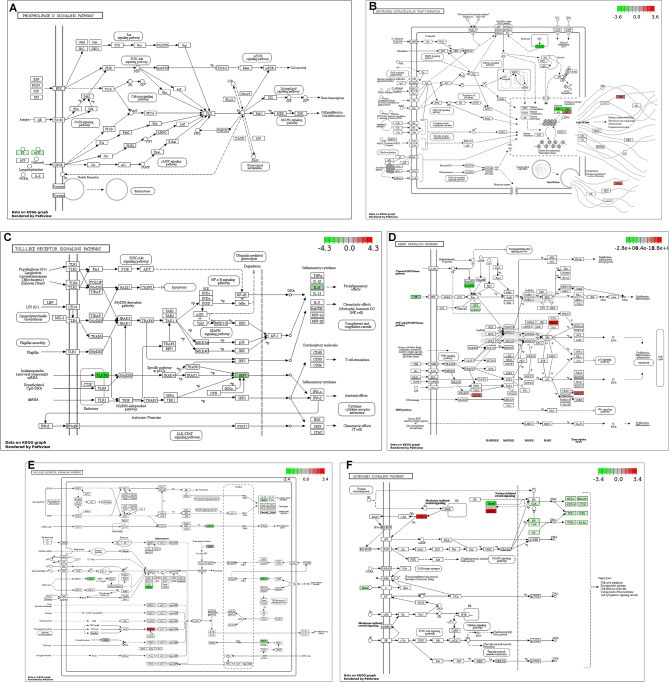
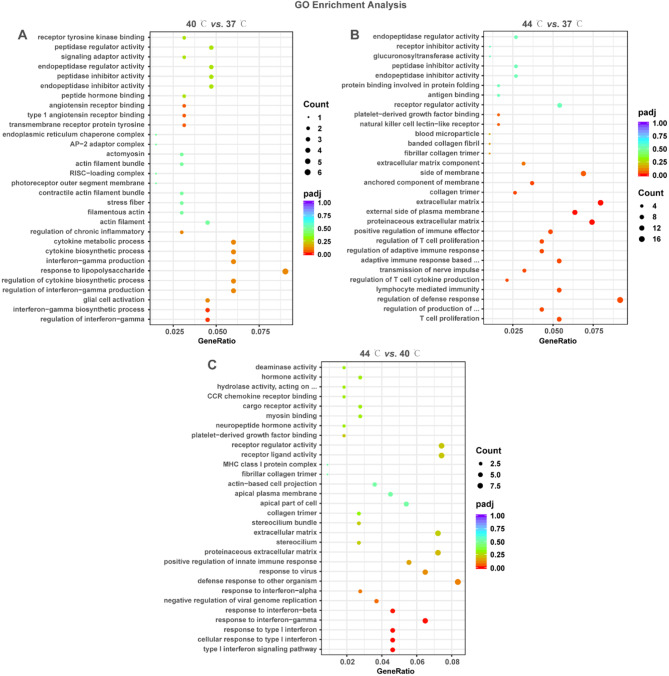
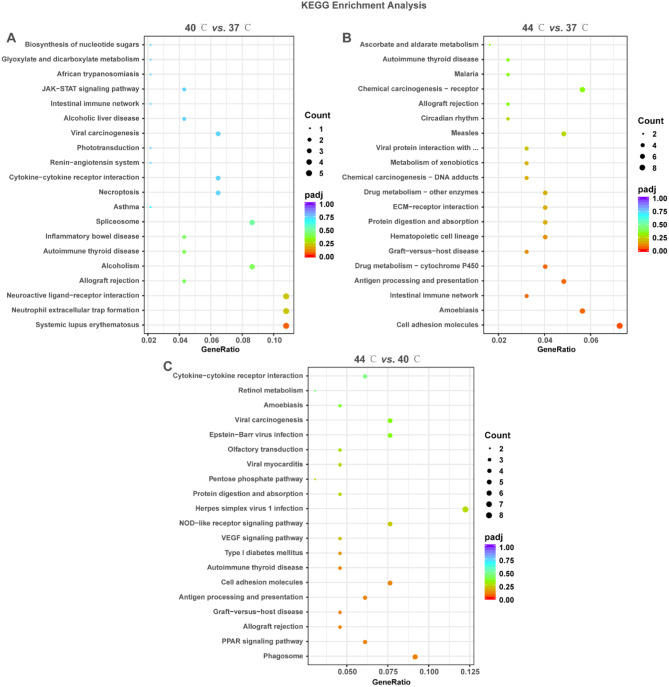
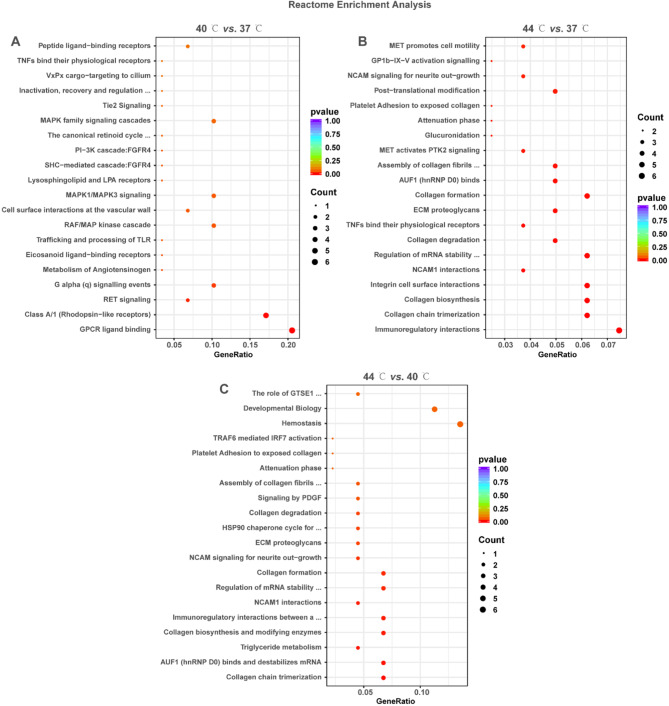
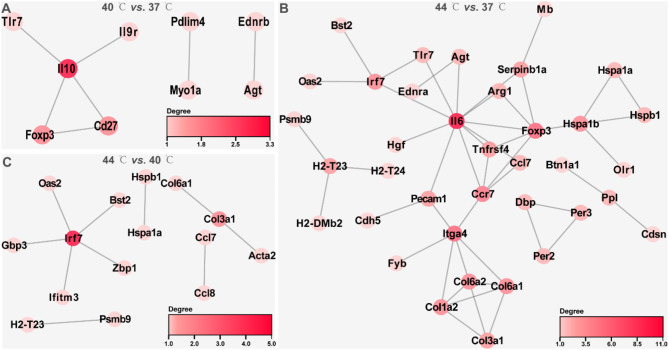
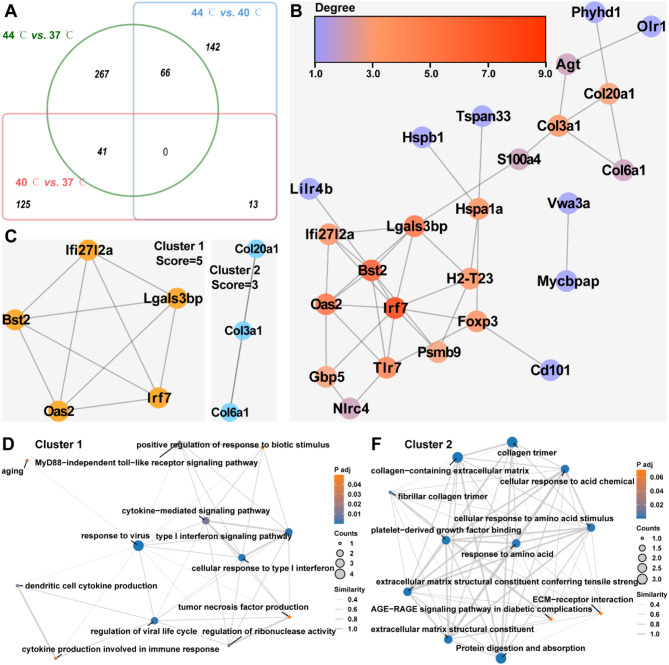
Compared with 37 °C, exposure to 40 °C significantly increased the viability of ATDC5 cells, while 42 °C had no significant effect. Additionally, exposure to 44 °C, 46 °C, 48 °C, and 50 °C exhibited the opposite pattern, with ATDC5 cells being particularly less than 50% active after treatment at 46 °C, 48 °C, and 50 °C. Differential expression analysis identified 179, 374 and 221 DEGs in the comparisons of 40 °C vs. 37 °C, 44 °C vs. 37 °C, and 44 °C vs. 40 °C, respectively. These DEGs predominantly regulated proliferation, differentiation, necrosis, inflammatory and immune responses, and ECM synthesis/degradation. Furthermore, they were associated with the Ras, PI3K/AKT, mTOR, cAMP, and MAPK pathways. Agt, Hspa1a, Hspb1, and Nlrc4 were identified as hub genes in DEGs, and RT-qPCR confirmed that the mRNA expression patterns of these hub genes in ATDC5 cells were largely consistent with the RNA-seq results.
The regulation of chondrocyte viability by temperature is associated with Ras, PI3K/AKT, mTOR, cAMP, and MAPK pathways. Additionally, Agt, Hspa1a, Hspb1, and Nlrc4 may be the key regulatory genes in this process.
我们之前的研究表明,与温度相关的微波消融(MWA)可以安全地调节仔猪椎骨的生长板。因此,本研究旨在探讨不同温度对软骨细胞活力的影响及其体外潜在的分子机制。
在不同温度(37°C、40°C、42°C、44°C、46°C、48°C和50°C)下处理10分钟后,使用CCK-8法检测12小时时ATDC5细胞的活力。使用RNA测序鉴定在37°C、40°C和44°C处理的ATDC5细胞中的差异表达基因(DEG)和核心基因。使用RT-qPCR验证ATDC5细胞中核心基因的表达。
与37°C相比,暴露于40°C显著提高了ATDC5细胞的活力,而42°C没有显著影响。此外,暴露于44°C、46°C、48°C和50°C呈现相反的模式,在46°C、48°C和50°C处理后,ATDC5细胞的活性特别低于50%。差异表达分析在40°C与37°C、44°C与37°C以及44°C与40°C的比较中分别鉴定出179、374和221个DEG。这些DEG主要调节增殖、分化、坏死、炎症和免疫反应以及细胞外基质合成/降解。此外,它们与Ras、PI3K/AKT、mTOR、cAMP和MAPK途径相关。Agt、Hspa1a、Hspb1和Nlrc4被鉴定为DEG中的核心基因,RT-qPCR证实这些核心基因在ATDC5细胞中的mRNA表达模式与RNA测序结果基本一致。
温度对软骨细胞活力的调节与Ras、PI3K/AKT、mTOR、cAMP和MAPK途径相关。此外,Agt、Hspa1a、Hspb1和Nlrc4可能是这一过程中的关键调节基因。