Hao Ting, Pei Zhiwei, Hu Sile, Zhao Zhenqun, He Wanxiong, Wang Jing, Jiang Liuchang, Ariben Jirigala, Wu Lina, Yang Xiaolong, Wang Leipeng, Wu Yonggang, Chen Xiaofeng, Li Qiang, Yang Haobo, Li Siqin, Wang Xing, Sun Mingqi, Zhang Baoxin
The Second Affiliated Hospital of Inner Mongolia Medical University, Hohhot, 010050, Inner Mongolia, People's Republic of China.
Tianjin Hospital, Tianjin University, Jiefang Nan Road 406, Hexi District, Tianjin, 300211, People's Republic of China.
Sci Rep. 2025 Apr 11;15(1):12448. doi: 10.1038/s41598-025-90694-w.
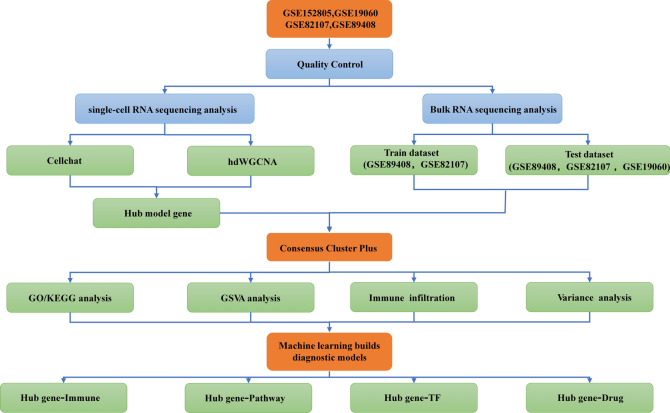
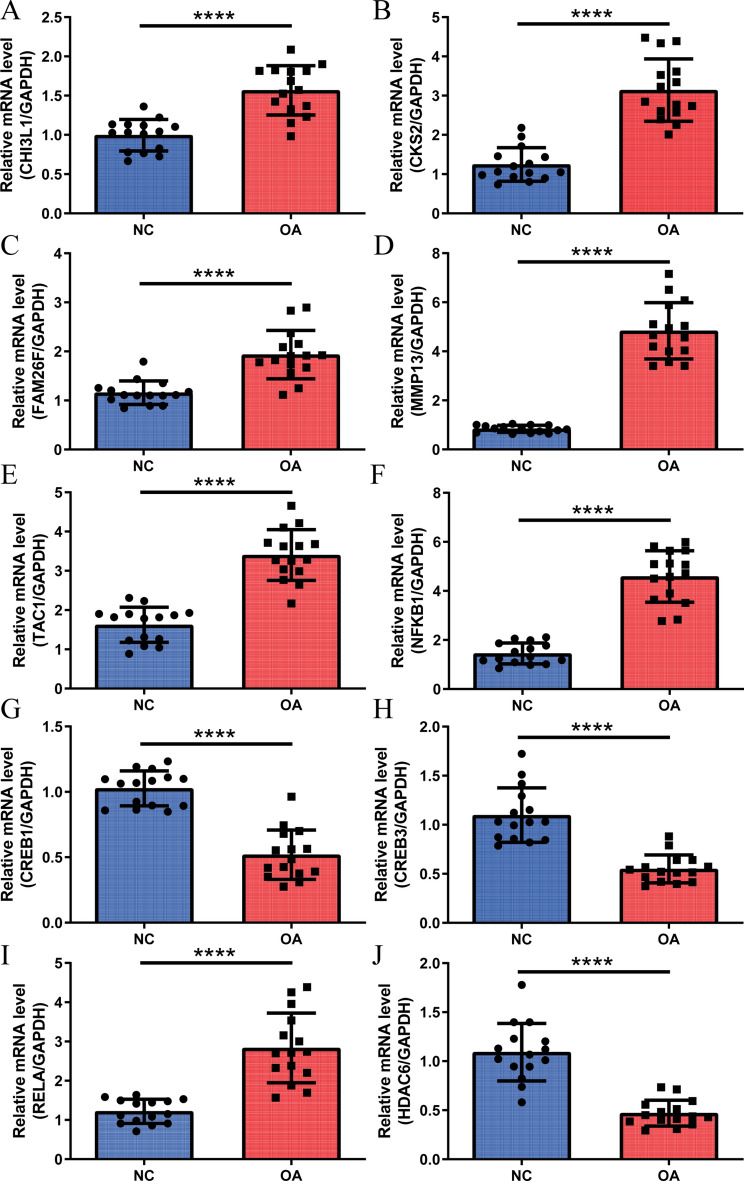
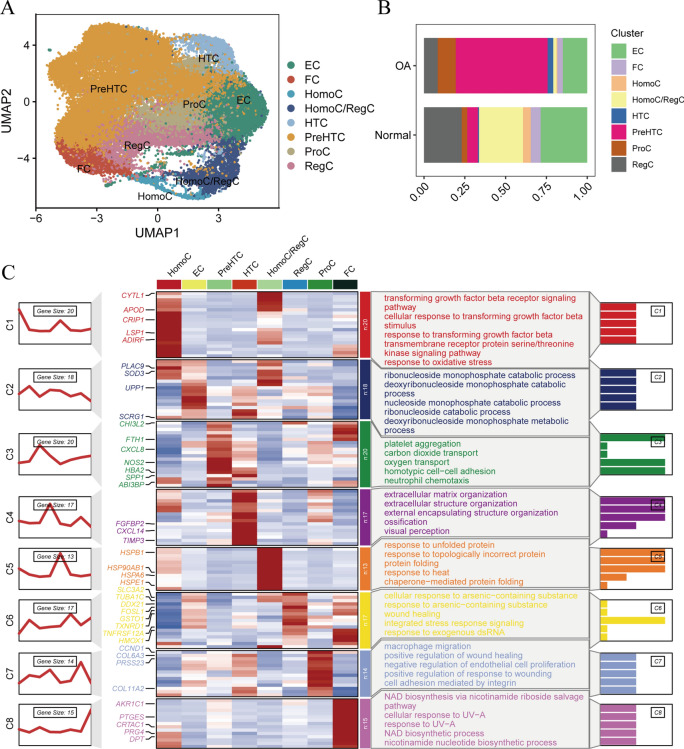
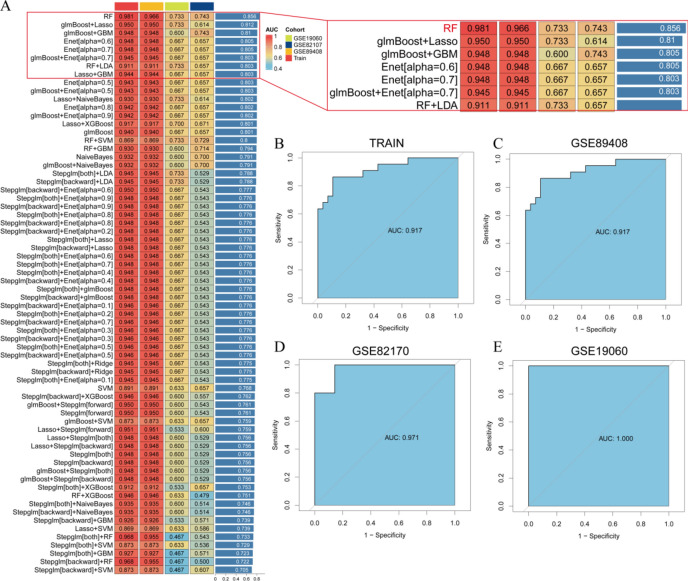
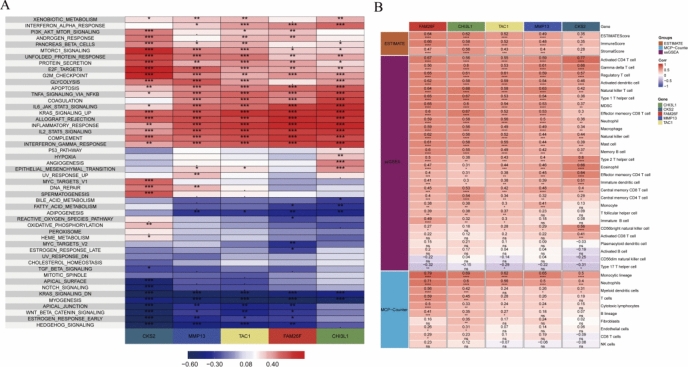
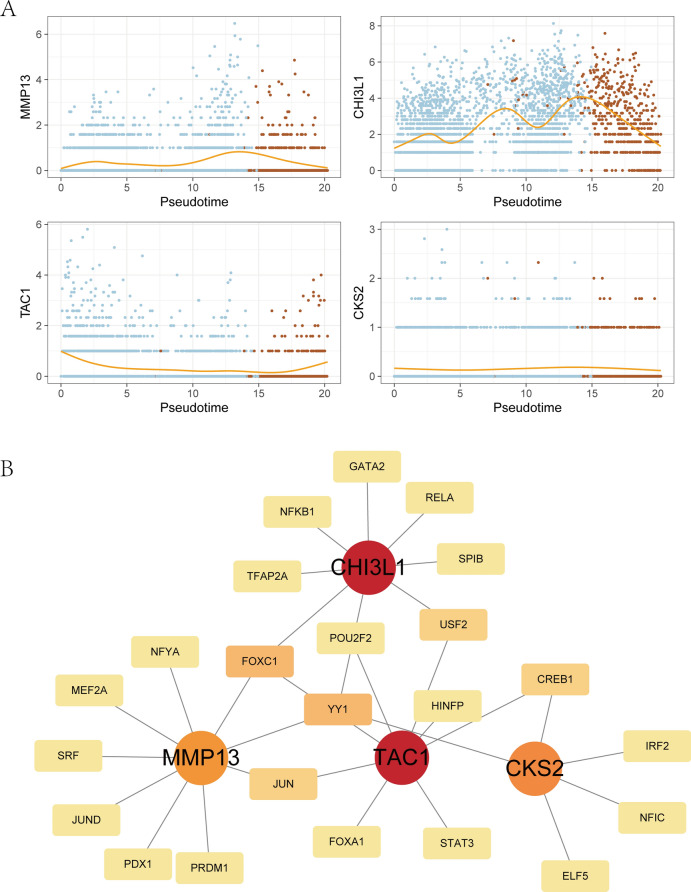
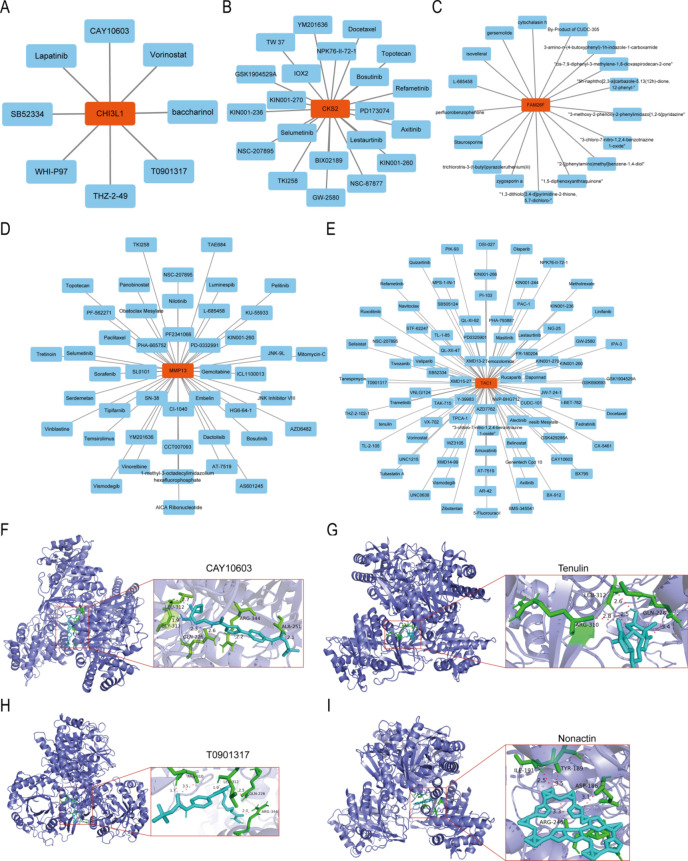
The mechanism by which chondrocytes respond to mechanical stress in joints significantly affects the balance and function of cartilage. This study aims to characterize osteoarthritis-associated chondrocyte subpopulations and key gene targets for regulatory drugs. To begin, single-cell and transcriptome datasets were obtained from the Gene Expression Omnibus (GEO) database. Cell communication and pseudo-temporal analysis, as well as High-dimensional Weighted Gene Co-expression Network Analysis (hdWGCNA), were conducted on the single-cell data to identify key chondrocyte subtypes and module genes. Subsequently, Consensus Cluster Plus analysis was utilized to identify distinct disease subgroups within the osteoarthritis (OA) training dataset based on the key module genes. Furthermore, differential gene expression analysis and GO/KEGG pathway enrichment analysis were performed on the identified subgroups. To screen for hub genes associated with OA, a combination of 10 machine learning algorithms and 113 algorithm compositions was integrated. Additionally, the immune and pathway scores of the training dataset samples were evaluated using the ESTIMATE, MCP-counter, and ssGSEA algorithms to establish the relationship between the hub genes and immune and pathways. Following this, a network depicting the interaction between the hub genes and transcription factors was constructed based on the Network Analyst database. Moreover, the hub genes were subjected to drug prediction and molecular docking using the RNAactDrug database and AutoDockTools. Finally, real-time fluorescence quantitative PCR (RT-qPCR) was employed to detect the expression of hub genes in the plasma samples collected from osteoarthritis patients and healthy adults. In the OA sample, there is a significant increase in the proportion of prehypertrophic chondrocytes (preHTC), particularly in subgroups 6, 7, and 9. We defined these subgroups as OA_PreHTC subgroups. The OA_PreHTC subgroup exhibits a higher communication intensity with proliferative-related pathways such as ANGPTL and TGF-β. Furthermore, two OA disease subgroups were identified in the training set samples. This led to the identification of 411 differentially expressed genes (DEGs) related to osteoarthritis, 2485 DEGs among subgroups, as well as 238 intersecting genes and 5 hub genes (MMP13, FAM26F, CHI3L1, TAC1, and CKS2). RT-qPCR results indicate significant differences in the expression levels of five hub genes and their related TFs in the clinical blood samples of OA patients compared to the healthy control group (NC). Moreover, these five hub genes are positively associated with inflammatory pathways such as TNF-α, JAK-STAT3, and inflammatory response, while being negatively associated with proliferation pathways like WNT and KRAS. Additionally, the five hub genes are positively associated with neutrophils, activated CD4 T cell, gamma delta T cell, and regulatory T cell, while being negatively associated with CD56dim natural killer cell and Type 17T helper cell. Molecular docking results reveal that CAY10603, Tenulin, T0901317, and Nonactin exhibit high binding activity to CHI3L1, suggesting their potential as therapeutic drugs for OA. The OA_PreHTC subgroups plays a crucial role in the occurrence and development of osteoarthritis (OA). Five hub genes may exert their effects on OA through interactions with PreHTC cells, other chondrocytes, and immune cells, playing a role in inhibiting cell proliferation and stimulating inflammation, thus having high diagnostic value for OA. Additionally, CAY10603, Tenulin, T0901317, and Nonactin have potential therapeutic effects for OA patients.
软骨细胞对关节机械应力作出反应的机制显著影响软骨的平衡和功能。本研究旨在表征骨关节炎相关的软骨细胞亚群以及调节药物的关键基因靶点。首先,从基因表达综合数据库(GEO)获取单细胞和转录组数据集。对单细胞数据进行细胞通讯和伪时间分析以及高维加权基因共表达网络分析(hdWGCNA),以识别关键的软骨细胞亚型和模块基因。随后,利用一致性聚类加分析基于关键模块基因在骨关节炎(OA)训练数据集中识别不同的疾病亚组。此外,对识别出的亚组进行差异基因表达分析和GO/KEGG通路富集分析。为筛选与OA相关的枢纽基因,整合了10种机器学习算法和113种算法组合。另外,使用ESTIMATE、MCP-counter和ssGSEA算法评估训练数据集样本的免疫和通路得分,以建立枢纽基因与免疫及通路之间的关系。在此之后,基于网络分析数据库构建描绘枢纽基因与转录因子之间相互作用的网络。此外,使用RNAactDrug数据库和AutoDockTools对枢纽基因进行药物预测和分子对接。最后,采用实时荧光定量PCR(RT-qPCR)检测从骨关节炎患者和健康成年人采集的血浆样本中枢纽基因的表达。在OA样本中,前肥大软骨细胞(preHTC)的比例显著增加,尤其是在亚组6、7和9中。我们将这些亚组定义为OA_PreHTC亚组。OA_PreHTC亚组与诸如血管生成素样蛋白(ANGPTL)和转化生长因子-β(TGF-β)等增殖相关通路表现出更高的通讯强度。此外,在训练集样本中识别出两个OA疾病亚组。这导致识别出411个与骨关节炎相关的差异表达基因(DEG)、亚组间2485个DEG,以及238个交集基因和5个枢纽基因(基质金属蛋白酶13(MMP13)、家族性26F成员(FAM26F)、几丁质酶3样蛋白1(CHI3L1)、速激肽原1(TAC1)和细胞周期蛋白依赖性激酶亚基2(CKS2))。RT-qPCR结果表明,与健康对照组(NC)相比,OA患者临床血样中五个枢纽基因及其相关转录因子的表达水平存在显著差异。此外,这五个枢纽基因与诸如肿瘤坏死因子-α(TNF-α)、JAK-STAT3等炎症通路以及炎症反应呈正相关,而与诸如WNT和KRAS等增殖通路呈负相关。另外,这五个枢纽基因与中性粒细胞、活化的CD4 T细胞、γδ T细胞和调节性T细胞呈正相关,而与CD56dim自然杀伤细胞和17型辅助性T细胞呈负相关。分子对接结果显示,CAY10603、特努林、T0901317和诺纳菌素对CHI3L1表现出高结合活性,表明它们作为OA治疗药物的潜力。OA_PreHTC亚组在骨关节炎(OA)的发生和发展中起关键作用。五个枢纽基因可能通过与PreHTC细胞、其他软骨细胞和免疫细胞相互作用对OA发挥作用,在抑制细胞增殖和刺激炎症方面发挥作用,因此对OA具有较高的诊断价值。此外,CAY10603、特努林、T0901317和诺纳菌素对OA患者具有潜在治疗作用。