Wei Li-Qiang, Song Yi-Bei, Lan Dong, Miao Xue-Jing, Lin Chun-Yu, Yang Shu-Ting, Liu Deng-He, Chi Xiao-Jv
Department of Clinical Laboratory, The First Affiliated Hospital of Guangxi Medical University, Key Laboratory of Clinical Laboratory Medicine of Guangxi Department of Education, 6 Shuangyong Road, Nanning, 530021, Guangxi Zhuang Autonomous Region, China.
Department of Medical Oncology, The First Affiliated Hospital of Guangxi Medical University, 6 Shuangyong Road, Nanning, 530021, Guangxi Zhuang Autonomous Region, China.
Discov Oncol. 2024 Dec 21;15(1):819. doi: 10.1007/s12672-024-01714-6.
The relationship between gout and colorectal cancer (CRC) remains unclear, emphasizing the need for additional research to clarify the potential cumulative effect of gout on CRC development.
Leveraging a single nucleotide polymorphism-based genome-wide association study, the potential causal correlation between gout and CRC was initially analyzed using Mendelian randomization (MR). Subsequently, our analysis was expanded to include an assessment of patient survival, with the aim of evaluating the potential causal correlation between gout and CRC and the impact of gout on CRC survival outcomes.
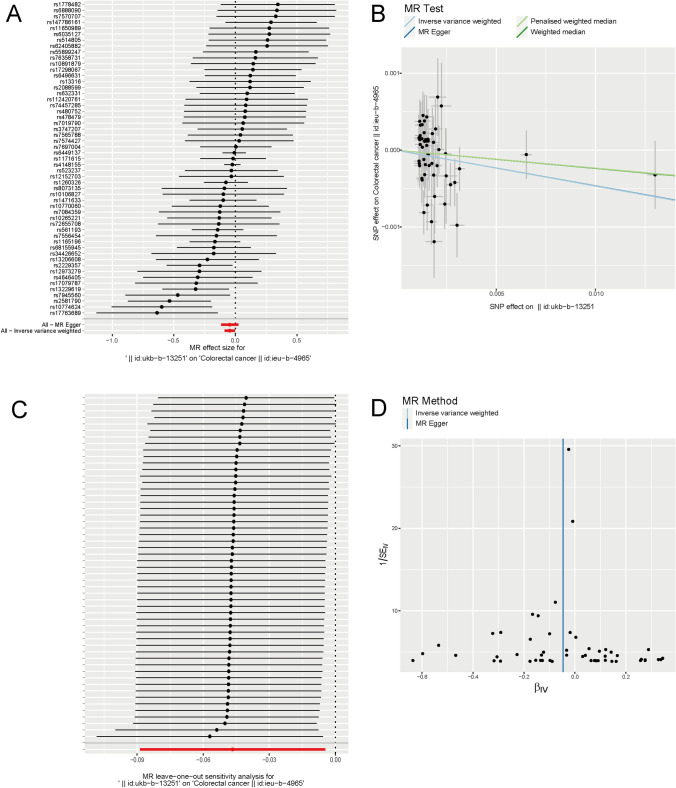
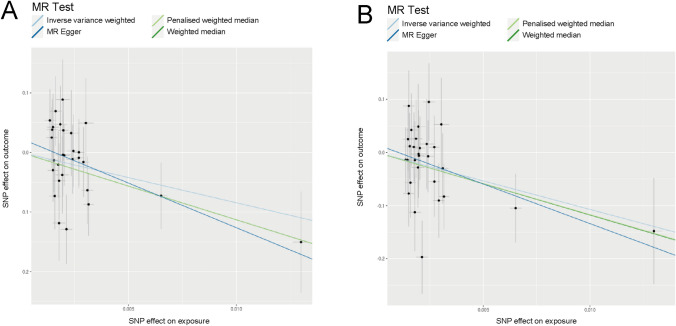
According to MR findings, a substantial relationship was observed between gout and the incidence of CRC when CRC was used as the outcome (OR = 0.954, 95% CI = 0.915-0.995). These results indicate a negative relationship between gout and the likelihood of developing CRC. In addition, when evaluating the overall survival (OS) or cancer-specific survival (CSS) of patients with CRC as outcomes, gout exhibited a significant relationship with survival. The inverse variance weighting approach demonstrated a progressive enhancement in CRC survival with the cumulative impact of gout (OS: OR = 2.000 × 10, 95% CI = 1.560 × 10-0.292; CSS: OR = 2.200 × 10, 95% CI = 4.660 × 10-0.104).
As gout accumulates, it exerts an inhibitory influence on CRC, indicating a potential protective effect. This study provides robust evidence that can guide the development of future clinical treatment approaches and research priorities.
痛风与结直肠癌(CRC)之间的关系仍不明确,这凸显了开展更多研究以阐明痛风对CRC发生发展潜在累积效应的必要性。
利用基于单核苷酸多态性的全基因组关联研究,最初采用孟德尔随机化(MR)分析痛风与CRC之间的潜在因果关系。随后,我们将分析扩展至包括对患者生存情况的评估,旨在评估痛风与CRC之间的潜在因果关系以及痛风对CRC生存结局的影响。
根据MR研究结果,以CRC作为结局时,观察到痛风与CRC发病率之间存在显著关联(OR = 0.954,95% CI = 0.915 - 0.995)。这些结果表明痛风与患CRC的可能性呈负相关。此外,当以CRC患者的总生存期(OS)或癌症特异性生存期(CSS)作为结局进行评估时,痛风与生存情况存在显著关联。逆方差加权法显示,随着痛风的累积影响,CRC生存率逐渐提高(OS:OR = 2.000 × 10,95% CI = 1.560 × 10 - 0.292;CSS:OR = 2.200 × 10,95% CI = 4.660 × 10 - 0.104)。
随着痛风的累积,它对CRC产生抑制作用,表明可能具有保护作用。本研究提供了有力证据,可指导未来临床治疗方法的开发和研究重点。