Department of Urology/Institute of Urology, West China Hospital, Sichuan University, Chengdu, China.
Department of Oncology, West China Hospital, Sichuan University, Chengdu, China.
BMJ. 2023 Apr 5;381:e071609. doi: 10.1136/bmj-2022-071609.
To evaluate the quality of evidence, potential biases, and validity of all available studies on dietary sugar consumption and health outcomes.
Umbrella review of existing meta-analyses.
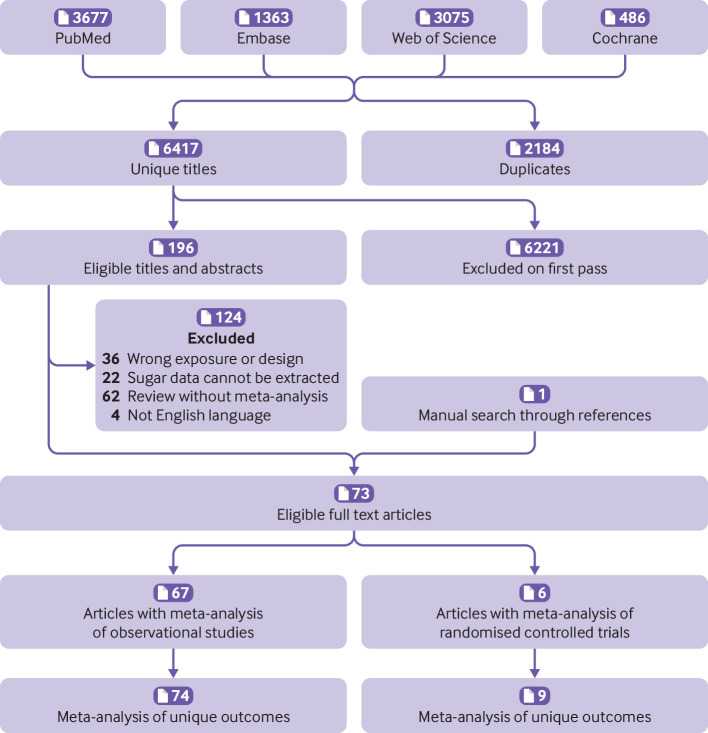
PubMed, Embase, Web of Science, Cochrane Database of Systematic Reviews, and hand searching of reference lists.
Systematic reviews and meta-analyses of randomised controlled trials, cohort studies, case-control studies, or cross sectional studies that evaluated the effect of dietary sugar consumption on any health outcomes in humans free from acute or chronic diseases.
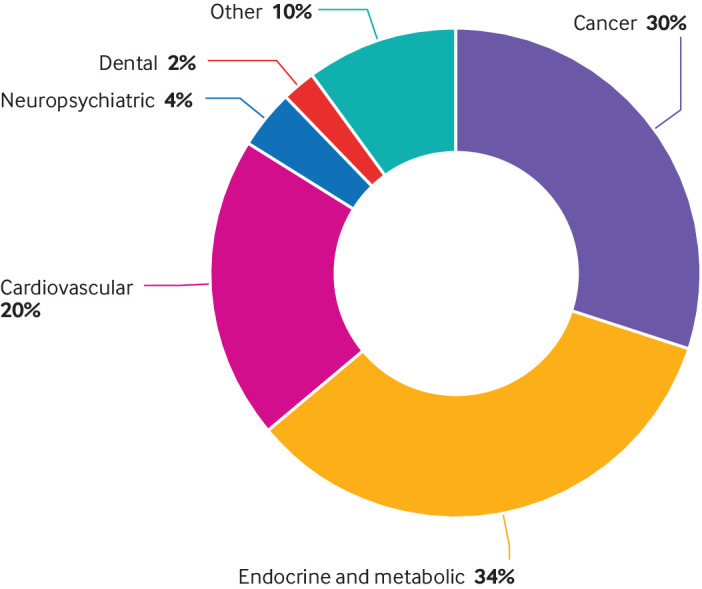
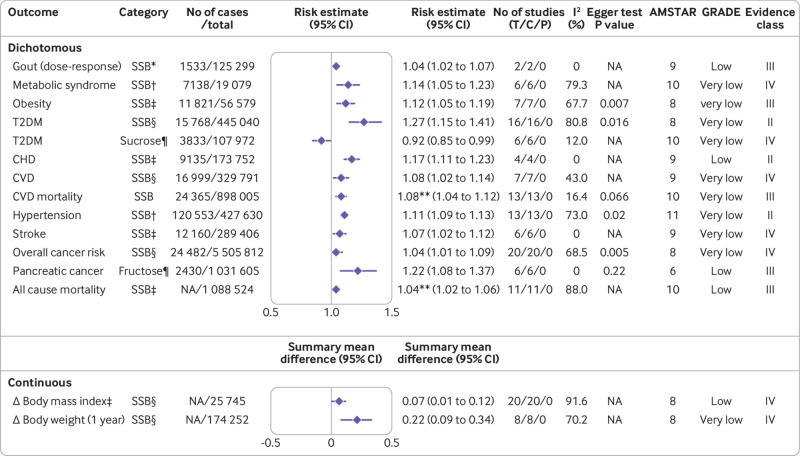
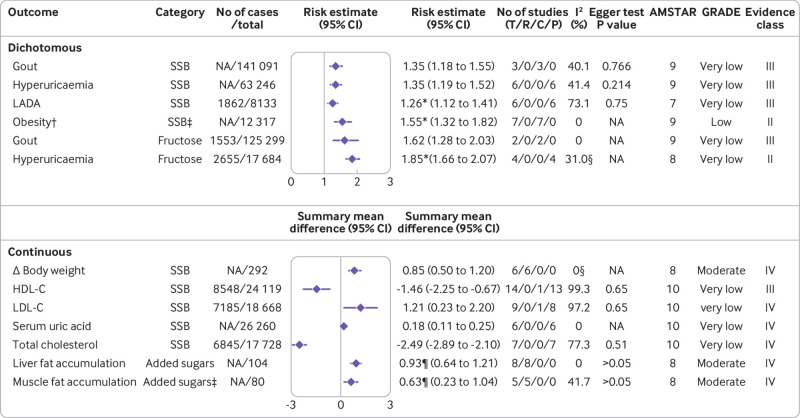
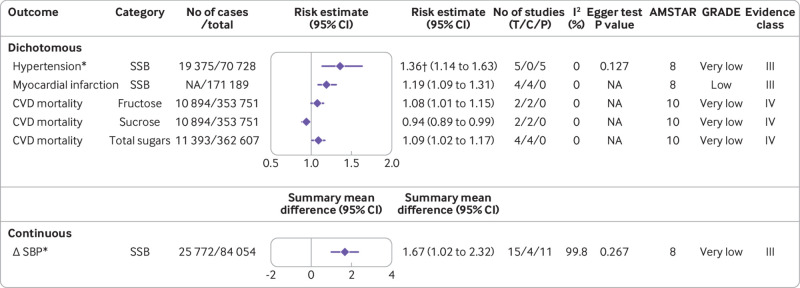
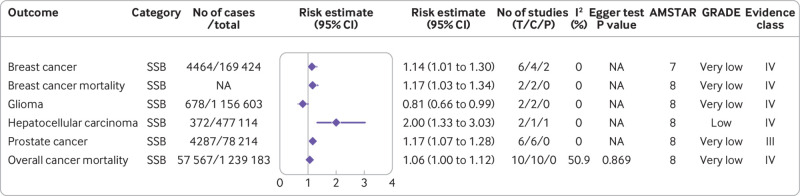
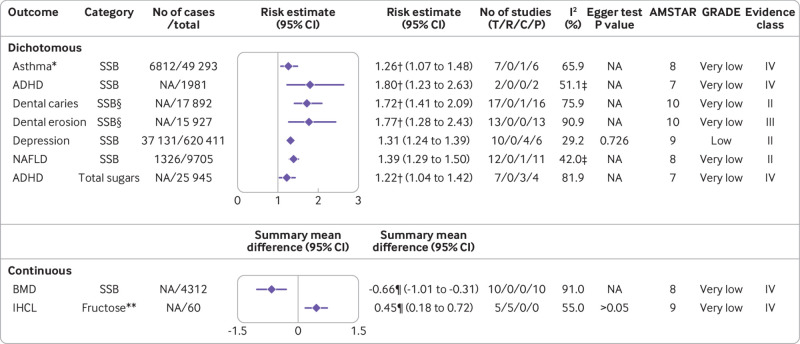
The search identified 73 meta-analyses and 83 health outcomes from 8601 unique articles, including 74 unique outcomes in meta-analyses of observational studies and nine unique outcomes in meta-analyses of randomised controlled trials. Significant harmful associations between dietary sugar consumption and 18 endocrine/metabolic outcomes, 10 cardiovascular outcomes, seven cancer outcomes, and 10 other outcomes (neuropsychiatric, dental, hepatic, osteal, and allergic) were detected. Moderate quality evidence suggested that the highest versus lowest dietary sugar consumption was associated with increased body weight (sugar sweetened beverages) (class IV evidence) and ectopic fatty accumulation (added sugars) (class IV evidence). Low quality evidence indicated that each serving/week increment of sugar sweetened beverage consumption was associated with a 4% higher risk of gout (class III evidence) and each 250 mL/day increment of sugar sweetened beverage consumption was associated with a 17% and 4% higher risk of coronary heart disease (class II evidence) and all cause mortality (class III evidence), respectively. In addition, low quality evidence suggested that every 25 g/day increment of fructose consumption was associated with a 22% higher risk of pancreatic cancer (class III evidence).
High dietary sugar consumption is generally more harmful than beneficial for health, especially in cardiometabolic disease. Reducing the consumption of free sugars or added sugars to below 25 g/day (approximately 6 teaspoons/day) and limiting the consumption of sugar sweetened beverages to less than one serving/week (approximately 200-355 mL/week) are recommended to reduce the adverse effect of sugars on health.
PROSPERO CRD42022300982.
评估所有关于饮食糖摄入与健康结果的研究的证据质量、潜在偏倚和有效性。
现有荟萃分析的伞式审查。
PubMed、Embase、Web of Science、Cochrane 系统评价数据库和参考文献列表的手工检索。
随机对照试验、队列研究、病例对照研究或横断面研究的系统评价和荟萃分析,评估饮食糖摄入对无急性或慢性疾病的人类任何健康结果的影响。
搜索确定了 73 项荟萃分析和 83 项健康结果,来自 8601 篇独特的文章,包括观察性研究荟萃分析中的 74 项独特结果和随机对照试验荟萃分析中的 9 项独特结果。饮食糖摄入与 18 种内分泌/代谢结果、10 种心血管结果、7 种癌症结果和 10 种其他结果(神经精神、牙科、肝脏、骨骼和过敏)之间存在显著的有害关联。高 versus 低饮食糖摄入与体重增加(含糖饮料)(IV 级证据)和异位脂肪堆积(添加糖)(IV 级证据)相关的中等质量证据表明。低质量证据表明,每周每增加一份/份含糖饮料的摄入量,痛风的风险增加 4%(III 级证据),每天每增加 250 毫升含糖饮料的摄入量,冠心病(II 级证据)和全因死亡率(III 级证据)的风险分别增加 17%和 4%。此外,低质量证据表明,每天增加 25 克果糖的摄入量与胰腺癌的风险增加 22%(III 级证据)相关。
高饮食糖摄入通常对健康弊大于利,尤其是在心血管代谢疾病方面。建议将游离糖或添加糖的摄入量减少到每天 25 克以下(约 6 茶匙/天),并将含糖饮料的摄入量限制在每周不超过一份(约 200-355 毫升/周),以减少糖对健康的不利影响。
PROSPERO CRD42022300982。