Ye Ya-Mei, Lin Yong, Sun Fang, Yang Wen-Yan, Zhou Lina, Lin Chun, Pan Chen
Mengchao Hepatobiliary Hospital of Fujian Medical University, Fuzhou, Fujian, 350000, China.
Virol J. 2024 Dec 23;21(1):333. doi: 10.1186/s12985-024-02599-1.
A multivariate predictive model was constructed using baseline and 12-week clinical data to evaluate the rate of clearance of hepatitis B surface antigen (HBsAg) at the 48-week mark in patients diagnosed with chronic hepatitis B who are receiving treatment with pegylated interferon α (PEG-INFα).
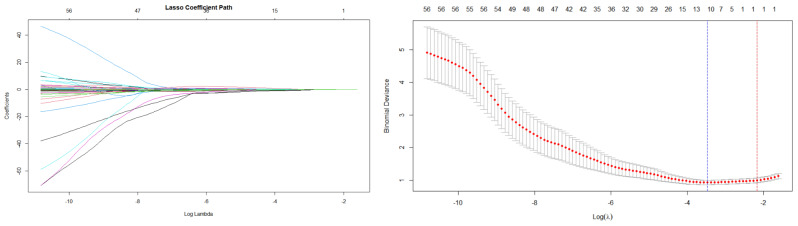
The study cohort comprised CHB patients who received pegylated interferon treatment at Mengchao Hepatobiliary Hospital, Fujian Medical University, between January 2019 and April 2024. Predictor variables were identified (LASSO), followed by multivariate analysis and logistic regression analysis. Subsequently, predictive models were developed via logistic regression, random forest (RF), gradient boosting decision tree (GBDT), extreme gradient boosting (XGBoost), and support vector machine (SVM) algorithms. The efficacy of these models was assessed through various performance metrics, including the area under the receiver operating characteristic curve (AUC), sensitivity, specificity, and F1 score.
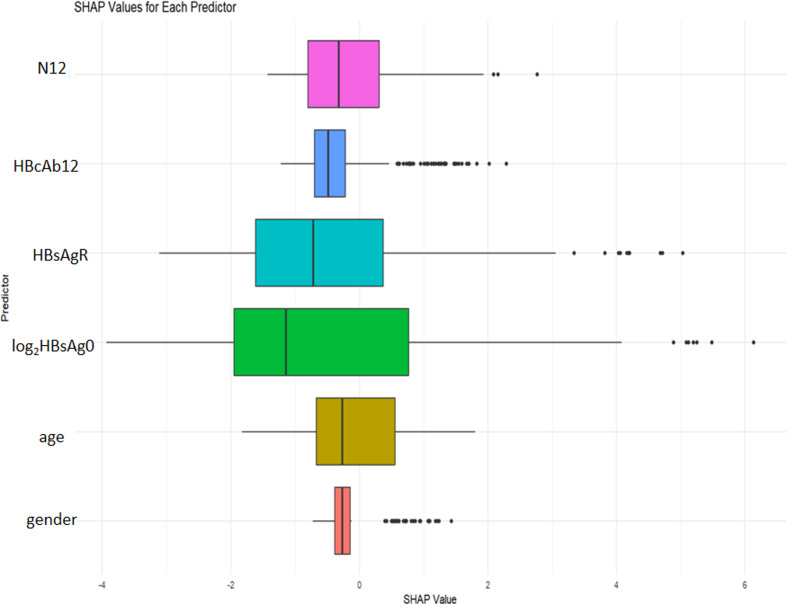
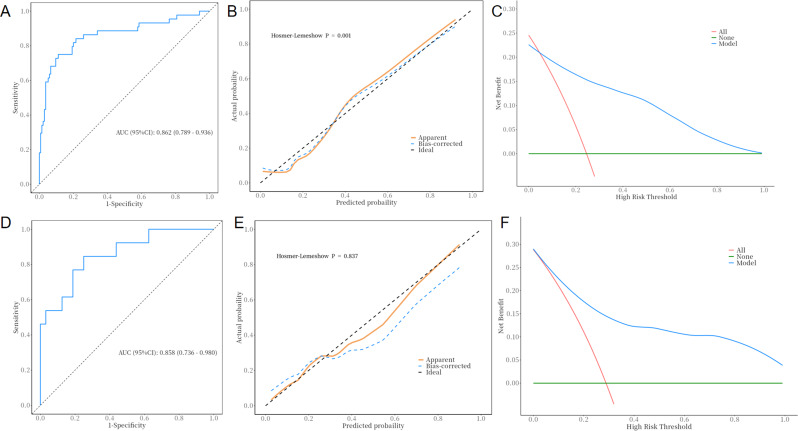
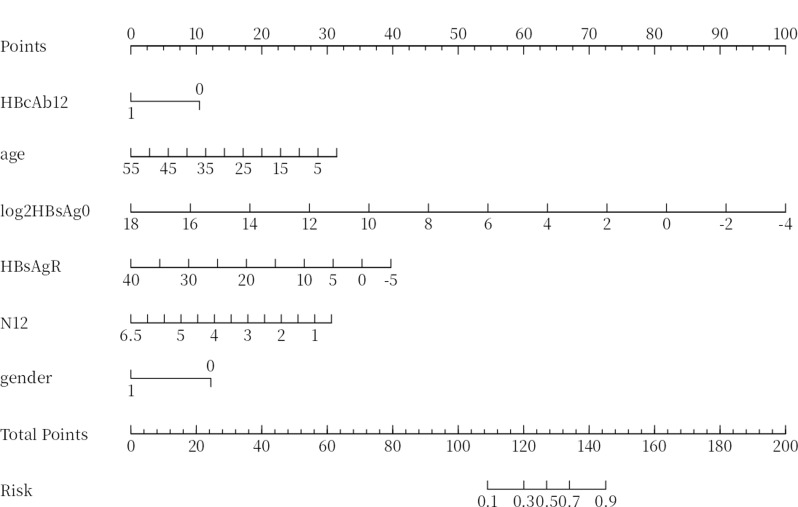
This study included a total of 224 individuals diagnosed with chronic hepatitis B. The variables baseline log(HBsAg), gender, age, neutrophil count at week 12, HBsAg decline rate at week 12, and HBcAb at week 12 were closely associated with functional cure and were included in the predictive model. In the validation term, the logistic regression model had an AUC of 0.858, which was better than that of the other machine learning models (AUC = 0.858,F1 = 0.753). Consequently, this model was selected for the development of the predictive tool.
The combined use of the baseline log(HBsAg) value, HBsAg decline rate at week 12, gender, neutrophil count at week 12, and age can serve as a foundational predicting model for anticipating the clearance of HBsAg in individuals with chronic hepatitis B who are receiving PEG-INFα therapy.
构建了一个多变量预测模型,使用基线和12周临床数据来评估接受聚乙二醇化干扰素α(PEG-INFα)治疗的慢性乙型肝炎患者在48周时乙肝表面抗原(HBsAg)的清除率。
研究队列包括2019年1月至2024年4月在福建医科大学孟超肝胆医院接受聚乙二醇化干扰素治疗的慢性乙型肝炎患者。识别预测变量(LASSO),随后进行多变量分析和逻辑回归分析。随后,通过逻辑回归、随机森林(RF)、梯度提升决策树(GBDT)、极端梯度提升(XGBoost)和支持向量机(SVM)算法开发预测模型。通过各种性能指标评估这些模型的有效性,包括受试者操作特征曲线下面积(AUC)、敏感性、特异性和F1分数。
本研究共纳入224例慢性乙型肝炎患者。变量基线log(HBsAg)、性别、年龄、第12周中性粒细胞计数、第12周HBsAg下降率和第12周HBcAb与功能性治愈密切相关,并纳入预测模型。在验证期,逻辑回归模型的AUC为0.858,优于其他机器学习模型(AUC = 0.858,F1 = 0.753)。因此,选择该模型来开发预测工具。
联合使用基线log(HBsAg)值、第12周HBsAg下降率、性别、第12周中性粒细胞计数和年龄,可作为预测接受PEG-INFα治疗的慢性乙型肝炎患者HBsAg清除情况的基础预测模型。