Wei Wei, Fang Jun, Yang Baozhong, Cui Chenlong, Wei Jiacheng, Xue Yating
School of Anesthesia, Shanxi Medical University, Shanxi, China.
Department of Anesthesiology, Taiyuan Central Hospital, Taiyuan, China.
Korean J Pain. 2025 Jan 1;38(1):14-28. doi: 10.3344/kjp.24244. Epub 2024 Dec 23.
Diabetic pain patients have increased pain at night. Exosomes can relieve neuropathic pain. This study aimed to investigate the efficacy of exosome administration at different time points in relieving diabetic neuropathic pain (DNP) in rats.
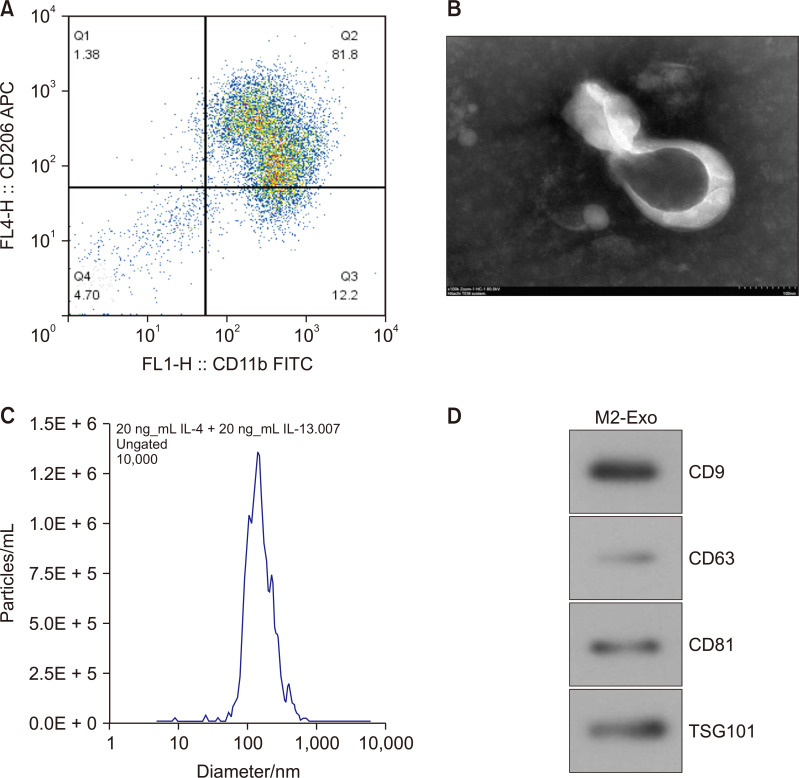
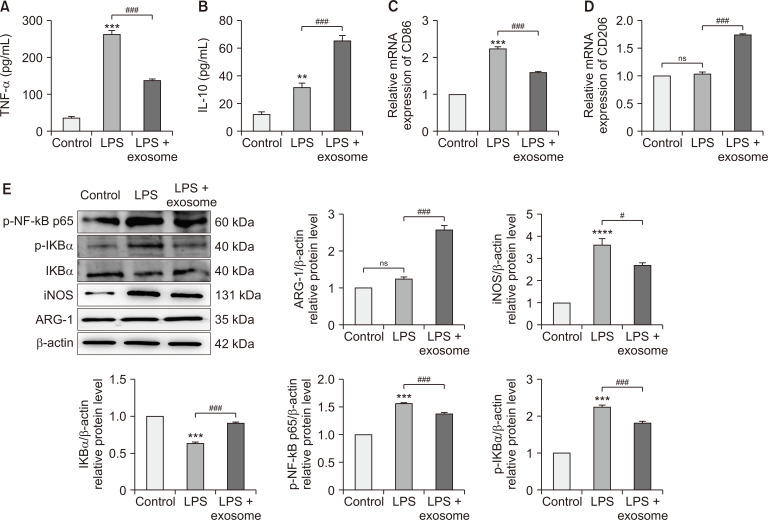
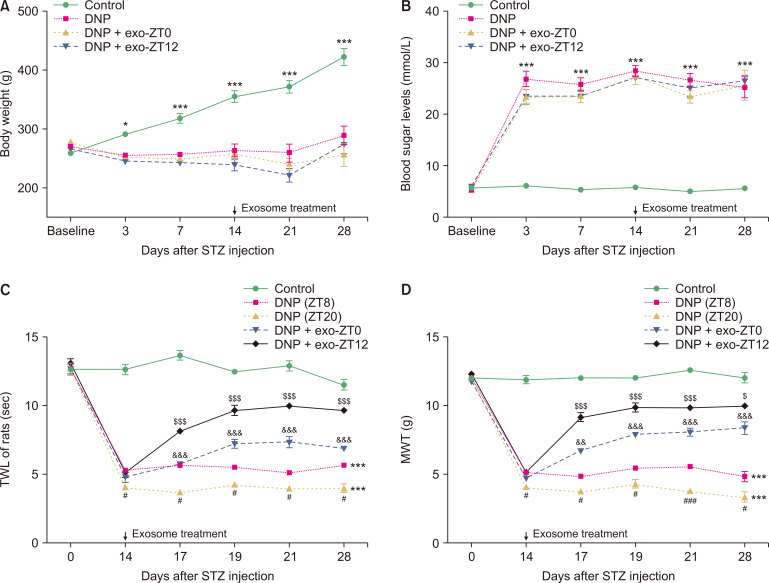
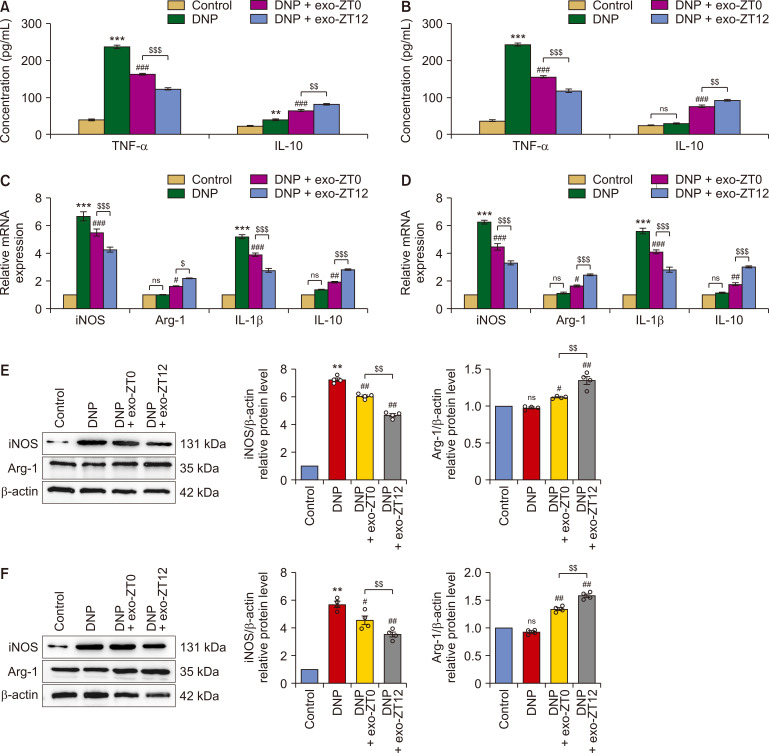
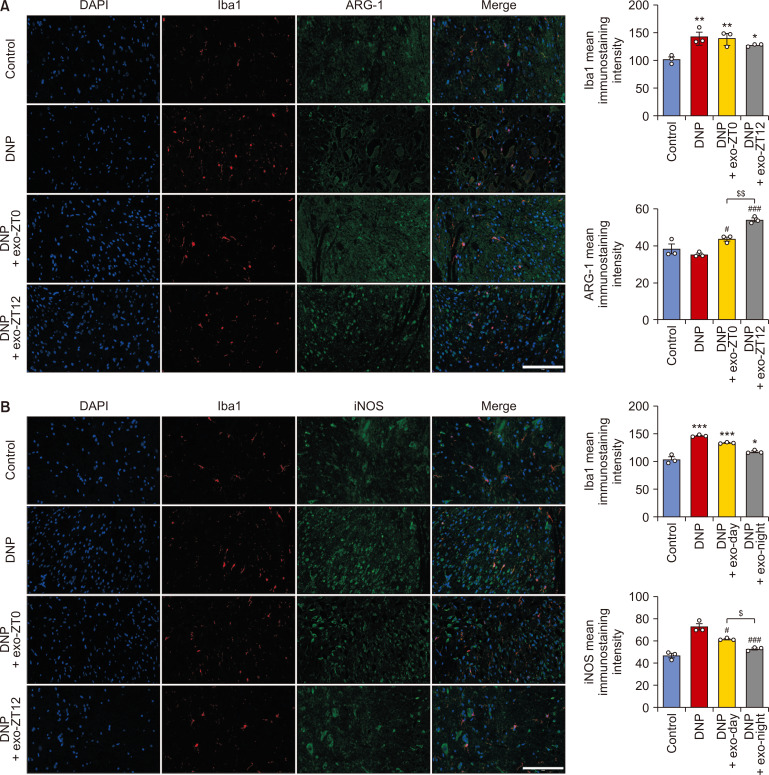
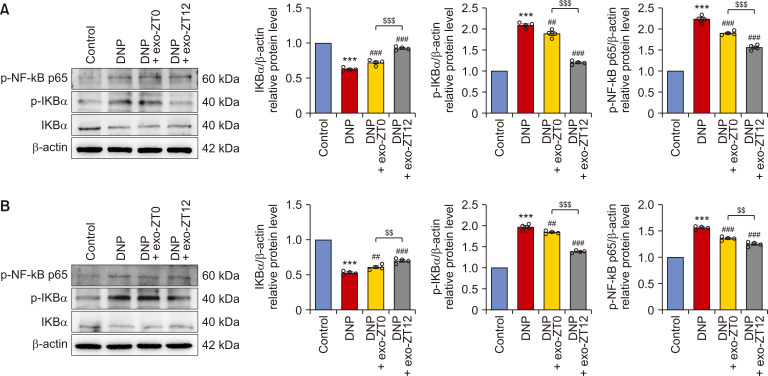
M2 macrophages from bone marrow were induced in mice and exosomes were extracted. A diabetic rat model was induced using streptozotocin, with the mechanical withdrawal threshold (MWT) of the rats being measured at ≤ 80% of the basal value after 14 days, indicating successful construction of the DNP rat model. Exosomes were administered on three consecutive days at ZT0 (zeitgeber time) and ZT12. Parameters including blood glucose levels, body weight, MWT, and thermal withdrawal latency (TWL) were assessed in the rats. The lumbar spinal cord of rats was examined on days 21 and 28 to measure inflammatory factors and observe the expression of M1 and M2 microglia. Furthermore, microglia were exposed to lipopolysaccharide (LPS) and LPS + exosomes in a controlled setting to assess alterations in microglia phenotype involving the NF-kB p65 and IKBα inflammatory signaling pathways.
The findings revealed that administration of exosomes during the rat resting period at ZT12 resulted in increased MWT and TWL, as well as a shift in microglia polarization towards the M2 phenotype. analysis indicated that exosomes influenced microglia polarization and suppressed the phosphorylation of NF-kB p65 and IKBα.
Temporal therapy with exosomes effectively reduces pain in DNP rats by polarizing microglia and affecting NF-kB p65 and IKBα signaling pathways.
糖尿病疼痛患者夜间疼痛加剧。外泌体可缓解神经性疼痛。本研究旨在探讨在不同时间点给予外泌体对缓解大鼠糖尿病性神经病变(DNP)疼痛的疗效。
在小鼠中诱导骨髓来源的M2巨噬细胞并提取外泌体。使用链脲佐菌素诱导建立糖尿病大鼠模型,14天后测量大鼠的机械性缩足阈值(MWT),当该阈值≤基础值的80%时,表明成功构建了DNP大鼠模型。在生物钟时间(ZT)0和ZT12连续三天给予外泌体。评估大鼠的血糖水平、体重、MWT和热缩足潜伏期(TWL)等参数。在第21天和第28天检查大鼠的腰脊髓,以测量炎症因子并观察M1和M2小胶质细胞的表达。此外,在可控条件下将小胶质细胞暴露于脂多糖(LPS)和LPS +外泌体中,以评估涉及NF-κB p65和IκBα炎症信号通路的小胶质细胞表型变化。
研究结果显示,在ZT12大鼠休息期给予外泌体可使MWT和TWL增加,并且小胶质细胞极化向M2表型转变。分析表明,外泌体影响小胶质细胞极化并抑制NF-κB p65和IκBα的磷酸化。
外泌体时间疗法通过使小胶质细胞极化并影响NF-κB p65和IκBα信号通路,有效减轻DNP大鼠的疼痛。