Yuan Jiaqi, Fei Yue
Department of Anesthesiology, Sir Run Run Shaw Hospital, Hangzhou, Zhejiang, China.
Department of Anesthesiology, Sir Run Run Shaw Hospital, 3 East Qingchun Road, Jianggan District, Hangzhou, Zhejiang, China.
Open Med (Wars). 2022 May 13;17(1):897-906. doi: 10.1515/med-2022-0480. eCollection 2022.
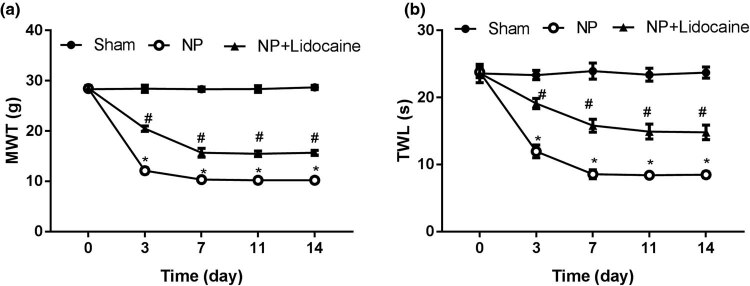
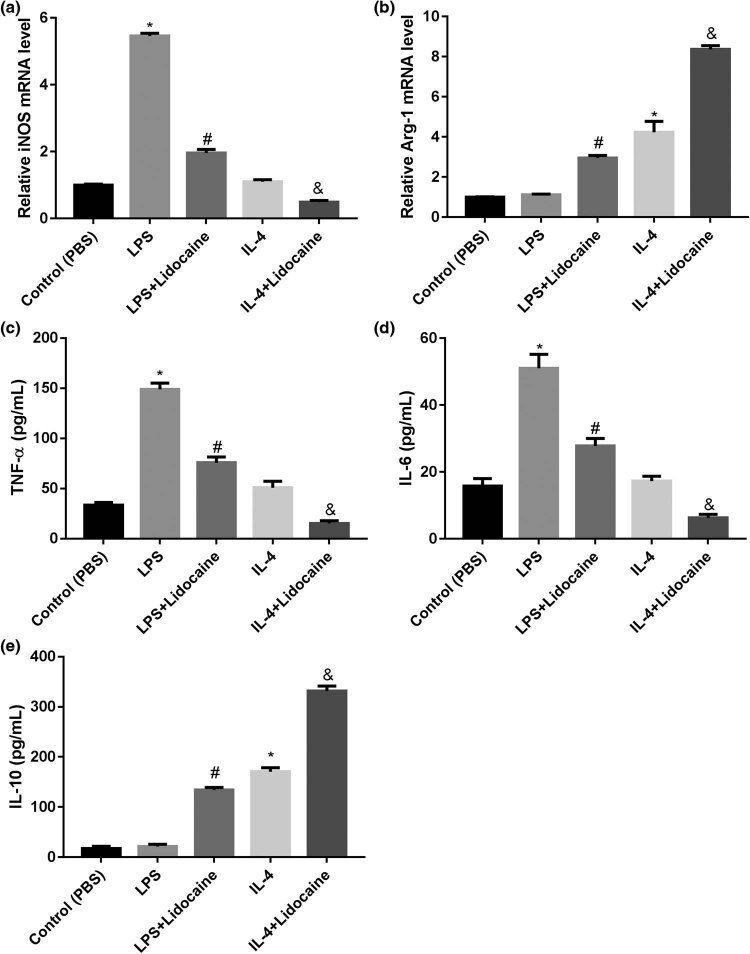
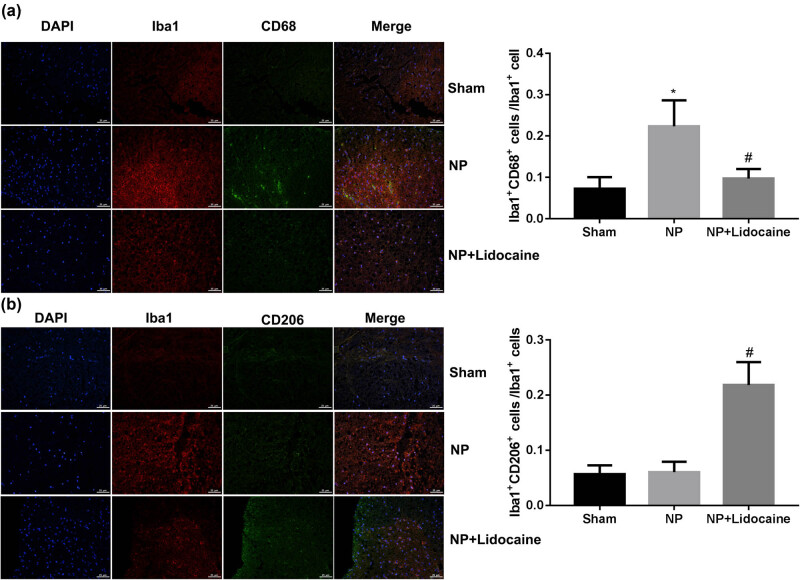
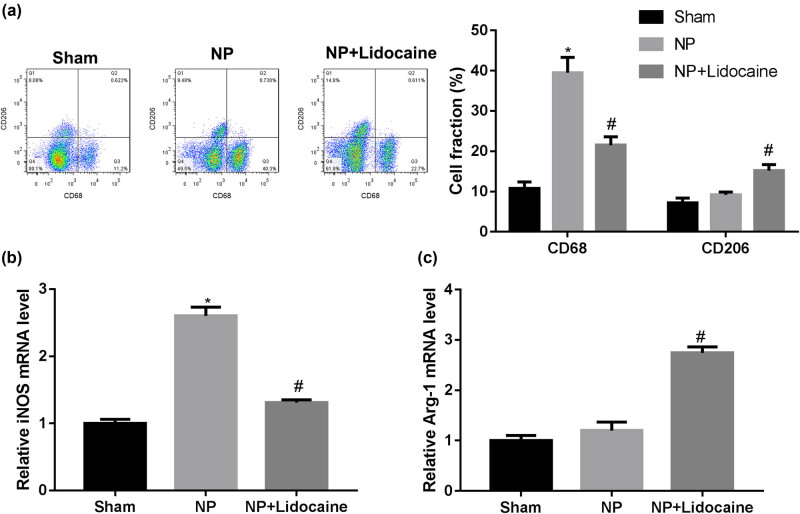
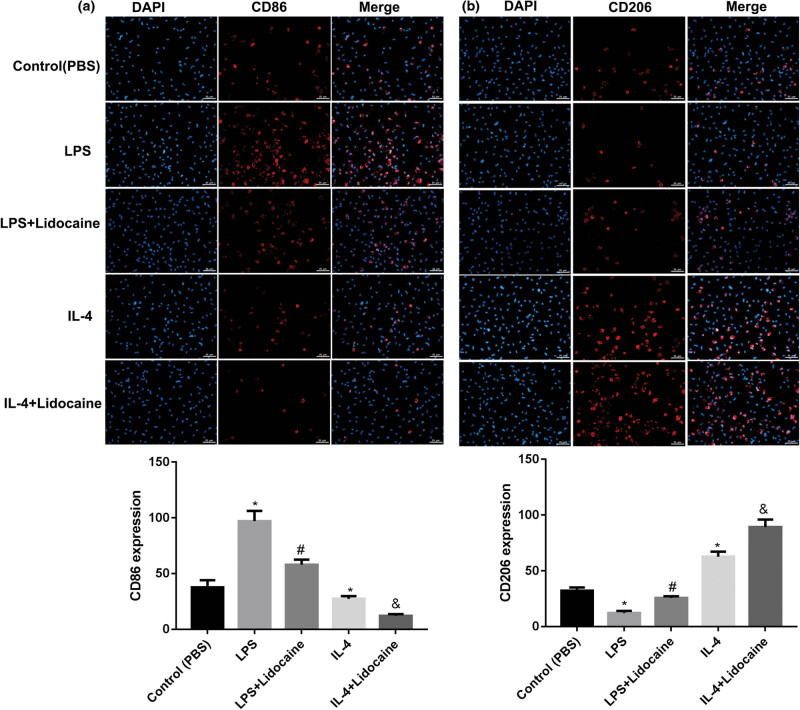
This study is intended to explore the mechanism that lidocaine ameliorates chronic constriction injury (CCI)-induced neuropathic pain (NP) related to the polarization of M1 and M2 microglia. CCI rats were established by surgery to induce NP. The mechanical withdrawal threshold (MWT) and thermal withdrawal latency (TWL) of rats were determined. Microglial line HAPI cells were polarized into M1 or M2 cells using lipopolysaccharide (LPS) or interleukin (IL)-4, respectively. Immunofluorescence staining was performed to determine the Iba1/CD86- and Iba1/CD206-positive cells. Markers of M1 and M2 microglia were assessed using flow cytometry. Real-time polymerase chain reaction and enzyme-linked immunosorbent assay were performed to detect the level of mRNA and inflammatory factors. Lidocaine ameliorates CCI-induced NP, evidenced by the markedly increased values of MWT and TWL in NP rats. Lidocaine inhibited M1 microglia polarization but promoted M2 microglia polarization in a rat model of CCI-induced NP. Besides, in the experiment, lidocaine regulated M1/M2 polarization in LPS- or IL-4-treated HAPI microglia. Lidocaine ameliorates CCI-induced NP by regulating M1/M2 microglia polarization. This study investigated the biological role of lidocaine in regulating NP in rats, which may be helpful for revealing the pathogenic mechanisms of NP and provide a potential therapeutic factor.
本研究旨在探讨利多卡因改善慢性缩窄性损伤(CCI)诱导的与M1和M2小胶质细胞极化相关的神经性疼痛(NP)的机制。通过手术建立CCI大鼠模型以诱导NP。测定大鼠的机械缩足阈值(MWT)和热缩足潜伏期(TWL)。分别使用脂多糖(LPS)或白细胞介素(IL)-4将小胶质细胞系HAPI细胞极化为M1或M2细胞。进行免疫荧光染色以确定Iba1/CD86和Iba1/CD206阳性细胞。使用流式细胞术评估M1和M2小胶质细胞的标志物。进行实时聚合酶链反应和酶联免疫吸附测定以检测mRNA和炎性因子水平。利多卡因改善CCI诱导的NP,NP大鼠的MWT和TWL值显著增加证明了这一点。在CCI诱导的NP大鼠模型中,利多卡因抑制M1小胶质细胞极化,但促进M2小胶质细胞极化。此外,在实验中,利多卡因调节LPS或IL-4处理的HAPI小胶质细胞中的M1/M2极化。利多卡因通过调节M1/M2小胶质细胞极化改善CCI诱导的NP。本研究调查了利多卡因在调节大鼠NP中的生物学作用,这可能有助于揭示NP的致病机制并提供一种潜在的治疗因素。