Arunima Aryashree, Niyakan Seyednami, Butler Samantha M, Clark Sabrina D, Pinson Anna, Kwak Doyoung, Qian Xiaoning, de Figueiredo Paul, van Schaik Erin J, Samuel James E
Department of Microbial Pathogenesis and Immunology, Texas A&M University Health Science Center, Bryan, TX 77807, USA.
Department of Electrical and Computer Engineering, Texas A&M University, College Station, TX 77843, USA.
Res Sq. 2024 Dec 11:rs.3.rs-5390645. doi: 10.21203/rs.3.rs-5390645/v1.
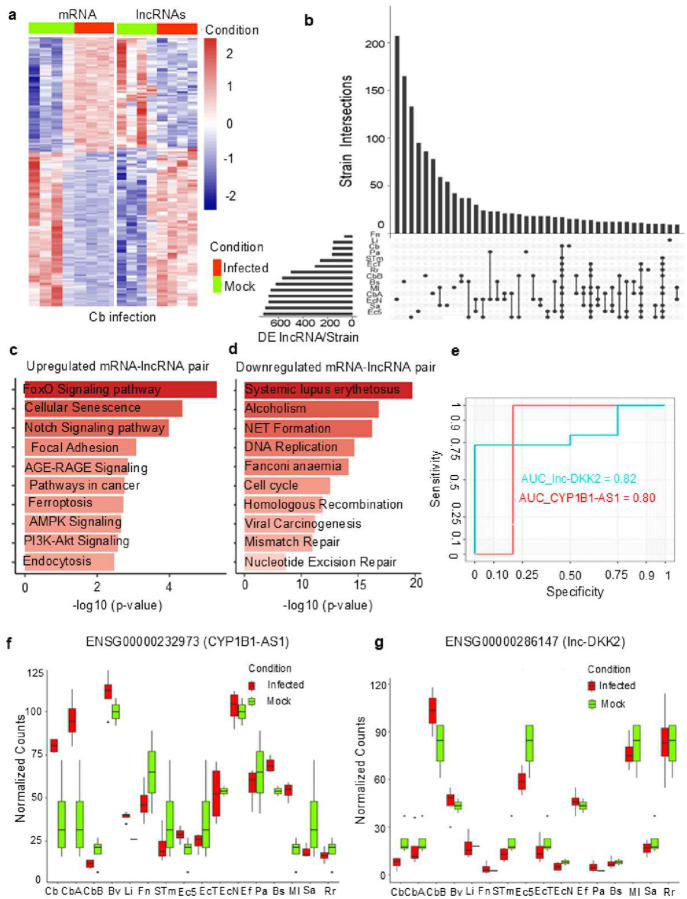
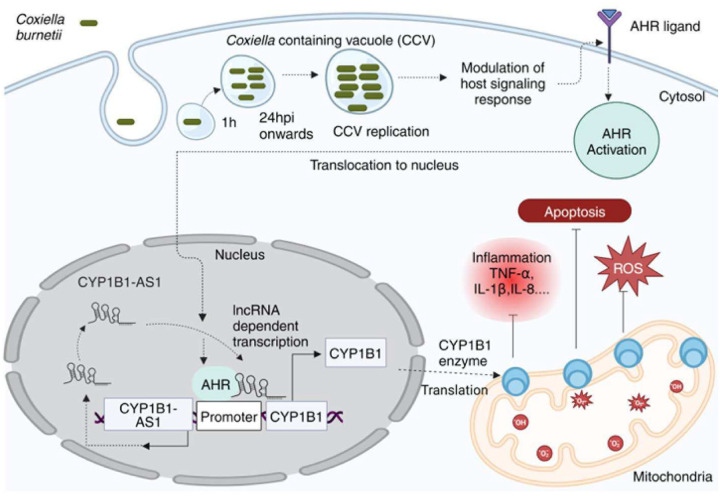
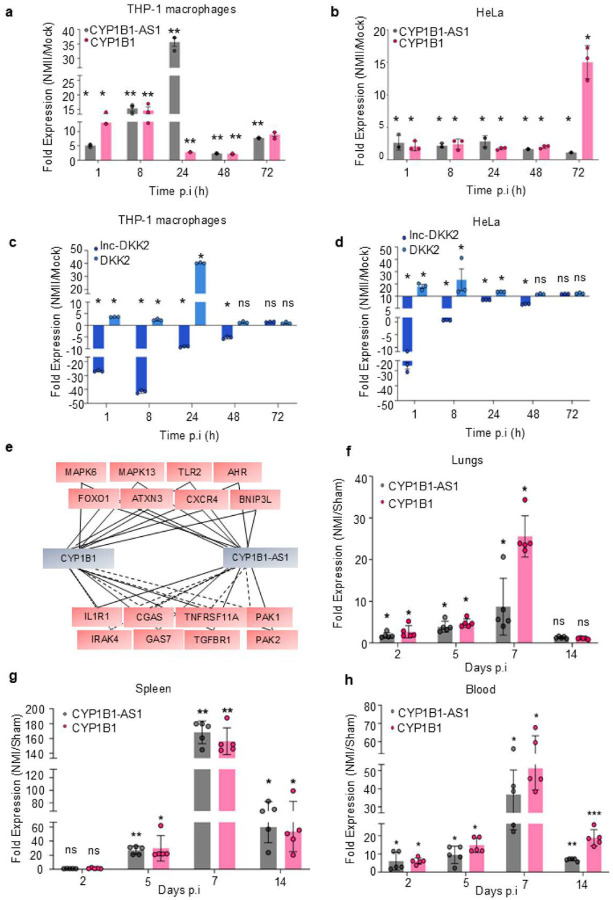
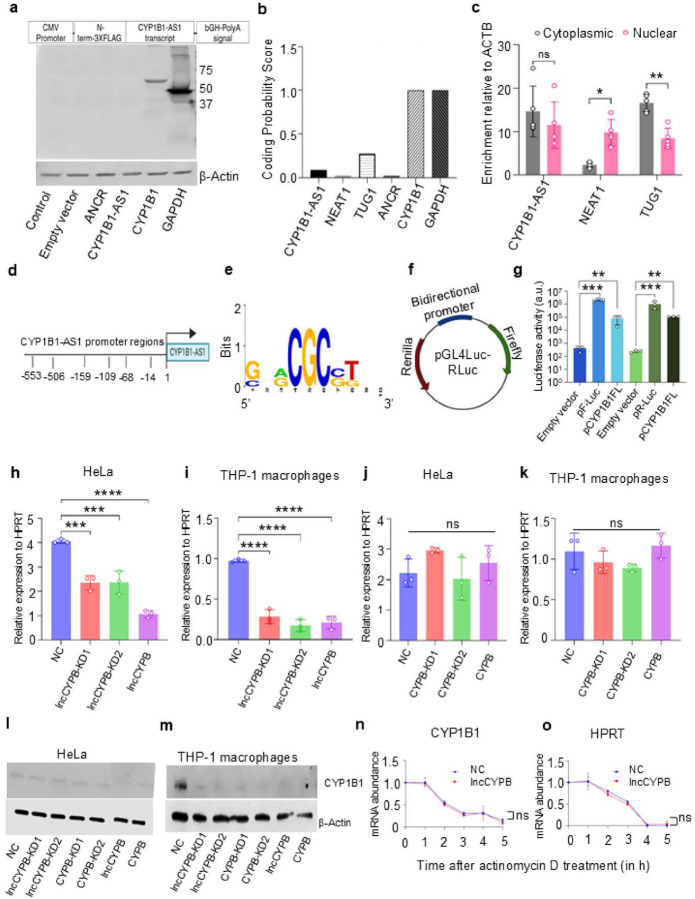
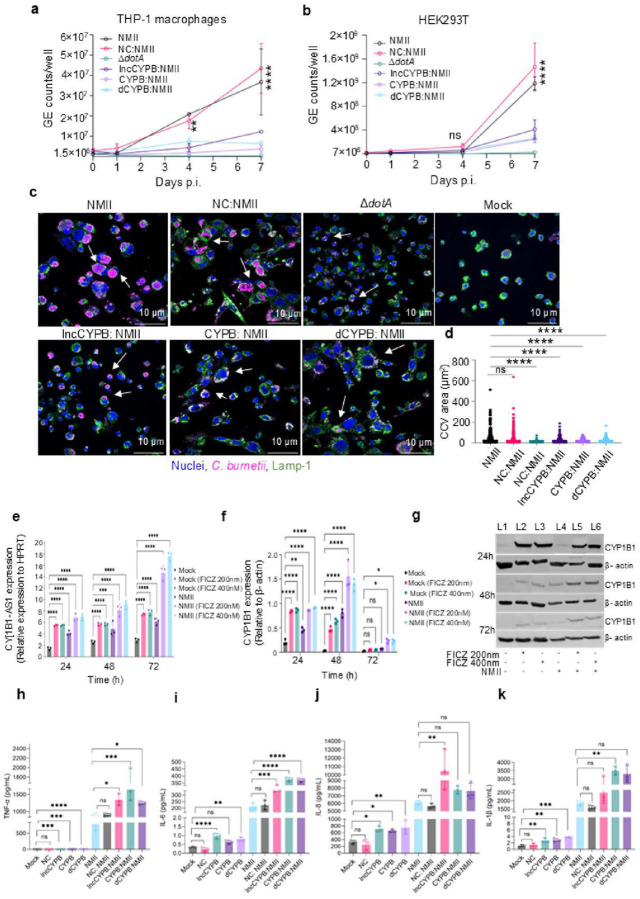
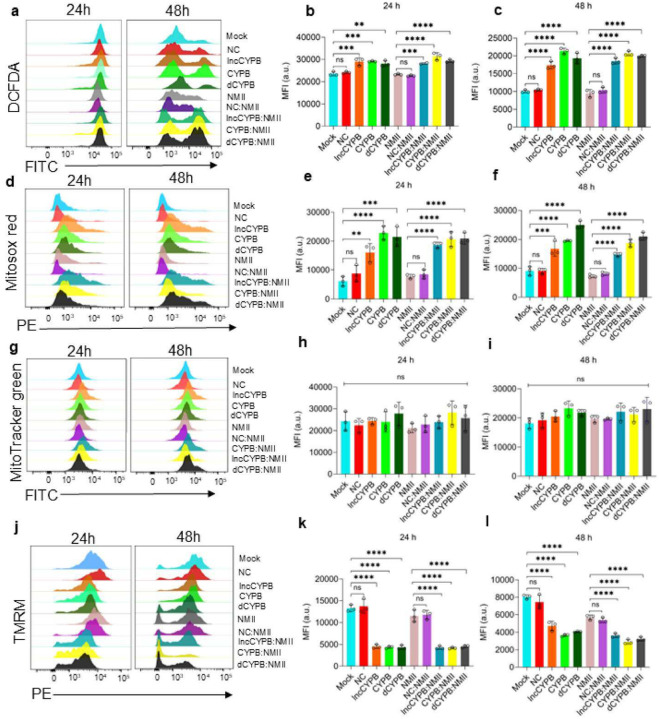
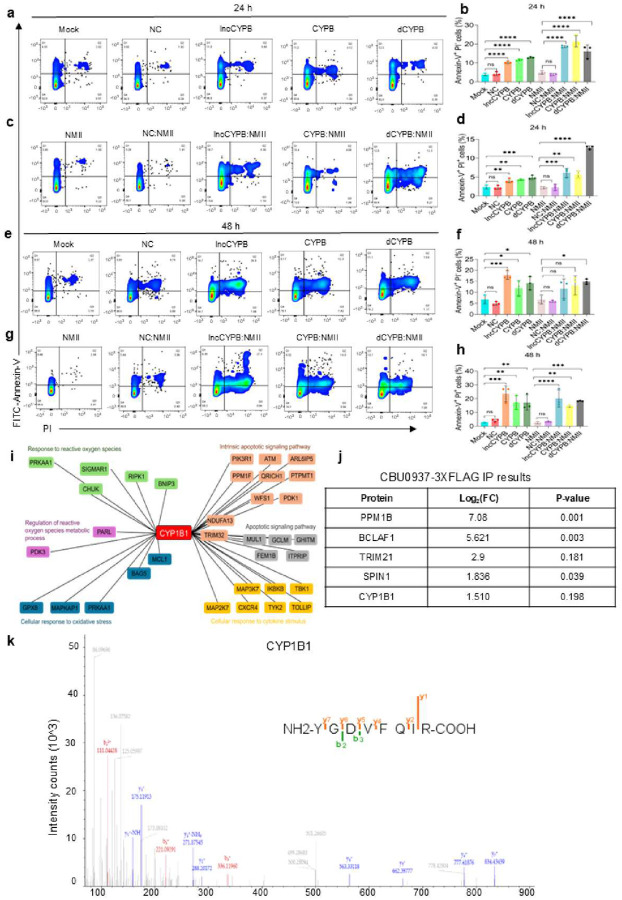
(Cb), the causative agent of Q fever, replicates within host macrophages by modulating immune responses through poorly understood mechanisms. Long non-coding RNAs (lncRNAs) are emerging as critical regulators of inflammation, yet their role in Cb pathogenesis remains largely unexplored. Here, we employed a global transcriptomic approach to identify lncRNAs specific to Cb infection in THP-1 derived macrophages, compared to 15 other microbial infections. CYP1B1-AS1 was uniquely regulated in a spatio-temporal manner during Cb infection. Promoter assays revealed that CYP1B1-AS1 is transcribed by AHR from a bidirectional promoter, enhancing CYP1B1 expression in . Inhibition of CYP1B1-AS1 and CYP1B1 increased reactive oxygen species (ROS), mitochondrial membrane depolarization, and apoptosis, suggesting their role in dampening host cell death. Additionally, immunoprecipitation followed by mass spectrometry identified the mitochondrially localized Cb effector CBU_0937 as an interactor of the CYP1B1 enzyme. These events facilitate Cb intracellular survival. Our findings identify CYP1B1-AS1 as a potential molecular target for combating Cb infection.
Q热的病原体伯氏考克斯体(Cb)通过尚不清楚的机制调节免疫反应,从而在宿主巨噬细胞内复制。长链非编码RNA(lncRNA)正成为炎症的关键调节因子,但其在Cb发病机制中的作用在很大程度上仍未得到探索。在这里,我们采用了一种全局转录组学方法,以鉴定与其他15种微生物感染相比,THP-1衍生巨噬细胞中Cb感染特有的lncRNA。CYP1B1-AS1在Cb感染期间以时空方式受到独特调控。启动子分析表明,CYP1B1-AS1由芳烃受体(AHR)从双向启动子转录而来,增强了CYP1B1在……中的表达。抑制CYP1B1-AS1和CYP1B1会增加活性氧(ROS)、线粒体膜去极化和细胞凋亡,表明它们在抑制宿主细胞死亡中发挥作用。此外,免疫沉淀后进行质谱分析,确定线粒体定位的Cb效应蛋白CBU_0937为CYP1B1酶的相互作用因子。这些事件促进了Cb在细胞内的存活。我们的研究结果确定CYP1B1-AS1是对抗Cb感染的潜在分子靶点。