Coatney John W, Krull Adam C, Gorden Patrick J, Shearer Jan, Humphrey Samuel, Olsen Steven, Plummer Paul J, Wilson-Welder Jennifer H
College of Veterinary Medicine, Iowa State University, Ames, IA, United States.
National Animal Disease Center, Agricultural Research Service (USDA), Ames, IA, United States.
Front Vet Sci. 2024 Nov 28;11:1487316. doi: 10.3389/fvets.2024.1487316. eCollection 2024.
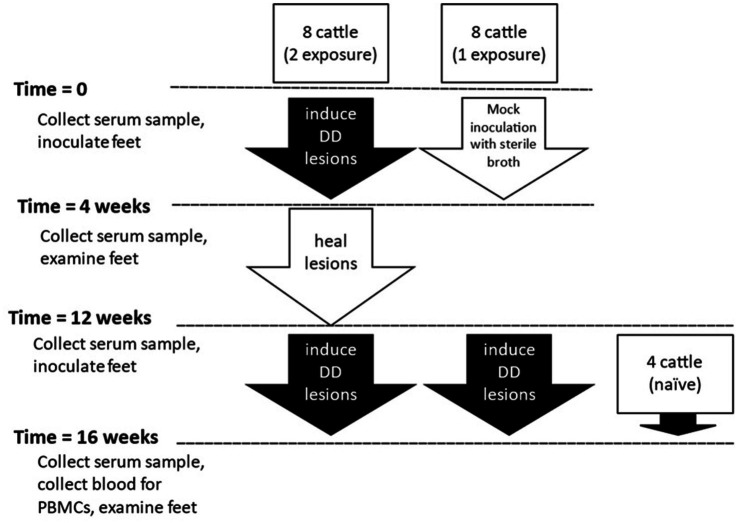
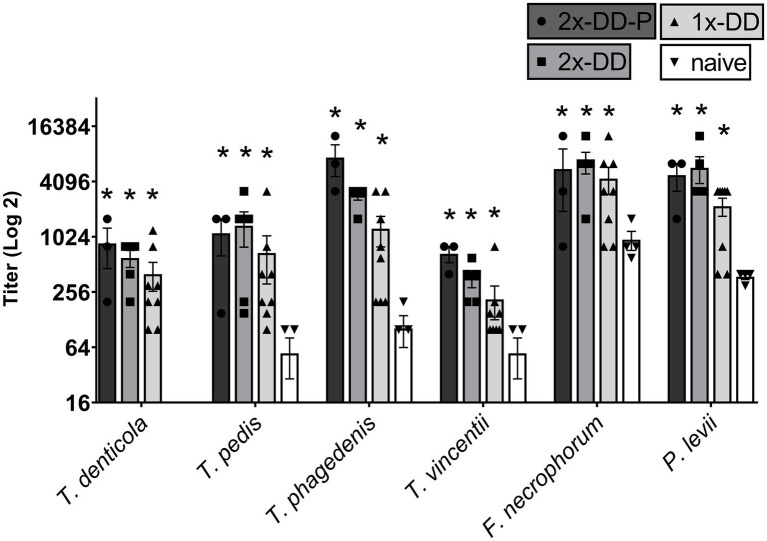
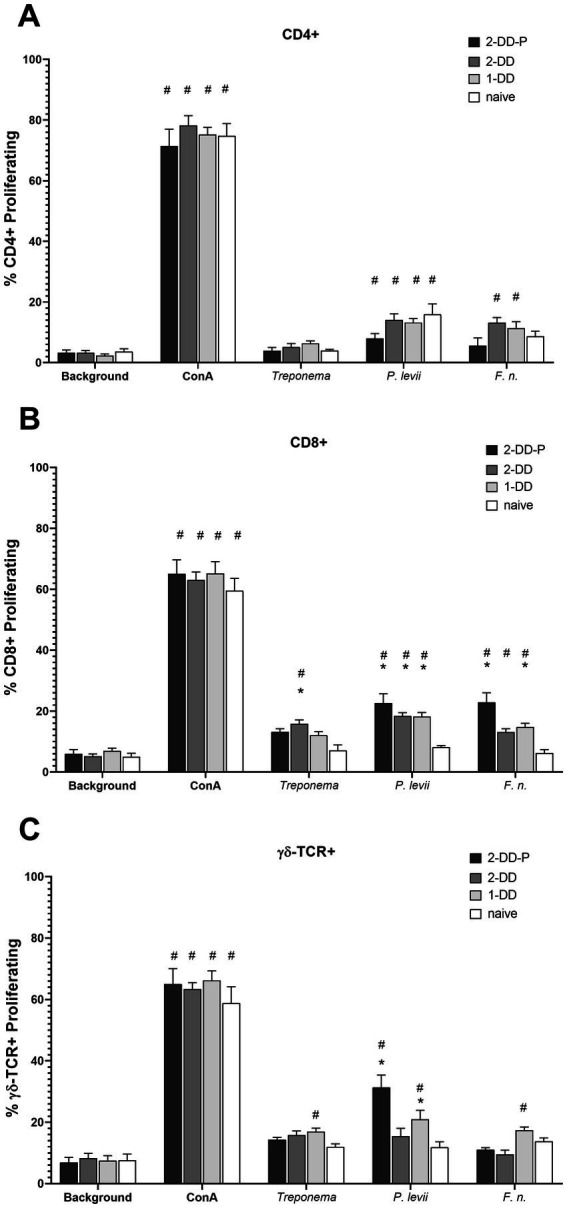
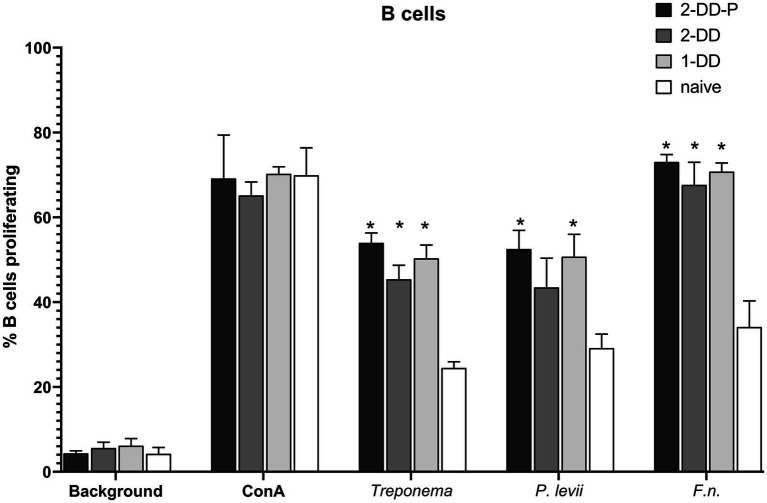
The ability to reliably induce bovine digital dermatitis (DD) in naive calves provides unique opportunities to evaluate immune responses of the calves to infection after disease induction, during healing, and after subsequent re-infection. Dairy calves infected in a previous induction trial were held until lesions resolved and were then re-infected in parallel with naïve calves. Humoral and cell-mediated responses were assessed via serum antibody titer and lymphocyte proliferation analysis with responses of previously infected calves compared with responses of the newly infected calves and naïve calves. In addition, feet of calves in both treatment groups were photographed and scored by a single blinded observer using a previously described induced lesion scoring system. All naïve calves developed lesions after initial infection whereas only 5 of 8 calves developed lesions consistent with DD after a second experimental infection. In the naïve group, lesions commensurate with DD occurred in 15 of 26 experimentally infected feet with 6 feet not included in the analysis due to bandage failure. In comparison, calves in the second infection group developed lesions in 10 of 25 infected feet. Humoral responses or cellular proliferative responses did not differ between the two treatment groups or between calves which developed or did not develop lesions after experimental infection. Our results indicate that resolution of lesions after DD infection, immunity only provides partial protection against reinfection. Further studies are needed to determine immune mechanisms that provide the observed partial protection against reinfection with DD.
在未感染过的犊牛中可靠地诱发牛趾间皮炎(DD)的能力,为评估犊牛在疾病诱发后、愈合过程中以及后续再次感染后对感染的免疫反应提供了独特的机会。在之前的诱发试验中感染的奶牛犊牛被饲养至病变消退,然后与未感染过的犊牛同时再次感染。通过血清抗体滴度和淋巴细胞增殖分析评估体液和细胞介导的反应,将先前感染的犊牛的反应与新感染的犊牛和未感染过的犊牛的反应进行比较。此外,由一名单盲观察者使用先前描述的诱发病变评分系统对两个治疗组的犊牛的足部进行拍照和评分。所有未感染过的犊牛在初次感染后都出现了病变,而在第二次实验性感染后,8头犊牛中只有5头出现了与DD一致的病变。在未感染过的组中,26只实验感染的足部中有15只出现了与DD相称的病变,由于绷带失败,6只足部未纳入分析。相比之下,第二次感染组的犊牛在25只感染的足部中有10只出现了病变。两个治疗组之间或在实验感染后出现或未出现病变的犊牛之间,体液反应或细胞增殖反应没有差异。我们的结果表明,DD感染后病变的消退,免疫仅提供部分保护以防止再次感染。需要进一步的研究来确定提供观察到的针对DD再次感染的部分保护的免疫机制。