Blades Caitlin M, Dumanian Zari P, Wang Yong, Wang Zhaohui, Li Bing, Washington Kia M, Slade Julia B, Evans Conor L, Arrowsmith Paula, Farkash Evan A, Yu Jason W, Greyson Mark A, Huang Christene A, Navarro-Alvarez Nalu, Mathes David W
Department of Surgery, University of Colorado Denver Anschutz Medical Campus, Aurora, CO, United States.
Wellman Center for Photomedicine, Massachusetts General Hospital, Harvard Medical School, Charlestown, MA, United States.
Front Transplant. 2024 Dec 6;3:1504959. doi: 10.3389/frtra.2024.1504959. eCollection 2024.
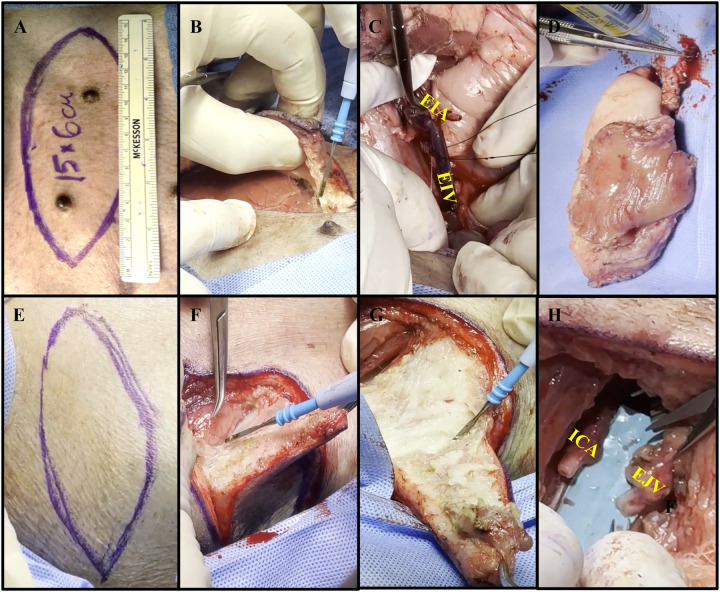
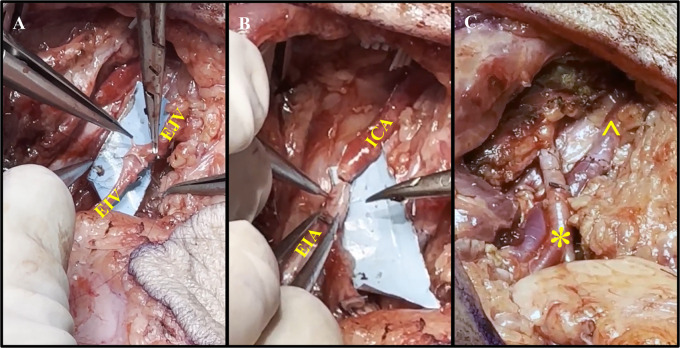
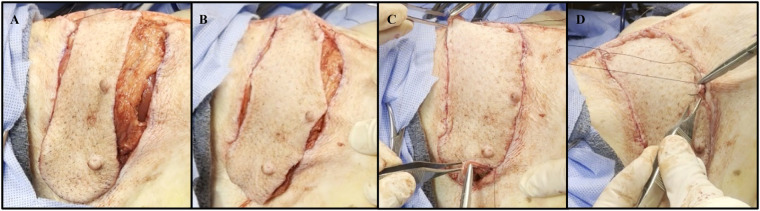
As research advances in vascularized composite allotransplantation (VCA), large animal models are essential for translational studies related to immune rejection and graft survival. However, procurement of large flaps can cause significant defects, complicating wound closure and increasing postoperative risks. This study details the surgical techniques and outcomes of autologous vertical rectus abdominis myocutaneous (VRAM) flap transplantation and neck flap isolation with induced ischemia in a swine model. The purpose of this study was to identify the most effective control procedure for use in future VRAM flap allotransplantation research.
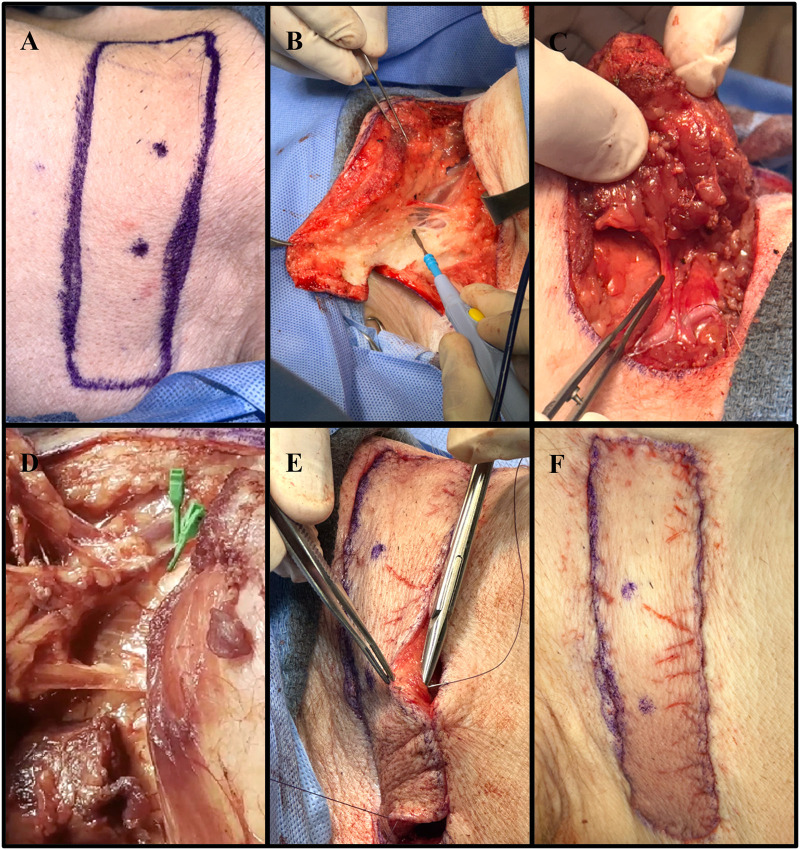
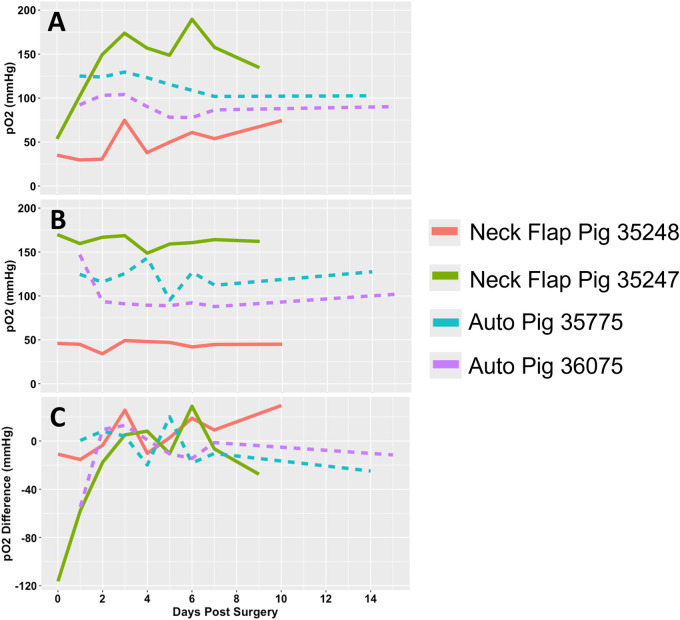
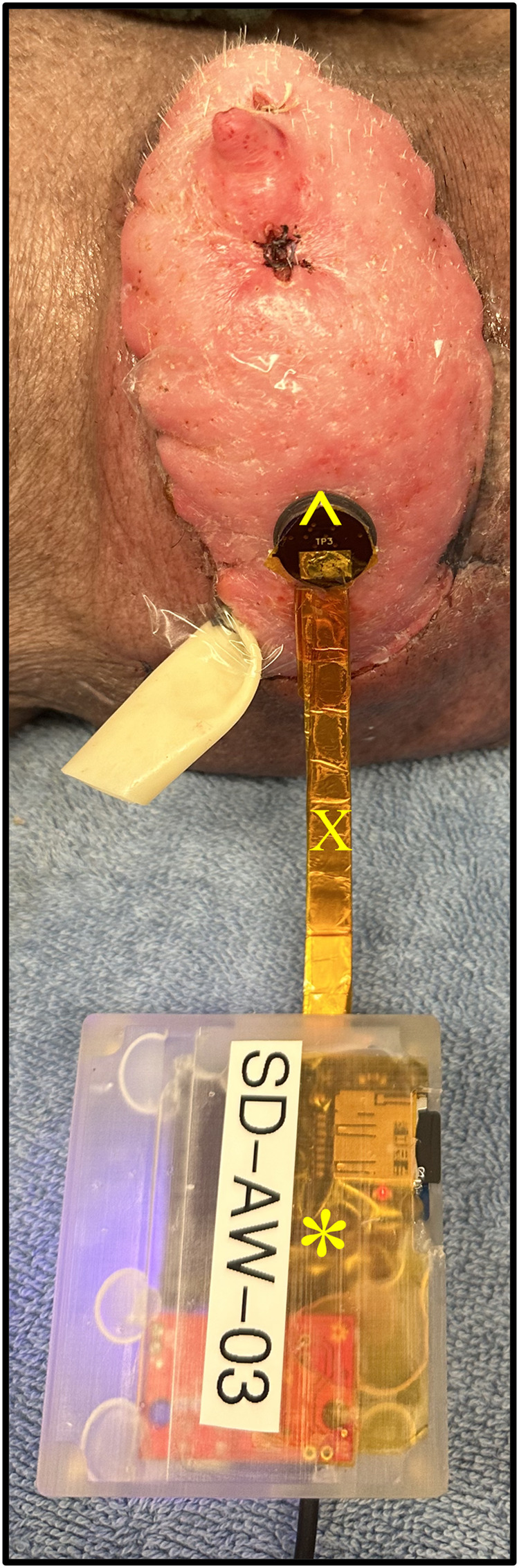
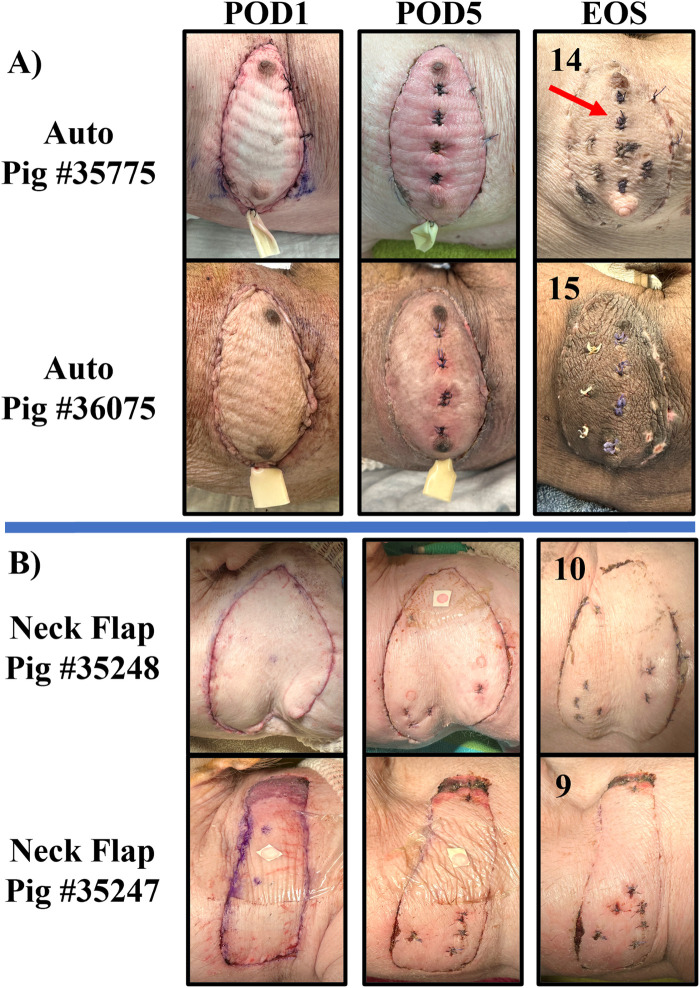
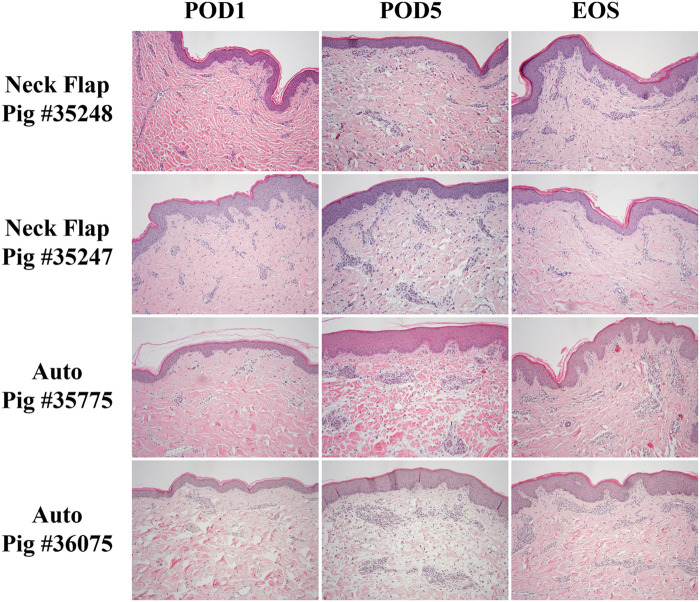
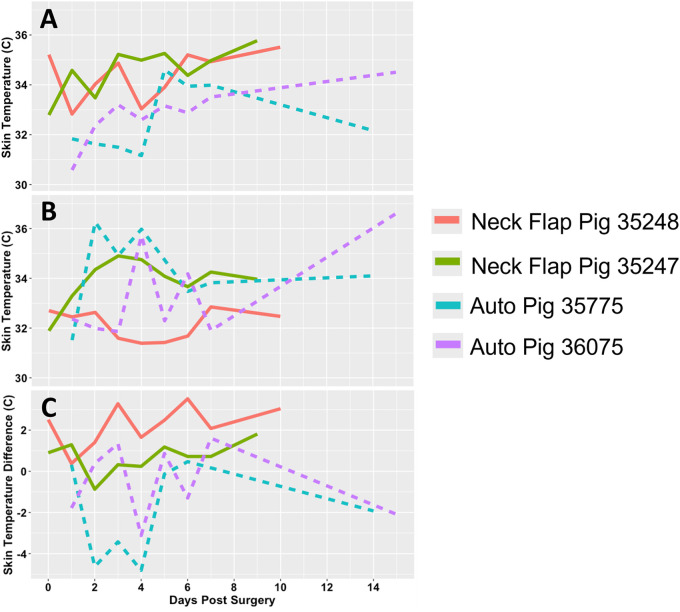
We performed two left heterotopic autologous VRAM flap transplants and two right anterolateral neck flap isolations using female Yucatan pigs. Postoperatively, animals were monitored for complications and flap healing, with punch biopsies taken on POD1, 5, and at the end of the study for histological analysis. Transcutaneous oxygen and temperature were also recorded.
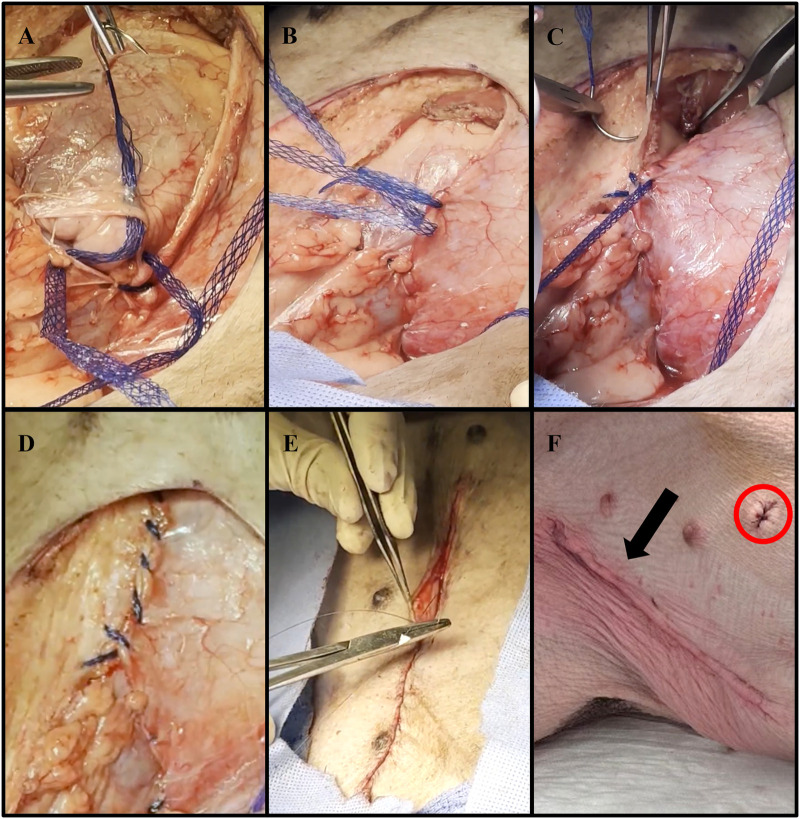
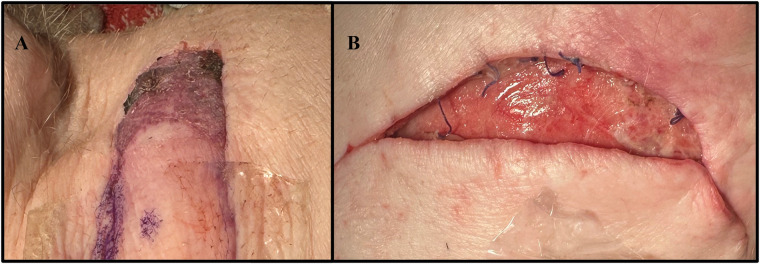
Both autologous flaps survived after vessel anastomosis, with effective closure of abdominal defects using suturable mesh, and no postoperative complications were observed. Histology revealed mild dermal edema and perivascular inflammation on POD5. In the neck flap group, both flaps survived temporary ischemia, however, postoperative complications included dorsal flap necrosis and wound dehiscence, requiring reoperation. No gross inflammation or edema was observed following surgery and histologically there was only mild dermal edema on POD5.
We have developed a low-risk, technically feasible porcine autologous VRAM flap transplantation model and our findings support its use in future VCA studies.
随着血管化复合组织异体移植(VCA)研究的进展,大型动物模型对于免疫排斥和移植物存活相关的转化研究至关重要。然而,获取大皮瓣会导致显著的缺损,使伤口闭合复杂化并增加术后风险。本研究详细介绍了猪模型中自体腹直肌肌皮(VRAM)瓣移植和诱导缺血颈部皮瓣分离的手术技术及结果。本研究的目的是确定在未来VRAM瓣异体移植研究中使用的最有效的对照程序。
我们使用雌性尤卡坦猪进行了两次左侧异位自体VRAM瓣移植和两次右侧颈前外侧皮瓣分离。术后,监测动物的并发症和皮瓣愈合情况,在术后第1天、第5天以及研究结束时进行穿刺活检以进行组织学分析。还记录了经皮氧含量和温度。
血管吻合后两个自体皮瓣均存活,使用可缝合网片有效闭合了腹部缺损,未观察到术后并发症。组织学显示术后第5天有轻度真皮水肿和血管周围炎症。在颈部皮瓣组中,两个皮瓣在短暂缺血后均存活,然而,术后并发症包括皮瓣背侧坏死和伤口裂开,需要再次手术。术后未观察到明显的炎症或水肿,组织学上术后第5天仅有轻度真皮水肿。
我们建立了一种低风险、技术上可行的猪自体VRAM瓣移植模型,我们的研究结果支持其在未来VCA研究中的应用。