Shang Rumin, Han Xiangming, He Fangwei, Huang Lihua, Zeng Cui, Chen Kun, Lv Fei, Ding Xiangwu
Department of Gastroenterology, Wuhan Pu'ai Hospital, Tongji Medical College, Huazhong University of Science and Technology, Wuhan, China.
Department of Oncology, Nanjing Drum Tower Hospital, Nanjing, China.
Front Med (Lausanne). 2024 Dec 6;11:1422600. doi: 10.3389/fmed.2024.1422600. eCollection 2024.
In solid pancreatic lesions (SPLs), we compared the diagnostic efficacy of a 19G fine-needle aspiration (FNA) needle and a 22G ProCore fine-needle biopsy (FNB) needle, We also compared the specimen quality between the standard suction (SS) technique and heparinized wet-suction (HWS) technique.
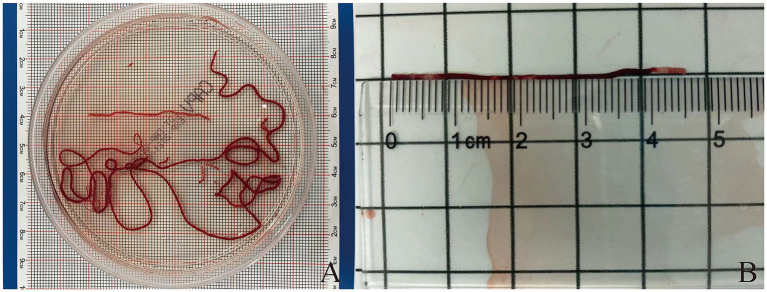
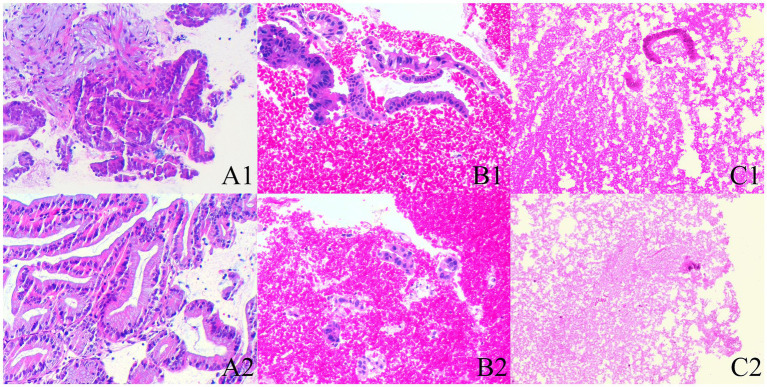
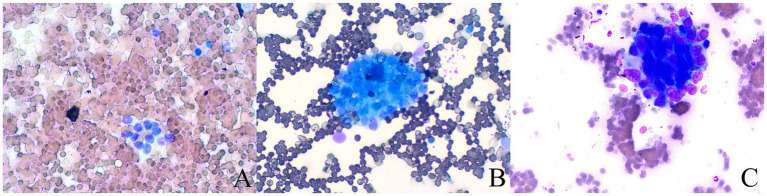
All cases of endoscopic ultrasound-guided tissue acquisition (EUS-TA) by 19G FNA or 22G FNB for SPLs in a single-centre hospital were retrospectively reviewed. The diagnostic yield was compared between the 19G and 22G groups. Univariate and multivariate logistic regression analyses were used to identify optimal factors for a correct histological diagnosis. We also examined tissue integrity, the length of the tissue cores, and the rate of blood cell contamination between the SS and HWS groups.
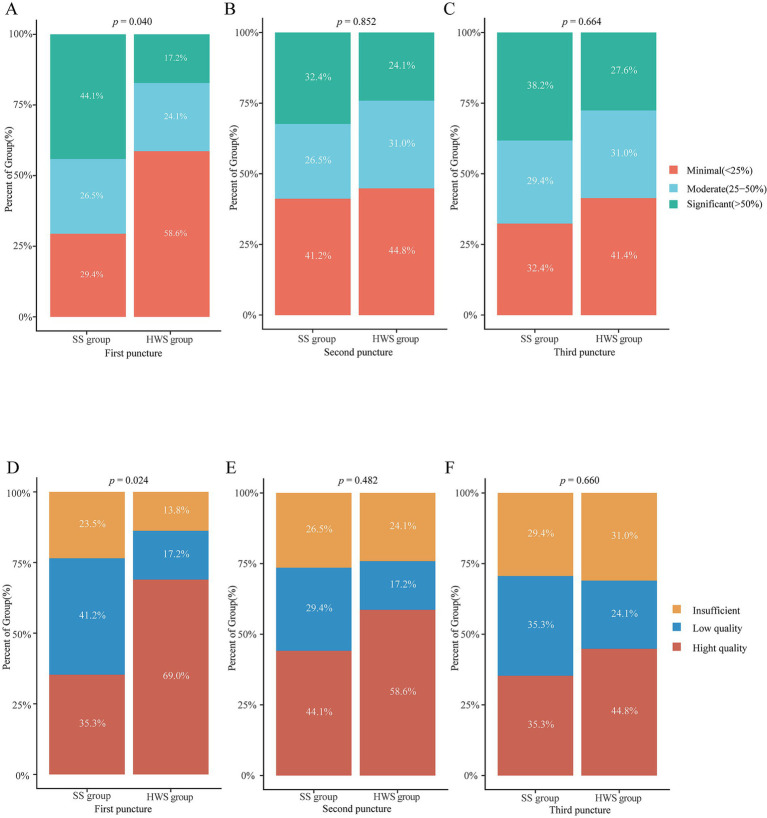
One hundred seventy-one and sixty-three patients were included in the comparisons of needle types and suction techniques, respectively. The 19G group had higher histological diagnosis rates compared to the 22G group for the first pass (87.8% vs. 70.4%, = 0.005), the second pass (82.2% vs. 65.4%, = 0.012), the first two passes (90.0% vs. 72.8%, = 0.004), and the final diagnosis (91.1% vs. 79%, = 0.025). Through macroscopic on-site evaluation, a significantly higher proportion of patients in the 22G group required a third needle pass compared to the 19G group (88.9% vs. 67.8%, = 0.002). The total procedure time was shorter in the 19G group than in the 22G group ( < 0.001). The HWS group showed superiority over the SS group in terms of the total length of tissue cores ( < 0.001) and the total length of white tissue cores ( = 0.005). The HWS group, compared to the SS group, can enhance the tissue integrity ( = 0.024) and reduce blood cell contamination ( = 0.040) during the first needle pass. There was no significant difference in complication rates between the needle puncture groups ( = 0.770) or the aspiration technique groups ( = 0.654).
Compared to the 22G FNB needle, endoscopists should consider using the 19G FNA needle when appropriate. Furthermore, the use of the HWS technique for the first pass is recommended to improve specimen quality.
在实性胰腺病变(SPL)中,我们比较了19G细针抽吸(FNA)针和22G ProCore细针活检(FNB)针的诊断效能。我们还比较了标准抽吸(SS)技术和肝素化湿抽吸(HWS)技术之间的标本质量。
回顾性分析了在一家单中心医院中,通过19G FNA或22G FNB对SPL进行内镜超声引导下组织获取(EUS-TA)的所有病例。比较了19G组和22G组的诊断率。采用单因素和多因素逻辑回归分析来确定正确组织学诊断的最佳因素。我们还检查了SS组和HWS组之间的组织完整性、组织芯长度和血细胞污染率。
分别有171例和63例患者纳入了针型和抽吸技术的比较。在首次穿刺时,19G组的组织学诊断率高于22G组(87.8%对70.4%,P = 0.005);第二次穿刺时(82.2%对65.4%,P = 0.012);前两次穿刺时(90.0%对72.8%,P = 0.004);最终诊断时(91.1%对79%,P = 0.025)。通过宏观现场评估,22G组需要第三次穿刺的患者比例显著高于19G组(88.9%对67.8%,P = 0.002)。19G组的总操作时间比22G组短(P < 0.001)。HWS组在组织芯总长度(P < 0.001)和白色组织芯总长度(P = 0.005)方面优于SS组。与SS组相比,HWS组在首次穿刺时可提高组织完整性(P = 0.024)并减少血细胞污染(P = 0.040)。针穿刺组之间(P = 0.770)或抽吸技术组之间(P = 0.654)的并发症发生率无显著差异。
与22G FNB针相比,内镜医师在适当的时候应考虑使用19G FNA针。此外,建议首次穿刺时使用HWS技术以提高标本质量。