Rezaeeyan Hadi, Moghimian-Boroujeni Bahareh, Abdolalian Mehrnaz, Javan Mohammadreza
Blood Transfusion Research Center, High Institute for Research and Education in Transfusion Medicine, Iranian Blood Transfusion Organization (IBTO), Tehran, Iran.
Thalassemia and Hemoglobinopathy Research Center, Health Research Institute, Ahvaz Jundishapur University of Medical Sciences, Ahvaz, Iran.
J Tehran Heart Cent. 2024 Jan;19(1):6-13. doi: 10.18502/jthc.v19i1.15531.
Cardiovascular disease (CVD) is one of the principal causes of mortality in the world. Various factors have been identified in the pathogenesis of CVD. Leukemia inhibitory factor (LIF) as a secretory cytokine is one of these factors. The LIF receptor is located on endothelial cells and plays a role in the expression of specific genes in these cells. Endothelial cells are the innermost cells of blood vessels, and defects in these cells cause endothelial dysfunction and eventually CVD.
The present study is based on PubMed database information (1982-2022) using the following words: "cardiovascular disease," "endothelial cells," "leukemia inhibitory factor," and "angiogenesis."
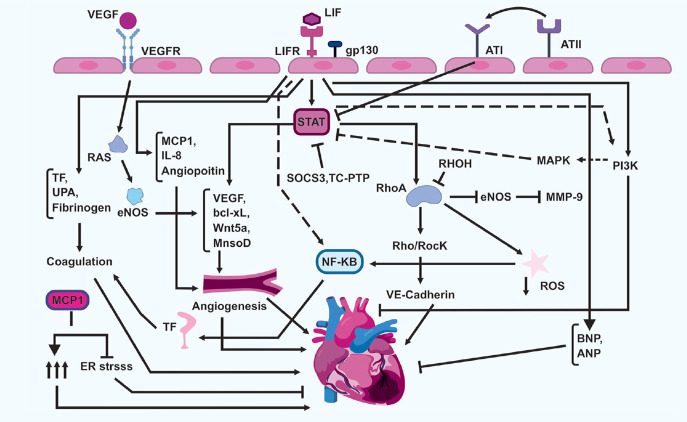
LIF can cause arteriosclerotic plaques by activating inflammatory mechanisms in monocytes through the induction of intercellular adhesion molecule-1 and vascular cell adhesion molecule-1 expression. LIF can also induce vascular endothelial growth factor expression by activating signaling pathways, eventually leading to angiogenesis. Additionally, it can activate the coagulation cascade by factor VII production promotion within endothelial cells.
Understanding the interplay between LIF and the inflammation pathways, coagulation, and angiogenesis as key factors in CVD occurrence raises the possibility of targeting this factor as a potential strategy to mitigate CVD risk.
心血管疾病(CVD)是全球主要的死亡原因之一。在CVD的发病机制中已确定了多种因素。白血病抑制因子(LIF)作为一种分泌性细胞因子是其中之一。LIF受体位于内皮细胞上,并在这些细胞中特定基因的表达中发挥作用。内皮细胞是血管的最内层细胞,这些细胞的缺陷会导致内皮功能障碍并最终引发CVD。
本研究基于PubMed数据库信息(1982 - 2022年),使用了以下关键词:“心血管疾病”、“内皮细胞”、“白血病抑制因子”和“血管生成”。
LIF可通过诱导细胞间黏附分子 - 1和血管细胞黏附分子 - 1的表达,激活单核细胞中的炎症机制,从而导致动脉粥样硬化斑块形成。LIF还可通过激活信号通路诱导血管内皮生长因子表达,最终导致血管生成。此外,它可通过促进内皮细胞内因子VII的产生来激活凝血级联反应。
了解LIF与炎症途径、凝血和血管生成之间的相互作用作为CVD发生的关键因素,增加了将该因子作为减轻CVD风险的潜在策略进行靶向治疗的可能性。