Li Man, Lu Lisen, Xiao Qungen, Maalim Ali Abdi, Nie Bin, Liu Yanchao, Kahlert Ulf D, Shu Kai, Lei Ting, Zhu Mingxin
Department of Anesthesiology and Pain Medicine Hubei Key Laboratory of Geriatric Anesthesia and Perioperative Brain Health and Wuhan Clinical Research Center for Geriatric Anesthesia Tongji Hospital Tongji Medical College Huazhong University of Science and Technology Wuhan People's Republic of China.
Department of Neurosurgery Tongji Hospital Tongji Medical College Huazhong University of Science and Technology Wuhan People's Republic of China.
Exploration (Beijing). 2024 Jun 25;4(6):20240027. doi: 10.1002/EXP.20240027. eCollection 2024 Dec.
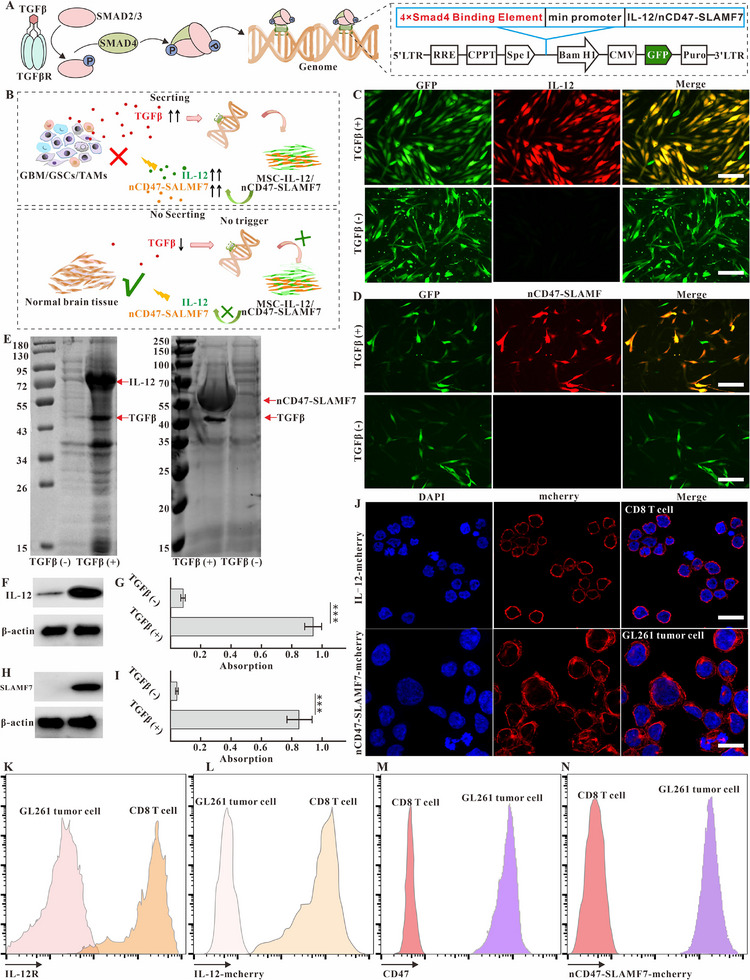
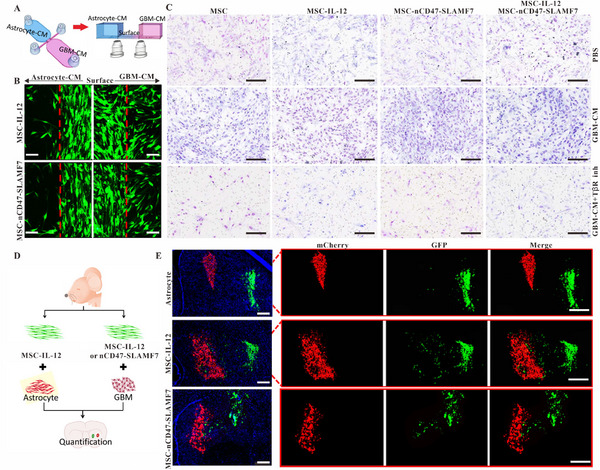
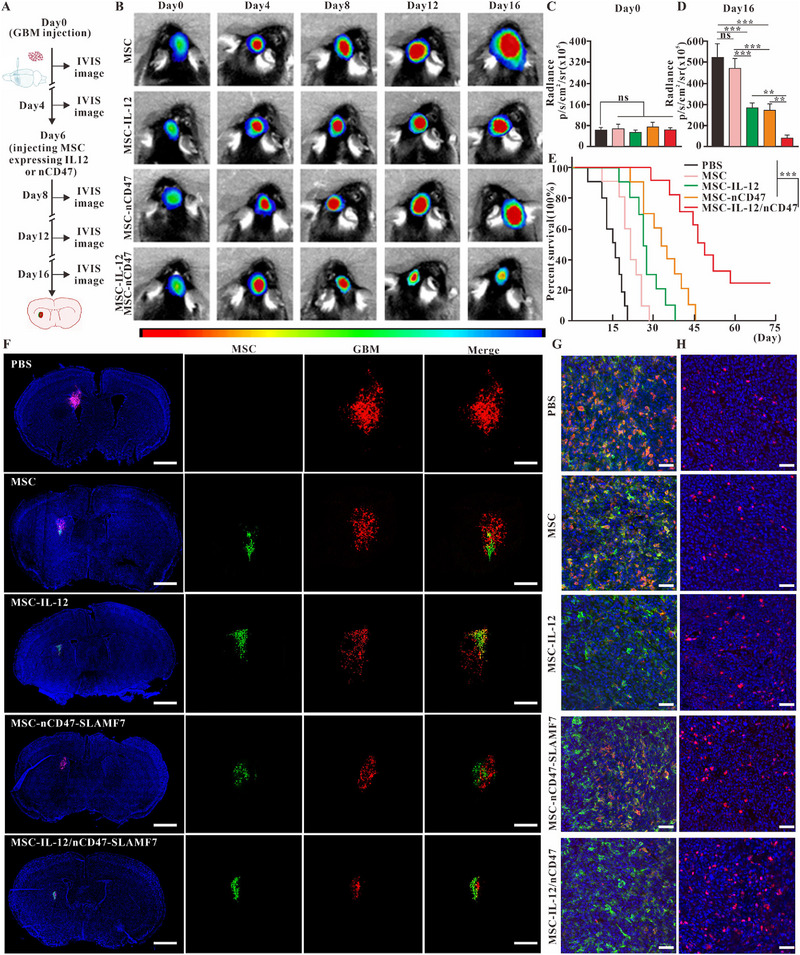
High expression of cellular self-activated immunosuppressive molecules and extensive infiltration of suppressive immune cells in the tumor microenvironment are the main factors contributing to glioma's resistance to immunotherapy. Nonetheless, technology to modify the expression of glioma cellular self-molecules through gene editing requires further development. This project advances cell therapy strategies to reverse the immunosuppressive microenvironment of glioma (TIME). Bone marrow-derived mesenchymal stem cells (MSCs) are engineered to express bioactive proteins and demonstrate tumor-homing characteristics upon activation by TGF-β. These MSCs are designed to secrete the anti-tumor immune cytokine IL-12 and the nCD47-SLAMF7 fusion protein, which regulates T-cell activity and macrophage phagocytosis. The engineered MSCs are then injected in situ into the glioma site, circumventing the blood-brain barrier to deliver high local concentrations of bioactive proteins. This approach aims to enhance the M1 polarization of infiltrating macrophages, stimulate macrophage-mediated tumor cell phagocytosis, activate antigen-presenting cells, and promote effector CD8 T cell infiltration, effectively controlling glioma. Additionally, the engineered MSCs may serve as a universal treatment for other tumors that express TGF-β at high levels. This study proposes a novel treatment strategy for the clinical management of glioma patients.
肿瘤微环境中细胞自激活免疫抑制分子的高表达和抑制性免疫细胞的广泛浸润是导致胶质瘤免疫治疗耐药的主要因素。尽管如此,通过基因编辑改变胶质瘤细胞自身分子表达的技术仍需进一步发展。本项目推进细胞治疗策略以逆转胶质瘤的免疫抑制微环境(TIME)。骨髓间充质干细胞(MSCs)经过基因工程改造以表达生物活性蛋白,并在被转化生长因子-β(TGF-β)激活后表现出肿瘤归巢特性。这些MSCs被设计为分泌抗肿瘤免疫细胞因子白细胞介素-12(IL-12)和nCD47-SLAMF7融合蛋白,后者可调节T细胞活性和巨噬细胞吞噬作用。然后将经过基因工程改造的MSCs原位注射到胶质瘤部位,绕过血脑屏障以递送高局部浓度的生物活性蛋白。该方法旨在增强浸润性巨噬细胞的M1极化,刺激巨噬细胞介导的肿瘤细胞吞噬作用,激活抗原呈递细胞,并促进效应性CD8 T细胞浸润,从而有效控制胶质瘤。此外,经过基因工程改造的MSCs可能作为一种针对其他高水平表达TGF-β的肿瘤的通用治疗方法。本研究为胶质瘤患者的临床管理提出了一种新的治疗策略。