Allen Kevin J H, Frank Connor, Jiao Rubin, Malo Mackenzie E, Bello Michele, De Nardo Laura, Meléndez-Alafort Laura, Dadachova Ekaterina
College of Pharmacy and Nutrition, University of Saskatchewan, Saskatoon, Saskatchewan S7N 5E5, Canada.
Department of Physics and Astronomy, University of Padua, Via Marzolo 8, Padua I-35131, Italy.
ACS Omega. 2024 Dec 4;9(50):50000-50011. doi: 10.1021/acsomega.4c09450. eCollection 2024 Dec 17.
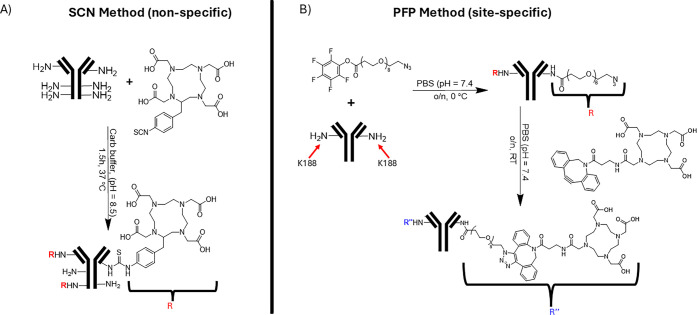
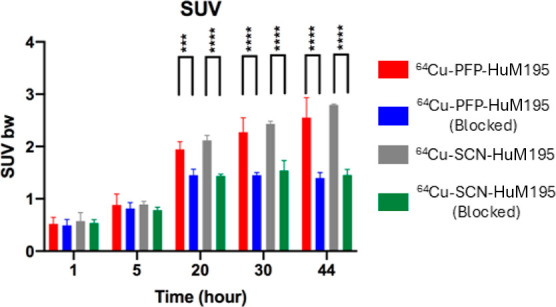
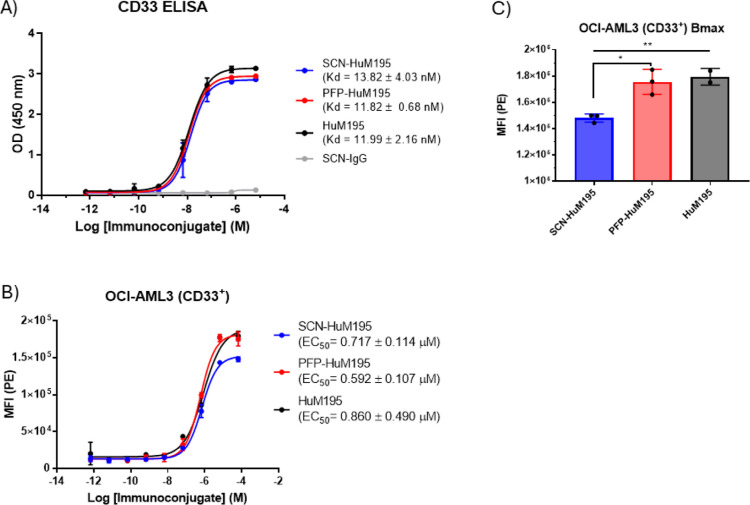
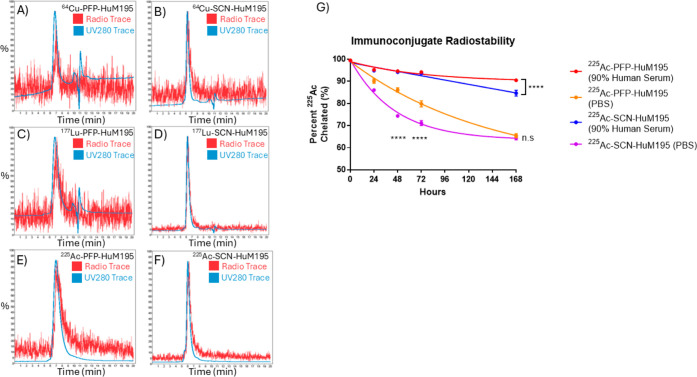
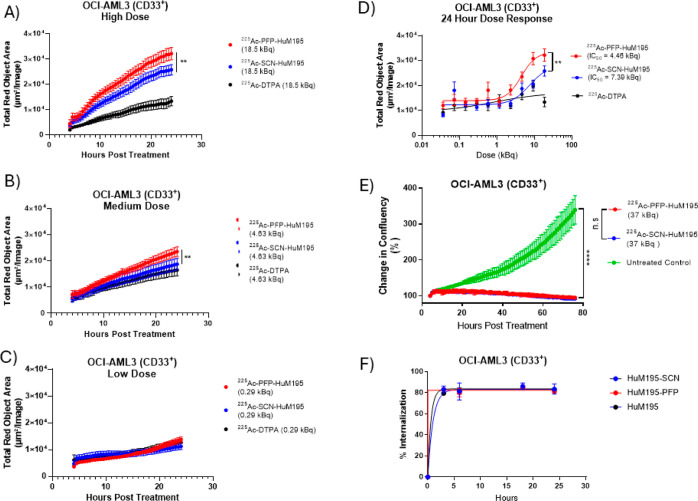
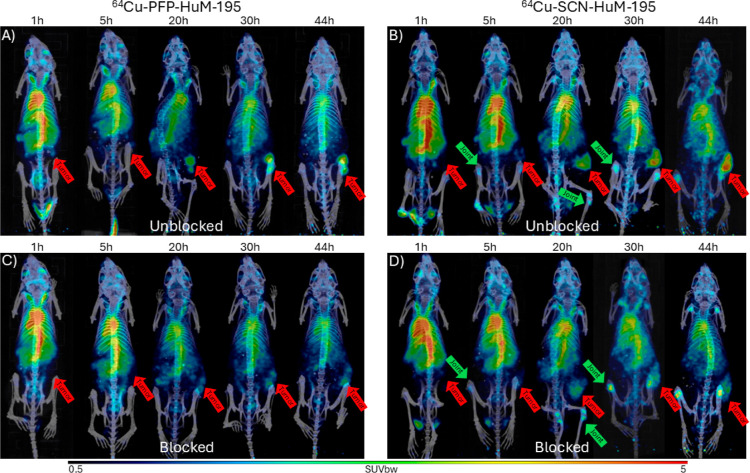
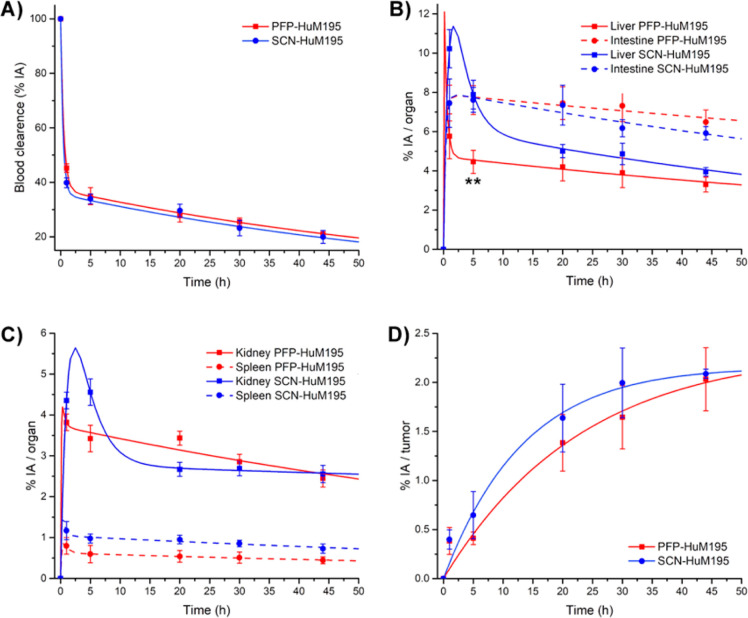
Radiometal chelator conjugation is a cornerstone of radioimmunotherapy (RIT). Continued interest in selective placement of chelators remains an active topic of discussion in the field. With several simple site-specific methods being recently reported, it was of interest to investigate the benefits and potential drawbacks of the site-specific method with a full comparison to a more typical random conjugation method that is currently utilized in clinical applications. In this study, the conjugation methods were evaluated side by side to determine the utility of both methods using commercially available random and site-specific conjugation reagents by performing antigen binding; radiolabeling with Cu, Lu, and Ac radioisotopes; antibody-conjugate stability, cytotoxicity, in vivo distribution, pharmacokinetics analyses, and dosimetry to gather a whole data set for preclinical investigation. Evaluation revealed that both methods performed similarly during most experiments with the site-specific method, resulting in higher binding capacity of the antibody conjugate via flow cytometry. Radiolabeling was not significantly different between two methods, while stability showed that the site-specifically conjugated antibody was somewhat more stable at 37 °C in human serum over 1 week. In vitro experiments demonstrated less cell killing with the random conjugation method, while in vivo experiments showed no statistical differences in tumor uptake between conjugation methods. Dosimetry calculations were performed using the acquired PET/CT data and showed that apart from the liver, there was no significant difference in radiation doses delivered by either antibody conjugate. These results demonstrate that both methods are viable for future work, while the site-specific method offers several potential advantages and, in some cases, improved efficacy.
放射性金属螯合剂偶联是放射免疫疗法(RIT)的基石。对螯合剂选择性定位的持续关注仍是该领域一个活跃的讨论话题。随着最近报道了几种简单的位点特异性方法,将位点特异性方法的益处和潜在缺点与目前临床应用中使用的更典型的随机偶联方法进行全面比较来进行研究很有意义。在本研究中,通过进行抗原结合;用铜、镥和锕放射性同位素进行放射性标记;抗体偶联物稳定性、细胞毒性、体内分布、药代动力学分析以及剂量测定,并排评估偶联方法,以收集用于临床前研究的完整数据集。评估显示,在大多数实验中,两种方法的表现相似,位点特异性方法通过流式细胞术使抗体偶联物具有更高的结合能力。两种方法之间的放射性标记没有显著差异,而稳定性表明,位点特异性偶联的抗体在37℃的人血清中1周内更稳定一些。体外实验表明,随机偶联方法的细胞杀伤作用较小,而体内实验表明,偶联方法之间的肿瘤摄取没有统计学差异。使用获得的PET/CT数据进行剂量计算,结果显示,除肝脏外,两种抗体偶联物递送的辐射剂量没有显著差异。这些结果表明,两种方法对未来的工作都是可行的,而位点特异性方法具有几个潜在优势,并且在某些情况下疗效有所提高。