Sprint Gina, Schmitter-Edgecombe Maureen, Cook Diane
Department of Computer Science, Gonzaga University, Spokane, WA, United States.
School of Electrical Engineering and Computer Science, Washington State University, Pullman, WA, United States.
JMIR Form Res. 2024 Dec 23;8:e63866. doi: 10.2196/63866.
Human digital twins have the potential to change the practice of personalizing cognitive health diagnosis because these systems can integrate multiple sources of health information and influence into a unified model. Cognitive health is multifaceted, yet researchers and clinical professionals struggle to align diverse sources of information into a single model.
This study aims to introduce a method called HDTwin, for unifying heterogeneous data using large language models. HDTwin is designed to predict cognitive diagnoses and offer explanations for its inferences.
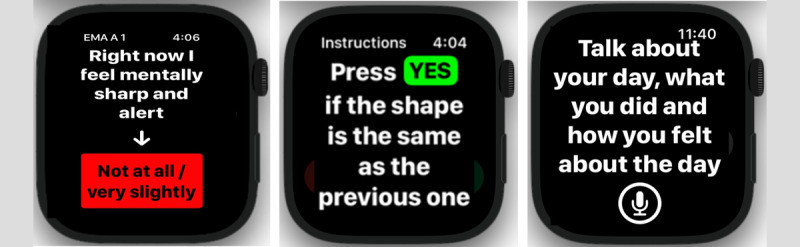
HDTwin integrates cognitive health data from multiple sources, including demographic, behavioral, ecological momentary assessment, n-back test, speech, and baseline experimenter testing session markers. Data are converted into text prompts for a large language model. The system then combines these inputs with relevant external knowledge from scientific literature to construct a predictive model. The model's performance is validated using data from 3 studies involving 124 participants, comparing its diagnostic accuracy with baseline machine learning classifiers.
HDTwin achieves a peak accuracy of 0.81 based on the automated selection of markers, significantly outperforming baseline classifiers. On average, HDTwin yielded accuracy=0.77, precision=0.88, recall=0.63, and Matthews correlation coefficient=0.57. In comparison, the baseline classifiers yielded average accuracy=0.65, precision=0.86, recall=0.35, and Matthews correlation coefficient=0.36. The experiments also reveal that HDTwin yields superior predictive accuracy when information sources are fused compared to single sources. HDTwin's chatbot interface provides interactive dialogues, aiding in diagnosis interpretation and allowing further exploration of patient data.
HDTwin integrates diverse cognitive health data, enhancing the accuracy and explainability of cognitive diagnoses. This approach outperforms traditional models and provides an interface for navigating patient information. The approach shows promise for improving early detection and intervention strategies in cognitive health.
人类数字替身有潜力改变个性化认知健康诊断的实践,因为这些系统能够将多种健康信息源及影响因素整合到一个统一模型中。认知健康是多方面的,但研究人员和临床专业人员难以将各种不同的信息源整合到一个单一模型中。
本研究旨在介绍一种名为HDTwin的方法,用于使用大语言模型统一异构数据。HDTwin旨在预测认知诊断并为其推理提供解释。
HDTwin整合来自多个来源的认知健康数据,包括人口统计学、行为、生态瞬时评估、n-back测试、语音以及基线实验者测试会话标记。数据被转换为针对大语言模型的文本提示。然后,该系统将这些输入与来自科学文献的相关外部知识相结合,以构建一个预测模型。使用来自3项涉及124名参与者的研究的数据验证模型的性能,将其诊断准确性与基线机器学习分类器进行比较。
基于标记的自动选择,HDTwin达到了0.81的峰值准确率,显著优于基线分类器。平均而言,HDTwin的准确率为0.77,精确率为0.88,召回率为0.63,马修斯相关系数为0.57。相比之下,基线分类器的平均准确率为0.65,精确率为0.86,召回率为0.35,马修斯相关系数为0.36。实验还表明,与单一信息源相比,当信息源融合时,HDTwin具有更高的预测准确率。HDTwin的聊天机器人界面提供交互式对话,有助于诊断解释并允许进一步探索患者数据。
HDTwin整合了多样的认知健康数据,提高了认知诊断的准确性和可解释性。这种方法优于传统模型,并提供了一个浏览患者信息的界面。该方法在改善认知健康的早期检测和干预策略方面显示出前景。