Raittio Eero, Lopez Rodrigo, Baelum Vibeke
Department of Dentistry and Oral Health, Aarhus University, Aarhus, Denmark.
Institute of Dentistry, University of Eastern Finland, Kuopio, Finland.
Community Dent Oral Epidemiol. 2025 Apr;53(2):205-215. doi: 10.1111/cdoe.13022. Epub 2024 Dec 23.
The study aimed to estimate the effect of a periodontal treatment policy that would restrict the receipt of periodontal therapy to no more than once every second year, on the 10-year risk of tooth extraction among Danish adults.
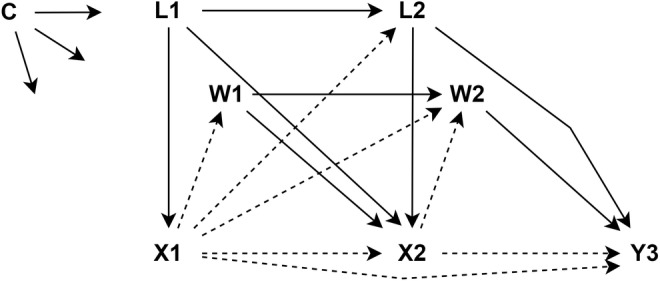
Data from linked nationwide Danish registers consisted of a random sample of 20 000 50-year-olds who were followed from the beginning of 1990 to the end of 2021. The longitudinal modified treatment policies' causal inference framework was used. In each of two slightly different counterfactual scenarios, the receipt of supragingival or subgingival periodontal therapy was restricted to no more than once every second year. The cumulative incidence of tooth extraction from 2012 to 2021 was compared between the counterfactual scenarios and the observed periodontal visiting pattern, while informative censoring, and time-varying and time-invariant confounding were accounted for using the social, economic and dental service utilisation history.
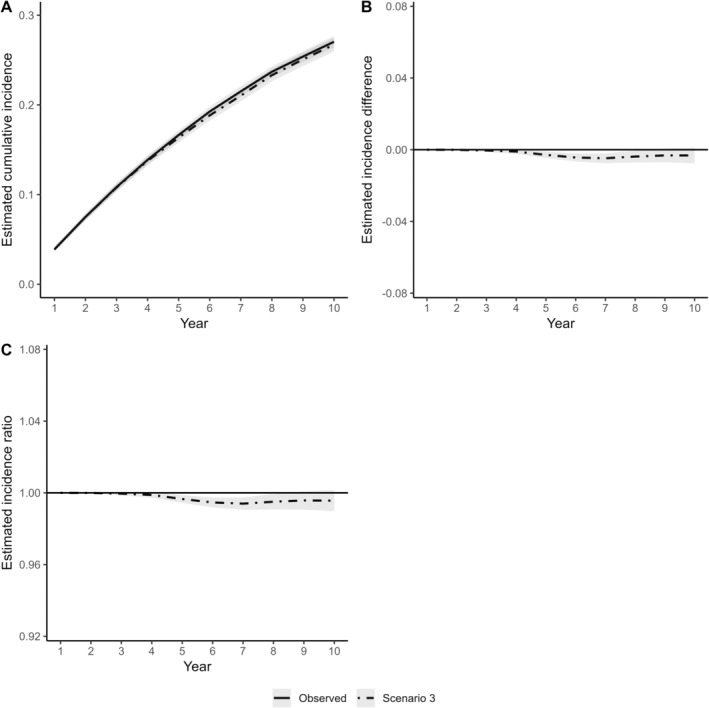
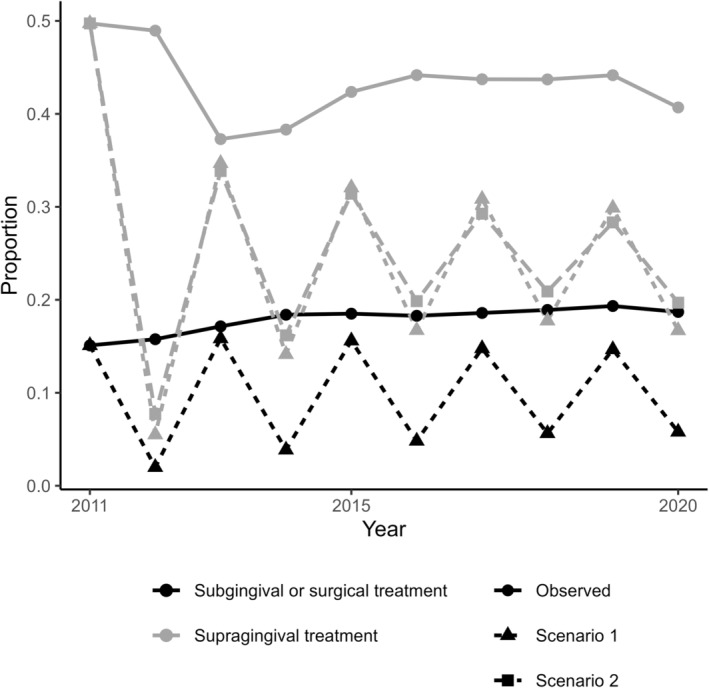
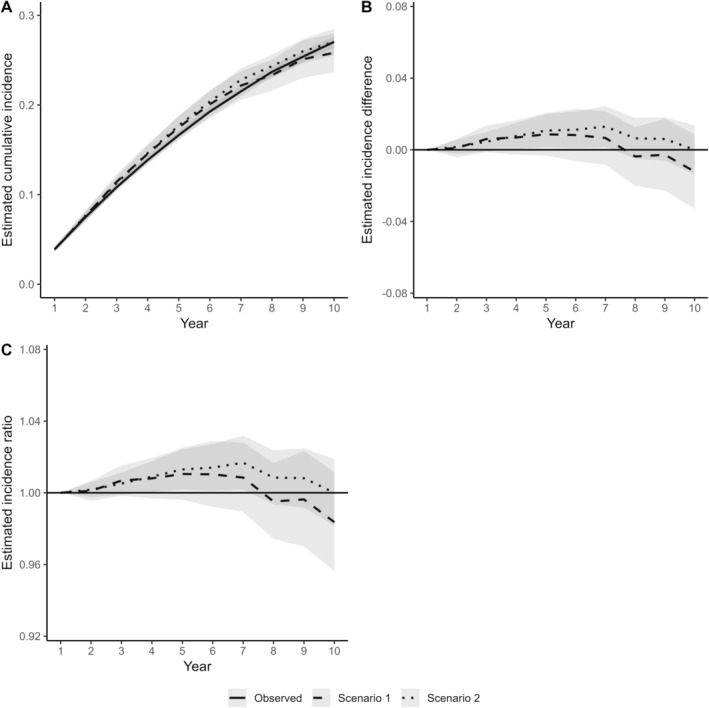
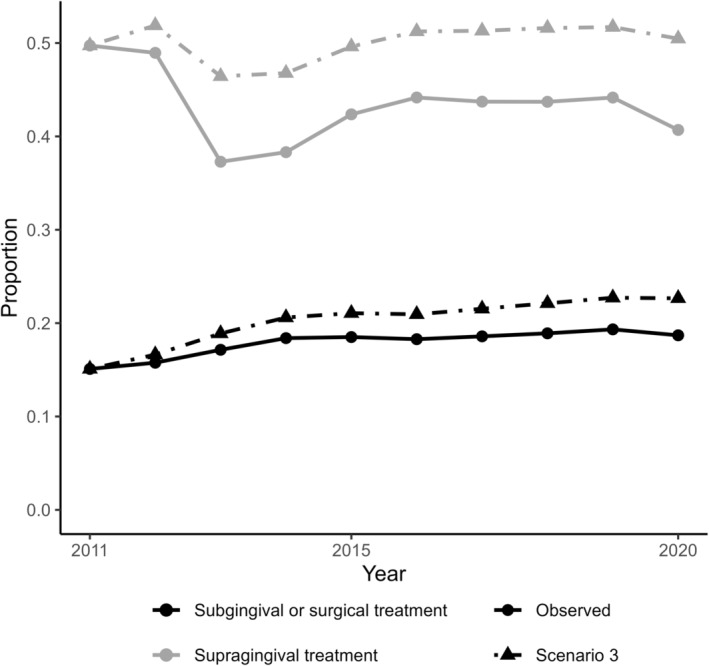
During the 10-year follow-up period, 5021 (25.1%) individuals received at least one tooth extraction. In the two counterfactual scenarios, the number of years receiving supragingival or subgingival periodontal therapy was 30%-50% lower than in the observed data. The 10-year cumulative incidence of tooth loss was practically the same in the two counterfactual scenarios as under the observed periodontal visiting patterns.
The findings indicate that a considerable decrease in the number and frequency of periodontal care visits would not have significant impact on the incidence of tooth loss in Denmark.
本研究旨在评估一项牙周治疗政策的效果,该政策将牙周治疗的接受频率限制为每两年不超过一次,对丹麦成年人10年内拔牙风险的影响。
来自丹麦全国关联登记处的数据包括20000名50岁成年人的随机样本,这些人从1990年初至2021年底接受随访。采用纵向改良治疗政策的因果推断框架。在两种略有不同的反事实情景中,龈上或龈下牙周治疗的接受频率均限制为每两年不超过一次。比较了反事实情景与观察到的牙周就诊模式之间2012年至2021年拔牙的累积发病率,同时利用社会、经济和牙科服务利用史对信息性删失以及随时间变化和不随时间变化的混杂因素进行了分析。
在10年的随访期内,5021名(25.1%)个体至少接受过一次拔牙。在两种反事实情景中,接受龈上或龈下牙周治疗的年数比观察数据低30%-50%。两种反事实情景下10年牙齿缺失的累积发病率与观察到的牙周就诊模式下的发病率基本相同。
研究结果表明,牙周护理就诊次数和频率的大幅减少对丹麦牙齿缺失的发生率不会产生显著影响。