Liu Yanlei, Wang Minglin, Liu Zehao, Liang Xinyue, Sheng Shengda, Dai Han, Zhang Junpeng, Zhang Shuyi, Zhang Xinghui, Xue Huiling
College of Animal Science and Veterinary Medicine, Shenyang Agricultural University (SYAU), Shenyang, 110866, China.
Modern Agricultural Production Base Construction Engineering Centre of Liaoning Province, Liaoyang, 111000, China.
Sci Data. 2024 Dec 23;11(1):1427. doi: 10.1038/s41597-024-04316-7.
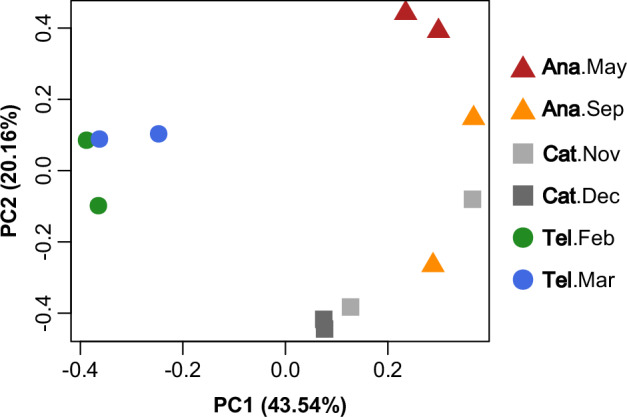
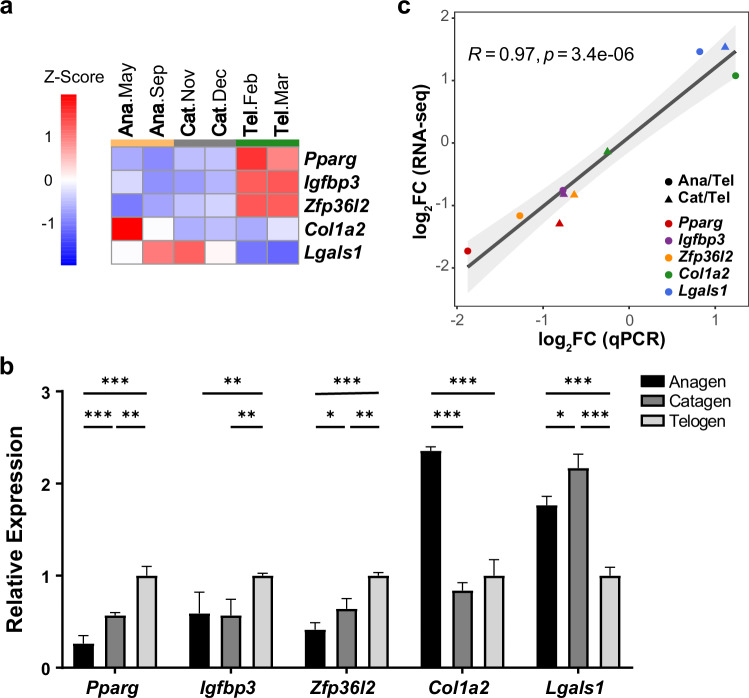
Cashmere grows from the secondary hair follicles (SHFs) that synchronously regenerate and degenerate in a circannual rhythm. Most studies examining factors related to cashmere growth have been performed on goat skin. However, the molecular properties and regulators preferentially expressed in SHFs are less clear. In this study, we isolated the SHFs from skin under a dissecting microscope and analysed the molecular signatures across the annual growth. It demonstrated the transcriptional profile of the isolated SHFs could accurately decipher the growth state and unequivocally distinguish three phases of the cashmere growth. We identified 1,289 molecular signatures that were differentially expressed between different phases. Real-time PCR verified the accuracy and reliability of our sequencing data for the representative genes. Taken together, the transcriptional profiles and identified molecular signatures extended previous findings, and provided a variety of promising targets for cashmere production, thereby offering valuable starting points for future work.
羊绒从次级毛囊(SHFs)生长而来,这些次级毛囊以年周期节律同步再生和退化。大多数研究羊绒生长相关因素的实验都是在山羊皮肤上进行的。然而,在次级毛囊中优先表达的分子特性和调节因子尚不清楚。在本研究中,我们在解剖显微镜下从皮肤中分离出次级毛囊,并分析了其全年生长过程中的分子特征。结果表明,分离出的次级毛囊的转录谱能够准确解读生长状态,并明确区分羊绒生长的三个阶段。我们鉴定出1289个在不同阶段差异表达的分子特征。实时PCR验证了我们对代表性基因测序数据的准确性和可靠性。综上所述,转录谱和鉴定出的分子特征扩展了先前的研究结果,并为羊绒生产提供了多种有前景的靶点,从而为未来的工作提供了有价值的起点。