Zhan Jie, Ding Xifeng, Liu Hai, Wang Kongjie, Wang Zhipeng, Guo Wenting, Nie Ren-Shi, Ma Xianlin, Zhang Zhenzihao
School of Petroleum Engineering, Xi'an Shiyou University, Xi'an, 710065, China.
Changqing Downhole Technology Company, CNPC Chuanqing Drilling Engineering Company Limited, Xi'an, 710018, China.
Sci Rep. 2024 Dec 23;14(1):30620. doi: 10.1038/s41598-024-81896-9.
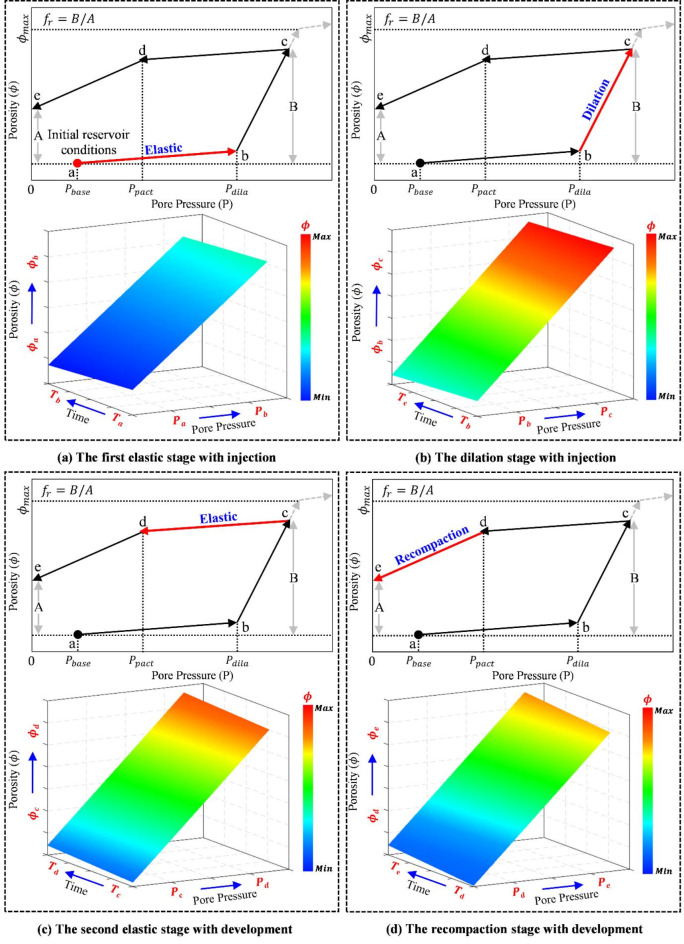
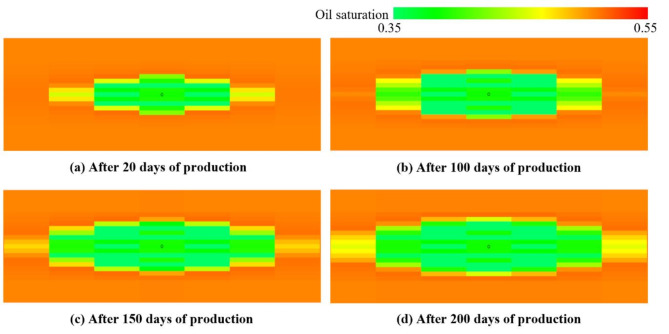
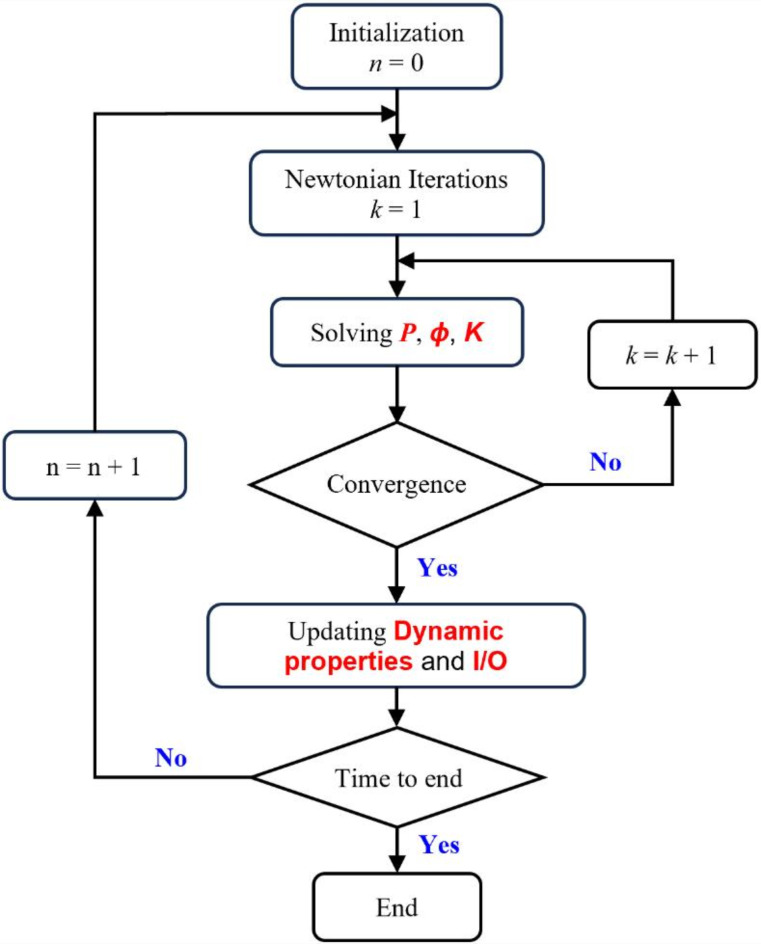
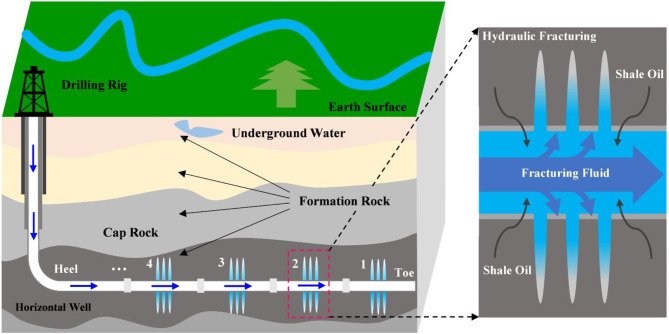
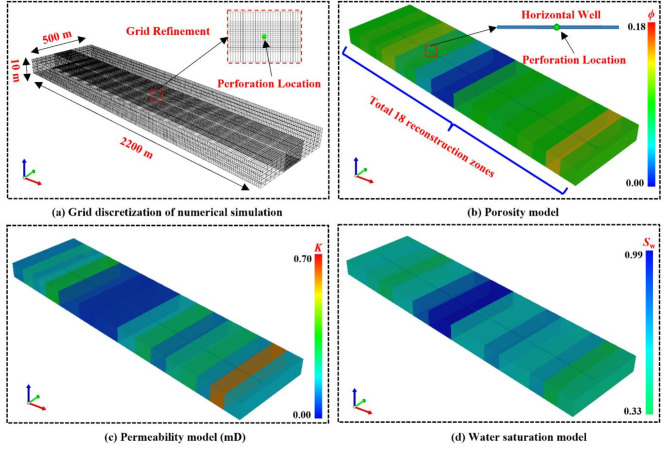
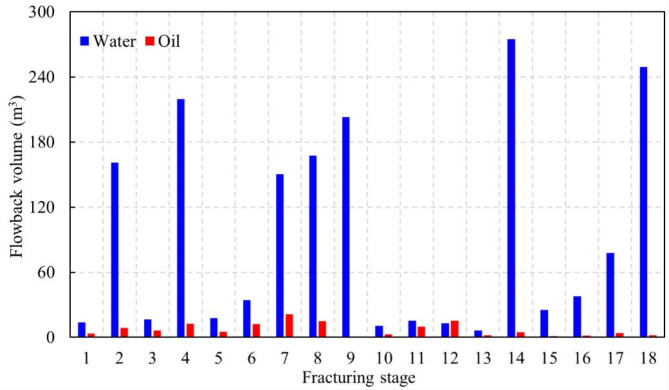
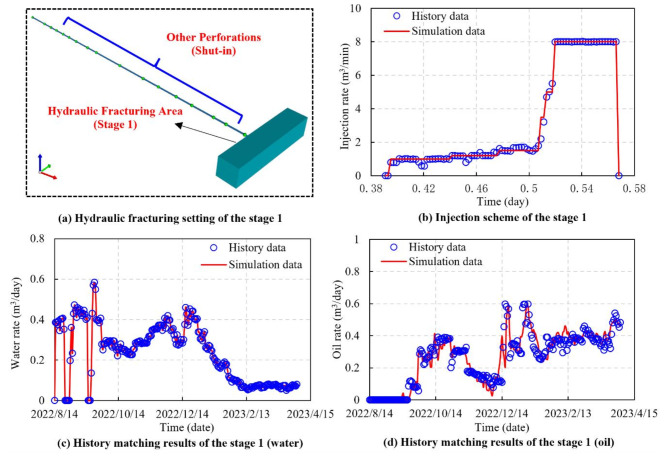
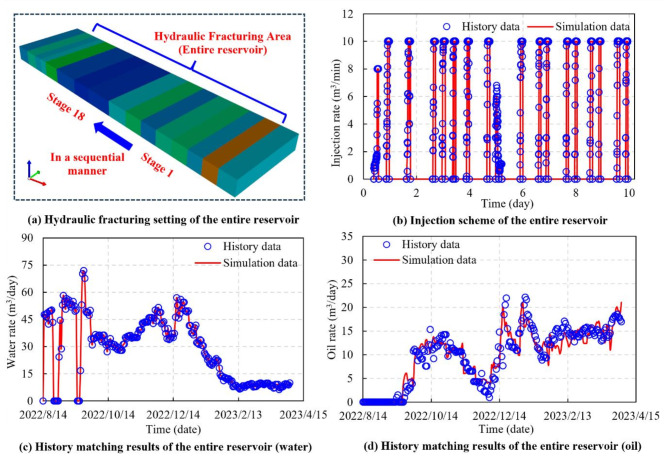
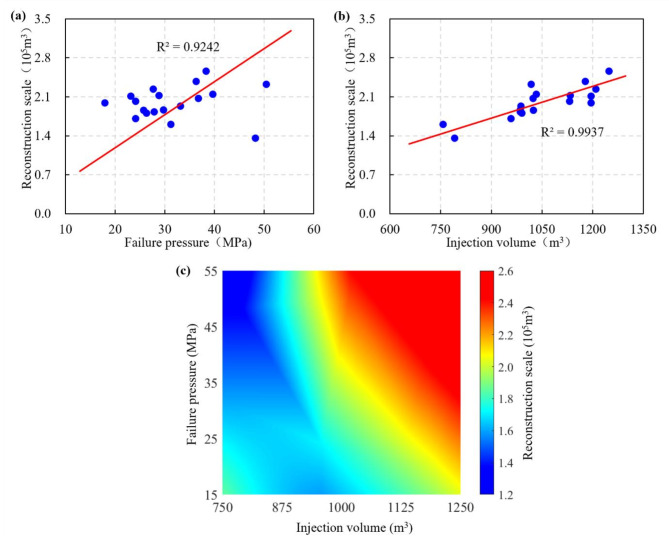
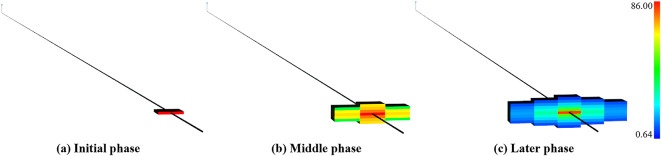
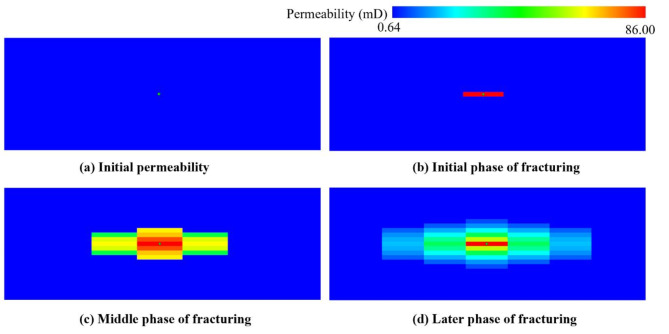
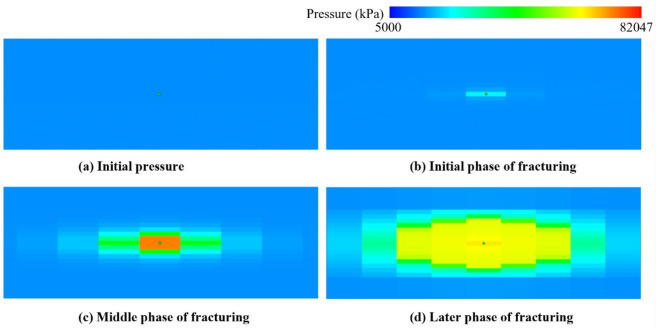
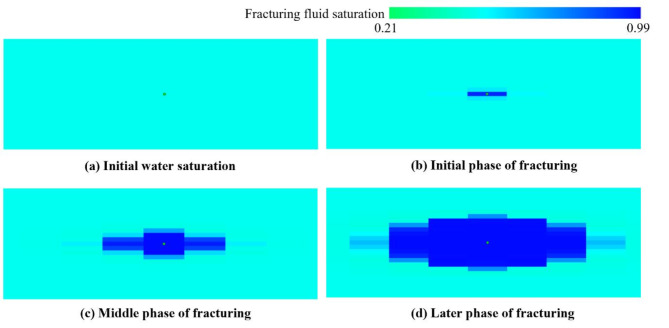
Horizontal well hydraulic fracturing technology has significantly enhanced the productivity of shale reservoirs. However, our understanding of the expansion patterns within the complex fracture network and fluid seepage mechanisms under field conditions remains inadequate. Here, this work develops a dynamic geomechanical (DG) model to simulate the complete sequence of operations in hydraulic fracturing. This study utilizes a construction procedure that closely mirrors field practices to establish the DG model. Furthermore, the numerical simulation results of the DG model are calibrated with field data. This work adopts a numerical simulation method that integrates unsteady seepage model for multi-stage fractured horizontal wells with the dilation-recompaction model to develop the DG model. It systematically constructs the geological model of the shale reservoir by utilizing segmented logging data and by segmenting production data. The time series evolution system is developed through an iterative process involving discrete time steps. Results show that the DG model can perform history matching on a multi-stage basis, enabling comprehensive and detailed analysis of the entire reservoir. This process effectively replicates the distribution relationship between each reconstruction zone and the overall productivity. Furthermore, the DG model is capable of accurately simulating the dynamic process of injected high-pressure fluids into the reservoir to fracture the rock and the dynamic evolution law of reservoir properties. Hydraulic fracturing creates a fracture zone that centers on the well's border and spreads outward radially. The injection volume and failure pressure are significantly correlated with the scale of shale reservoir reconstruction. Following the injection of 790.5 m³ of fracturing fluid in the first stage, the fracture half-length can reach around 148 m, essentially fulfilling the design specifications. Permeability can reach up to 86 mD at this moment, and it can even be maintained at the level of 46 mD during production. In conclusion, the DG model broadens the focus of study on the development of shale reservoirs and lays the groundwork for improving productivity and optimizing hydraulic fracturing design.
水平井水力压裂技术显著提高了页岩油藏的产能。然而,我们对复杂裂缝网络内的扩展模式以及现场条件下的流体渗流机制的理解仍然不足。在此,本研究开发了一种动态地质力学(DG)模型,以模拟水力压裂作业的完整流程。本研究采用了一种紧密模仿现场作业的构建程序来建立DG模型。此外,DG模型的数值模拟结果通过现场数据进行了校准。本研究采用了一种数值模拟方法,将多段压裂水平井的非稳态渗流模型与扩容-再压实模型相结合,开发了DG模型。利用分段测井数据和分段生产数据,系统地构建了页岩油藏的地质模型。通过离散时间步长的迭代过程开发了时间序列演化系统。结果表明,DG模型能够进行多段历史拟合,从而对整个油藏进行全面而详细的分析。这一过程有效地再现了各改造区与整体产能之间的分布关系。此外,DG模型能够准确模拟注入高压流体使岩石破裂进入油藏的动态过程以及油藏物性的动态演化规律。水力压裂形成了一个以井边界为中心并径向向外扩展的裂缝带。注入量和破裂压力与页岩油藏改造规模显著相关。在第一阶段注入790.5立方米压裂液后,裂缝半长可达148米左右,基本满足设计要求。此时渗透率可达86毫达西,甚至在生产过程中可维持在46毫达西的水平。总之,DG模型拓宽了页岩油藏开发研究的重点,为提高产能和优化水力压裂设计奠定了基础。