He Xi-Biao, Guo Fang, Zhang Wei, Fan Jiacheng, Le Weidong, Chen Qi, Ma Yongjun, Zheng Yong, Lee Sang-Hun, Wang Hui-Jing, Wu Yi, Zhou Qinming, Yang Rui
Laboratory of Stem Cell Biology and Epigenetics, School of Basic Medical Sciences, Shanghai University of Medicine & Health Sciences, 279 Zhouzhu Highway, Pudong New Area, Shanghai, 201318, China.
State Key Laboratory of Microbial Metabolism, School of Life Science and Biotechnology, Shanghai Jiao Tong University, Shanghai, 200240, China.
Acta Neuropathol Commun. 2024 Dec 23;12(1):201. doi: 10.1186/s40478-024-01912-x.
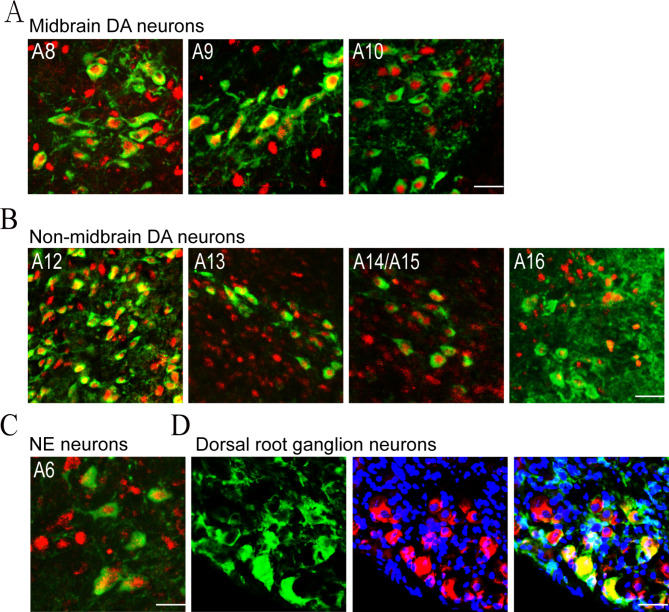
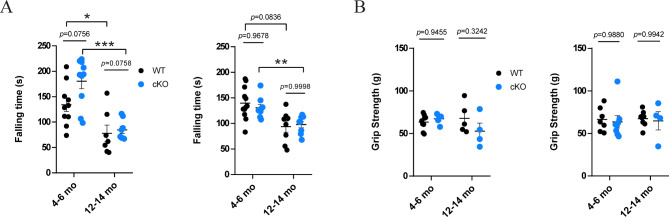
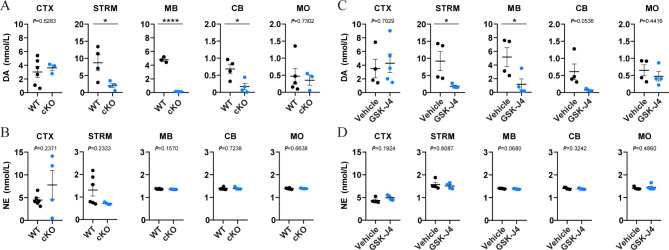
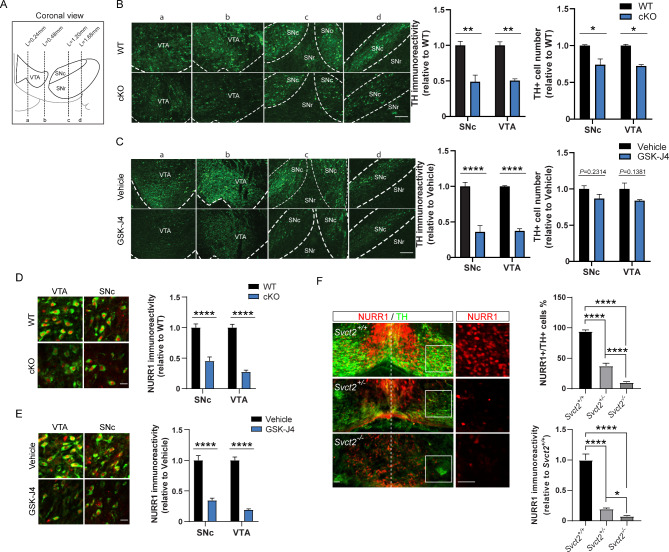
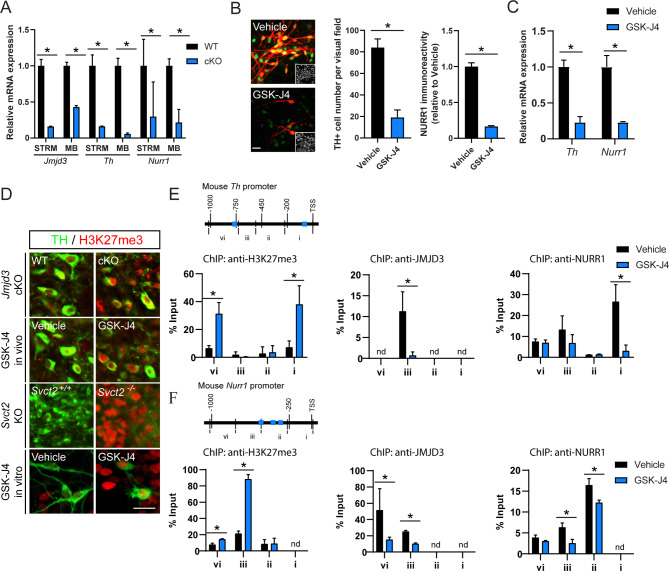
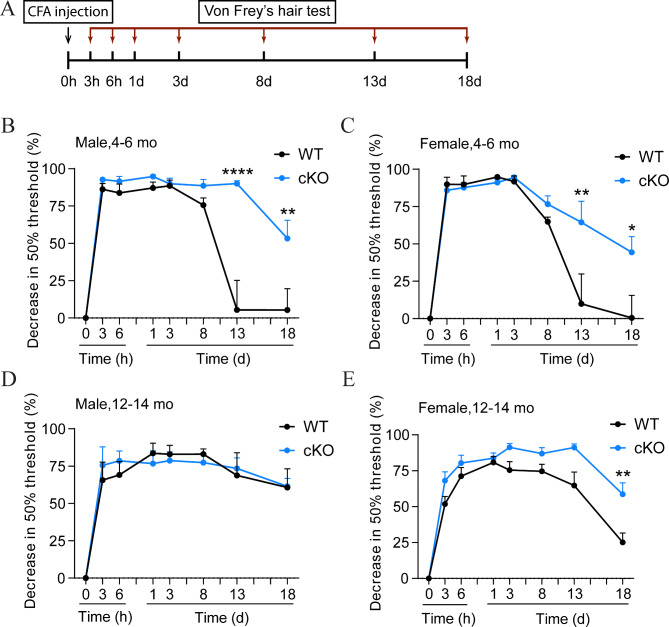
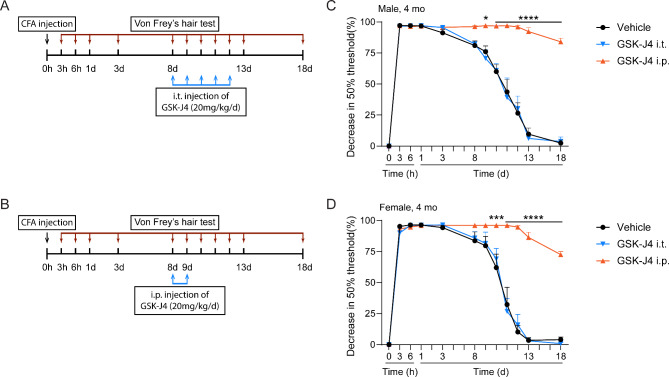
Midbrain dopamine (mDA) neurons participate in a wide range of brain functions through an intricate regulation of DA biosynthesis. The epigenetic factors and mechanisms in this process are not well understood. Here we report that histone demethylase JMJD3 is a critical regulator for DA biosynthesis in adult mouse mDA neurons. Mice carrying Jmjd3 conditional knockout or undergoing pharmaceutical inhibition of JMJD3 showed consistent reduction of DA content in midbrain and striatum. Histological examination of both mice confirmed that TH and NURR1, two key molecules in DA biosynthesis pathway, were decreased in mDA neurons. Mechanistic experiments in vivo and in vitro further demonstrated that the transcriptions of Th and Nurr1 in mDA neurons were suppressed by JMJD3 deficiency, because of increased repressive H3K27me3 and attenuated bindings of JMJD3 and NURR1 on the promoters of both genes. On behavioral level, a significant prolonged inflammation-induced mechanical hyperalgesia was found in conditional knockout mice regardless of sex and age, whereas motor function appeared to be intact. Our findings establish a novel link between DA level in mDA neurons with intrinsic JMJD3 activity, and suggest prolonged chronic inflammatory pain as a major loss-of-function consequence.
中脑多巴胺(mDA)神经元通过对多巴胺生物合成的复杂调控参与广泛的脑功能。这一过程中的表观遗传因素和机制尚未得到充分了解。在此,我们报告组蛋白去甲基化酶JMJD3是成年小鼠mDA神经元中多巴胺生物合成的关键调节因子。携带Jmjd3条件性敲除或接受JMJD3药物抑制的小鼠,其大脑中脑和纹状体中的多巴胺含量持续降低。对这两种小鼠的组织学检查证实,多巴胺生物合成途径中的两个关键分子酪氨酸羟化酶(TH)和核受体相关因子1(NURR1)在mDA神经元中减少。体内和体外的机制实验进一步表明,mDA神经元中Th和Nurr1的转录因JMJD3缺乏而受到抑制,这是由于抑制性组蛋白H3K27me3增加以及JMJD3和NURR1与这两个基因启动子的结合减弱。在行为水平上,无论性别和年龄,条件性敲除小鼠均出现炎症诱导的机械性痛觉过敏显著延长,而运动功能似乎完好无损。我们的研究结果建立了mDA神经元中多巴胺水平与内在JMJD3活性之间的新联系,并表明长期慢性炎症性疼痛是功能丧失的主要后果。