Al Khazal Fatimah J, Bhat Sanjana Mahadev, Zhu Yuxiang, de Araujo Correia Cristina M, Zhou Sherry X, Wilbanks Brandon A, Folmes Clifford D, Sieck Gary C, Favier Judith, Maher L James
Mayo Clinic Graduate School of Biomedical Sciences, Mayo Clinic College of Medicine and Science, Rochester, MN, USA.
Department of Biochemistry and Molecular Biology, Mayo Clinic College of Medicine and Science, 200 First St. SW, Rochester, MN, 55905, USA.
Cancer Metab. 2024 Dec 23;12(1):39. doi: 10.1186/s40170-024-00369-9.
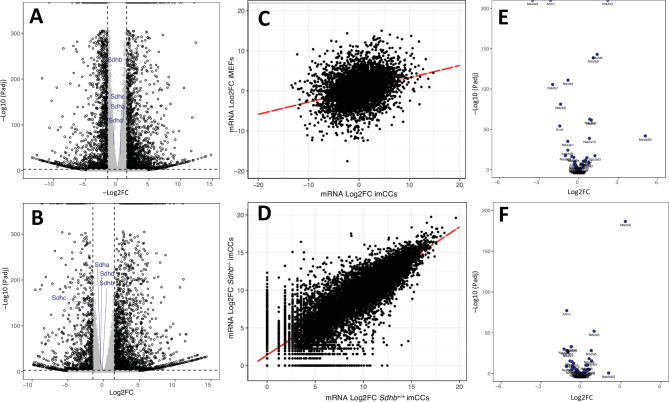
Heterozygosity for loss-of-function alleles of the genes encoding the four subunits of succinate dehydrogenase (SDHA, SDHB, SDHC, SDHD), as well as the SDHAF2 assembly factor predispose affected individuals to pheochromocytoma and paraganglioma (PPGL), two rare neuroendocrine tumors that arise from neural crest-derived paraganglia. Tumorigenesis results from loss of the remaining functional SDHx gene copy, leading to a cell with no functional SDH and a defective tricarboxylic acid (TCA) cycle. It is believed that the subsequent accumulation of succinate competitively inhibits multiple dioxygenase enzymes that normally suppress hypoxic signaling and demethylate histones and DNA, ultimately leading to increased expression of genes involved in angiogenesis and cell proliferation. Why SDH loss is selectively tumorigenic in neuroendocrine cells remains poorly understood. In the absence of SDH-loss tumor-derived cell models, the cellular burden of SDH loss and succinate accumulation have been investigated through conditional knockouts of SDH subunits in pre-existing murine or human cell lines with varying degrees of clinical relevance. Here we characterize two available murine SDH-loss cell lines, immortalized adrenally-derived premature chromaffin cells vs. immortalized fibroblasts, at a level of detail beyond that currently reported in the literature and with the intention of laying the foundation for future investigations into adaptive pathways and vulnerabilities in SDH-loss cells. We report different mechanistic and phenotypic manifestations of SDH subunit loss in the presented cellular contexts. These findings highlight similarities and differences in the cellular response to SDH loss between the two cell models. We show that adrenally-derived cells display more severe morphological cellular and mitochondrial alterations, yet are unique in preserving residual Complex I function, perhaps allowing them to better tolerate SDH loss, thus making them a closer model to SDH-loss PPGL relative to fibroblasts.(281 words).
编码琥珀酸脱氢酶(SDHA、SDHB、SDHC、SDHD)四个亚基的基因以及SDHAF2组装因子的功能丧失等位基因的杂合性,使受影响个体易患嗜铬细胞瘤和副神经节瘤(PPGL),这是两种源自神经嵴衍生副神经节的罕见神经内分泌肿瘤。肿瘤发生是由于剩余功能性SDHx基因拷贝的缺失,导致细胞中没有功能性SDH且三羧酸(TCA)循环存在缺陷。据信,随后琥珀酸的积累竞争性抑制多种双加氧酶,这些酶通常会抑制缺氧信号传导并使组蛋白和DNA去甲基化,最终导致参与血管生成和细胞增殖的基因表达增加。为何SDH缺失在神经内分泌细胞中具有选择性致瘤性仍知之甚少。在缺乏SDH缺失肿瘤衍生细胞模型的情况下,通过在具有不同临床相关性的现有小鼠或人类细胞系中对SDH亚基进行条件性敲除,研究了SDH缺失和琥珀酸积累的细胞负担。在此,我们详细表征了两种现有的小鼠SDH缺失细胞系,即永生化肾上腺来源的嗜铬前体细胞与永生化成纤维细胞,其详细程度超过目前文献报道,并旨在为未来研究SDH缺失细胞中的适应性途径和脆弱性奠定基础。我们报告了在所呈现的细胞环境中SDH亚基缺失的不同机制和表型表现。这些发现突出了两种细胞模型对SDH缺失的细胞反应的异同。我们表明,肾上腺来源的细胞表现出更严重的形态学细胞和线粒体改变,但在保留残余复合体I功能方面具有独特性,这或许使它们能够更好地耐受SDH缺失,从而相对于成纤维细胞而言,使其成为更接近SDH缺失PPGL的模型。