Wei Shulin, Li Mingxing, Zhao Long, Wang Tiangang, Wu Ke, Yang Jiayue, Liu Yubin, Zhao Yueshui, Du Fukuan, Chen Yu, Deng Shuai, Shen Jing, Xiao Zhangang, Li Wanping, Li Xiaobing, Sun Yuhong, Gu Li, Wei Mei, Li Zhi, Wu Xu
Cell Therapy & Cell Drugs of Luzhou Key Laboratory, Department of Pharmacology, School of Pharmacy, Southwest Medical University, Luzhou, 646000, Sichuan, China.
South Sichuan Institute of Translation Medicine, Luzhou, 646000, Sichuan, China.
Chin Med. 2024 Dec 23;19(1):175. doi: 10.1186/s13020-024-01049-y.
Liuweizhiji Gegen-Sangshen oral liquid (LGS), as a Chinese medicinal preparation, is developed from a Traditional Chinese medicinal formula consisting of six Chinese medicinal herbs, including Puerariae lobatae radix, Hoveniae semen, Imperatae rhizoma, Crataegi fructus, Mori fructus and Canarli fructus, and has been extensively utilized in the prevention and treatment of alcoholic liver disease (ALD) clinically. Previous study has demonstrated that LGS dose-dependently mitigated ALD in rat models. However, whether and how the main characteristic constituents of LGS (the flavonoid and polysaccharide fractions, LGSF and LGSP) contribute to the anti-ALD effect remains unclear. This study aimed to assess the anti-ALD effect of LGS and its main fractions (LGSF and LGSP) in a murine model of ALD and to explore the underlying mechanisms.
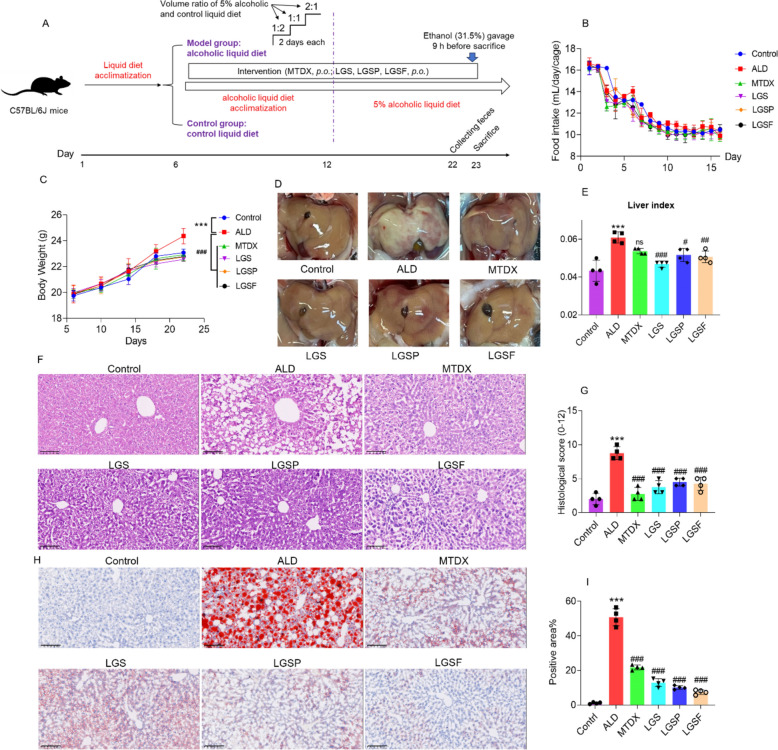
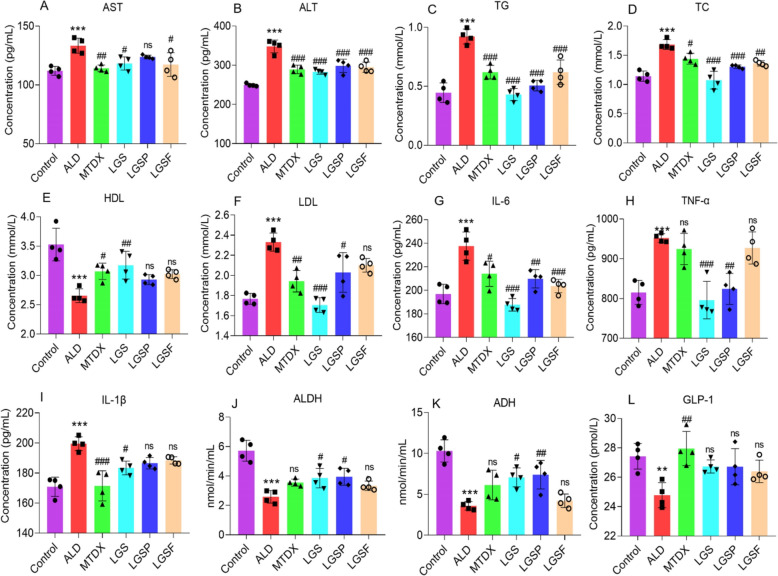
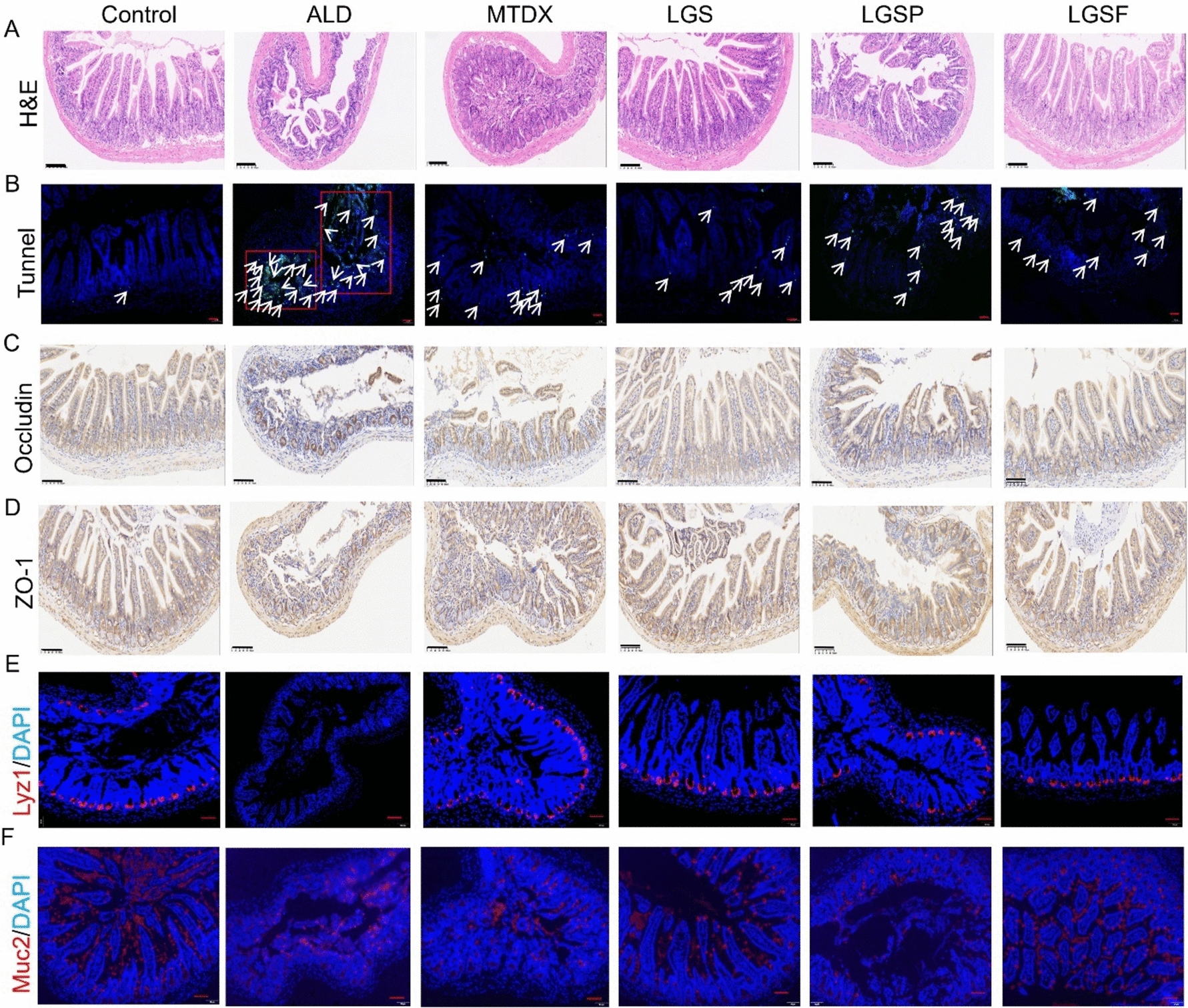
ALD mouse model was constructed using the chronic and binge ethanol feeding method. Biochemical determinations of AST, ALT, TC, TG, ADH, ALDH, HDL, LDL, IL-1β, IL-6, and TNF-α were performed using corresponding kits. Histopathological examination of liver and intestinal sections was conducted based on the H&E staining. Lipid accumulation in hepatocytes was evaluated by oil red O staining. Ethanol metabolism was assessed by determining the activity of ADH and ALDH enzymes. Intestinal barrier function was analyzed based on immunohistochemistry analysis of ZO-1 and occludin and immunofluorescence analysis of epithelial markers, Lgr5, Muc2, and Lyz1. Intestinal epithelial apoptosis was detected by TUNEL staining. Mouse fecal microbiota alterations were analyzed by 16S rRNA sequencing. An in vitro epithelial injury model was established by developing TNF-α-induced 3D-cultured intestinal organoids. In vitro culture of specific bacterial strains was performed.
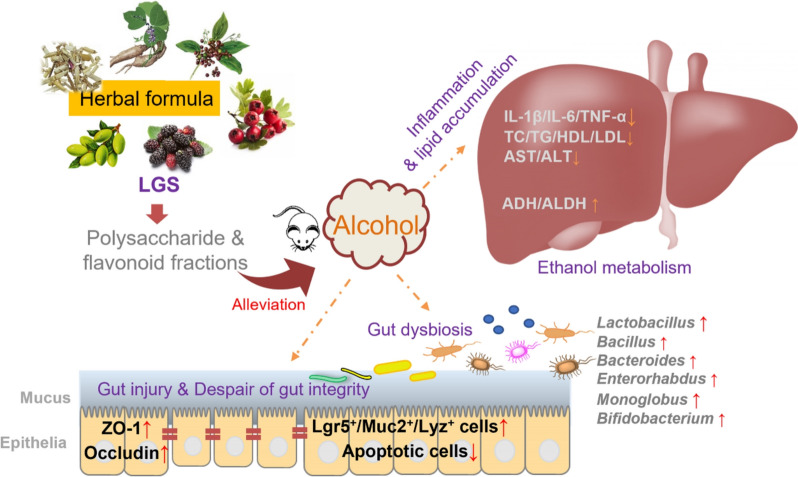
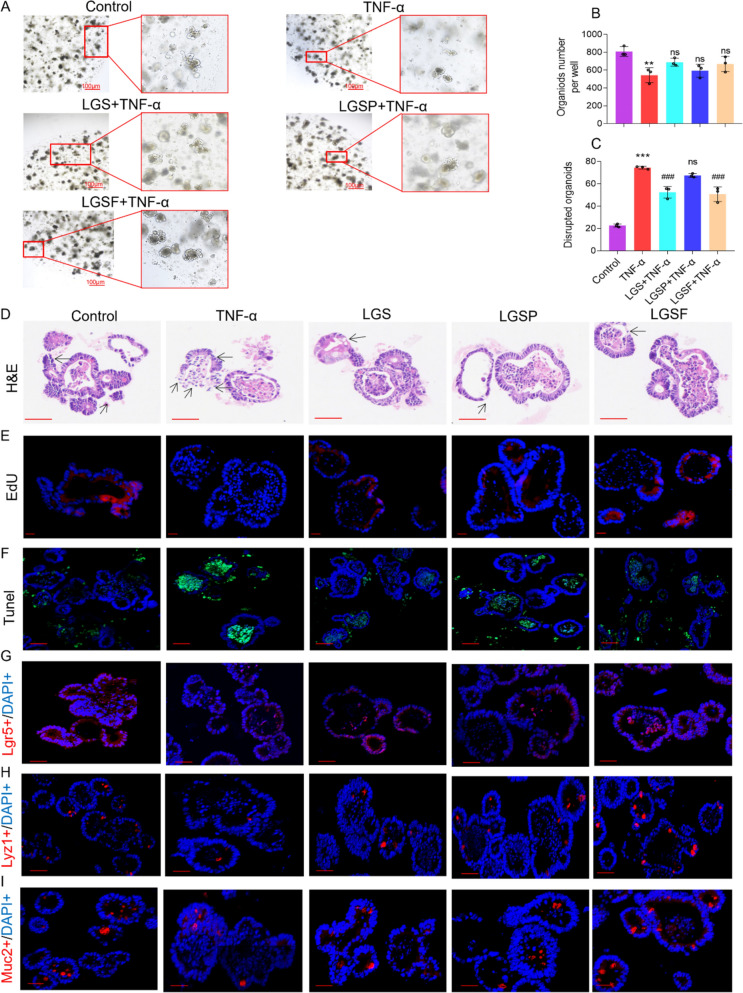
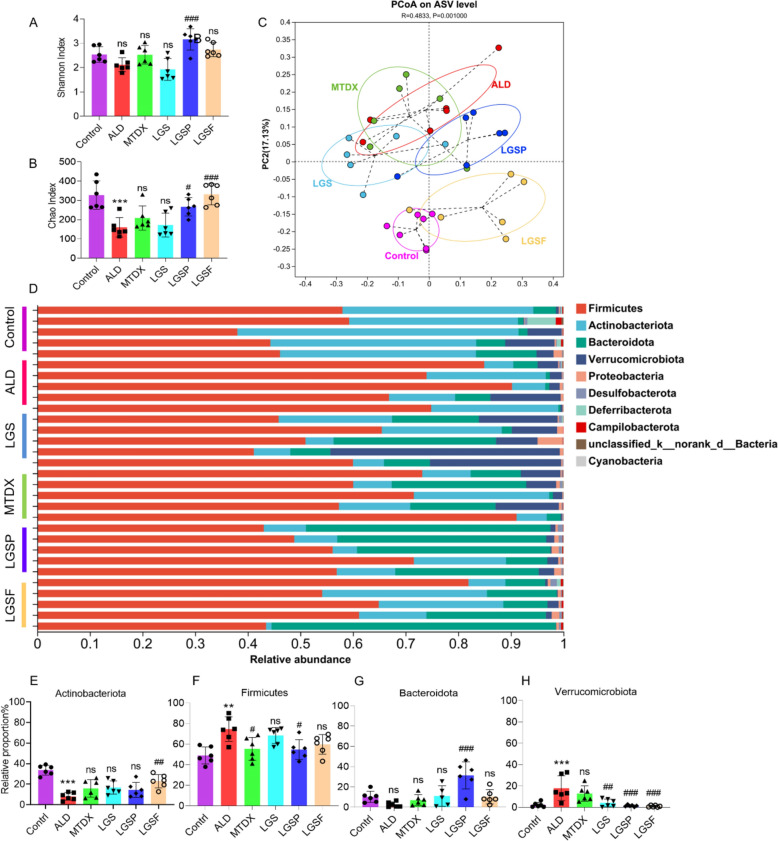
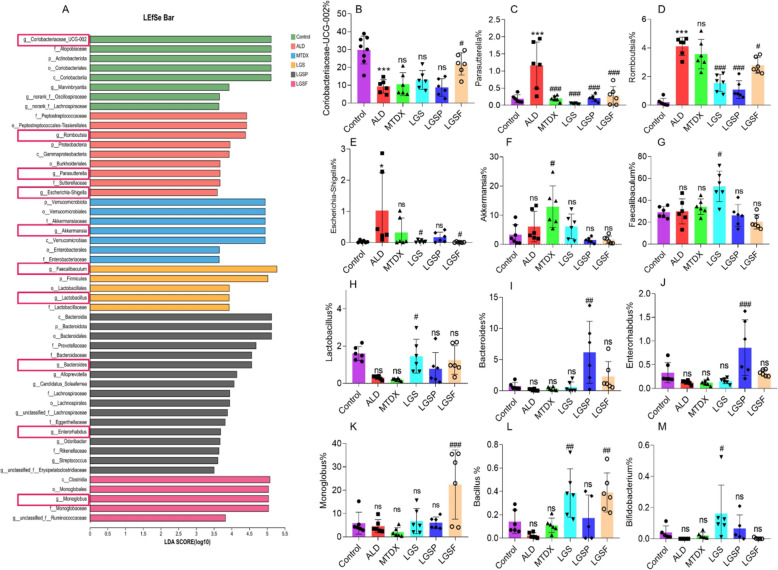
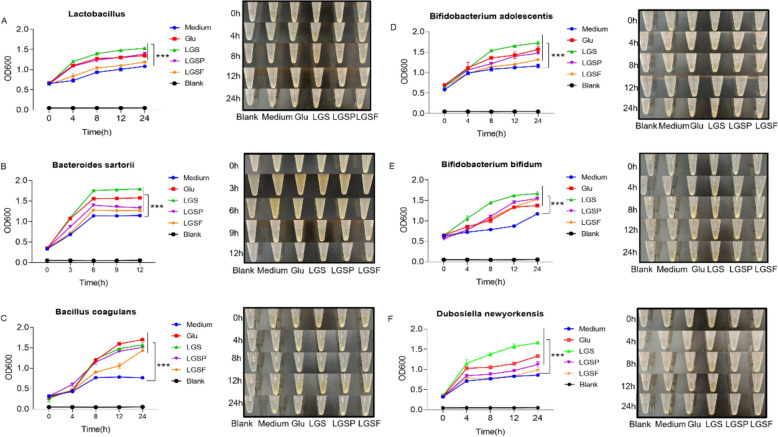
The results showed that LGS and its flavonoid and polysaccharide fractions (LGSF and LGSP) significantly alleviated ALD in mice through attenuating hepatic injury and inflammation, improving liver steatosis and promoting ethanol metabolism. Notably, LGS, LGSP, and LGSF mitigated intestinal damage and maintained barrier function in ALD mice. The intestinal barrier protection function of LGS, LGSP, and LGSF was generally more obvious than that of the positive drug meltadosine. Further study demonstrated that LGS, LGSP, and LGSF promoted intestinal epithelial repair via promoting Lgr5 stem cell mediated regeneration in TNF-α-induced intestinal organoids. LGS and LGSF, other than LGSP, had a better effect on repair of epithelial injury in vitro. Moreover, LGS, LGSP, and LGSF remarkably alleviated gut dysbiosis in ALD mice via at least partially recovery of alcohol-induced microbial changes and induction of specific bacterial groups. In vitro culture of bacterial strains indicated that LGS, LGSP, and LGSF had a specific impact on bacterial growth. LGS and LGSP, but not the LGSF, significantly promoted the growth of Lactobacillus. Similarly, LGS and LGSP significantly increased the proliferation of Bacteroides sartorii, and LGSF had a minimal effect. LGS, LGSP and LGSF all promoted the growth of Bacillus coagulans, Bifidobacterium adolescentis, and Bifidobacterium bifidum. LGS and LGSP promoted the growth of Dubosiella newyorkensis, but the LGSF had no effect.
LGS exerts its anti-ALD effect in mice through regulating gut-liver axis, and its flavonoid and polysaccharide fractions, LGSF and LGSP, are responsible for its protective effect.
六味枳椇葛参口服液(LGS)作为一种中药制剂,由葛根、枳椇子、白茅根、山楂、桑椹、红枣六味中药材组成的传统中药配方研制而成,临床上已广泛用于预防和治疗酒精性肝病(ALD)。先前的研究表明,LGS在大鼠模型中剂量依赖性地减轻了ALD。然而,LGS的主要特征成分(黄酮类和多糖类成分,LGSF和LGSP)是否以及如何对抗ALD作用有贡献仍不清楚。本研究旨在评估LGS及其主要成分(LGSF和LGSP)在ALD小鼠模型中的抗ALD作用,并探讨其潜在机制。
采用慢性和暴饮乙醇喂养法构建ALD小鼠模型。使用相应试剂盒对AST、ALT、TC、TG、ADH、ALDH、HDL、LDL、IL-1β、IL-6和TNF-α进行生化测定。基于苏木精-伊红(H&E)染色对肝脏和肠道切片进行组织病理学检查。通过油红O染色评估肝细胞中的脂质积累。通过测定ADH和ALDH酶的活性评估乙醇代谢。基于ZO-1和闭合蛋白的免疫组织化学分析以及上皮标志物Lgr5、Muc2和Lyz1的免疫荧光分析来分析肠道屏障功能。通过TUNEL染色检测肠道上皮细胞凋亡。通过16S rRNA测序分析小鼠粪便微生物群的变化。通过构建TNF-α诱导的3D培养肠道类器官建立体外上皮损伤模型。进行特定细菌菌株 的体外培养。
结果表明,LGS及其黄酮类和多糖类成分(LGSF和LGSP)通过减轻肝损伤和炎症、改善肝脏脂肪变性和促进乙醇代谢,显著减轻了小鼠的ALD。值得注意的是,LGS、LGSP和LGSF减轻了ALD小鼠的肠道损伤并维持了屏障功能。LGS、LGSP和LGSF的肠道屏障保护功能通常比阳性药物美他多辛更明显。进一步研究表明,LGS、LGSP和LGSF通过促进Lgr5干细胞介导的TNF-α诱导的肠道类器官再生来促进肠道上皮修复。除LGSP外,LGS和LGSF在体外对上皮损伤的修复效果更好。此外,LGS、LGSP和LGSF通过至少部分恢复酒精诱导的微生物变化和诱导特定细菌群,显著减轻了ALD小鼠的肠道菌群失调。细菌菌株的体外培养表明,LGS、LGSP和LGSF对细菌生长有特定影响。LGS和LGSP,但不是LGSF,显著促进了乳酸杆菌的生长。同样,LGS和LGSP显著增加了萨特氏拟杆菌 的增殖,而LGSF的作用最小。LGS、LGSP和LGSF均促进了凝结芽孢杆菌、青春双歧杆菌和两歧双歧杆菌的生长。LGS和LGSP促进了纽约杜波氏菌的生长,但LGSF没有作用。
LGS通过调节肠-肝轴在小鼠中发挥抗ALD作用,其黄酮类和多糖类成分LGSF和LGSP是其保护作用的原因。