Light Page M, Singh Neha S, Alhaffar Mervat, Allison Lauren E, Mounier-Jack Sandra, Ratnayake Ruwan, Checchi Francesco, Abdelmagid Nada
Department of Infectious Disease Epidemiology, Faculty of Epidemiology and Population Health, International Health London School of Hygiene and Tropical Medicine, London, WC1E 7HT, UK.
Department of Global Health and Development, Faculty of Public Health and Policy, School of Hygiene and Tropical Medicine, London, WC1E 7HT, UK.
Confl Health. 2024 Dec 23;18(1):77. doi: 10.1186/s13031-024-00638-w.
Children, particularly those who have received no routine vaccinations (zero-dose children), are at high risk of vaccine-preventable diseases in humanitarian crisis settings. However, the decision-making processes underlying vaccine intervention design and delivery in such settings are poorly understood. The present study investigated the decision-making practices of organisations involved in childhood vaccination in humanitarian crisis settings globally via an online survey.
Individuals involved in the design or delivery of childhood vaccination programmes in humanitarian crisis settings were invited to fill out a self-administered online survey. Respondents were asked about factors influencing intervention design and vaccine delivery; use of technical guidance, specifically the WHO decision-making framework for vaccination in acute humanitarian emergencies (WHO Framework); and practices for reaching zero-dose children.
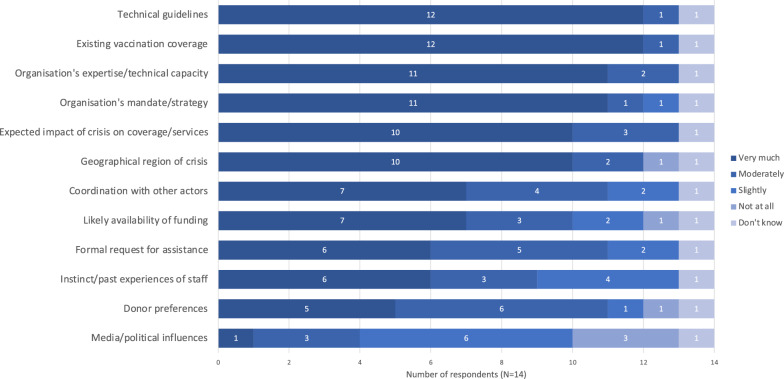
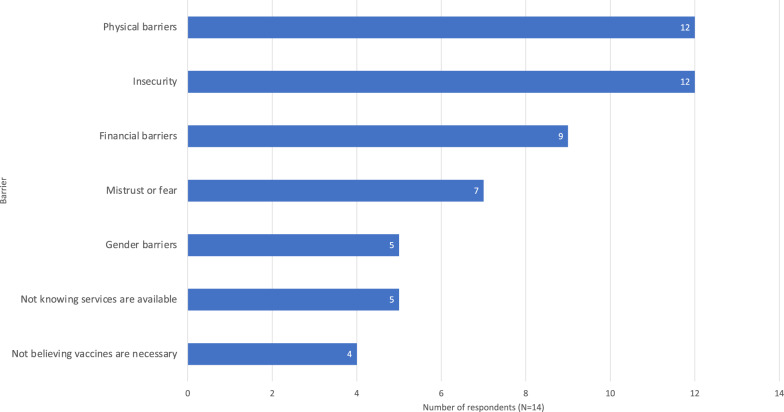
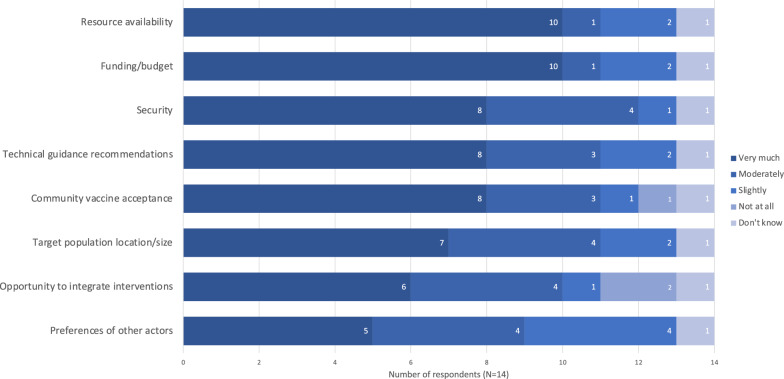
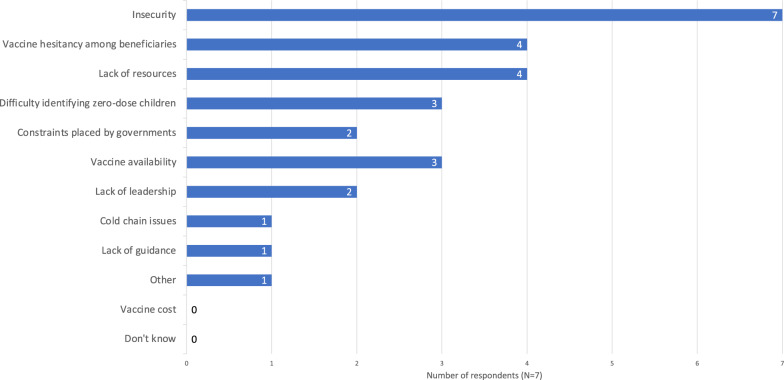
Fourteen responses were received. Large international organisations and UN agencies were overrepresented in the sample. Technical guidance was considered of high importance when designing vaccine interventions. However, the WHO Framework is not available in relevant languages and has not been well-distributed to local and national actors. Awareness of initiatives to reach zero-dose children was high within our sample, though this may not accurately reflect global awareness. Security and resource availability were key barriers to vaccine delivery and reaching zero-dose children. Problems with vaccine access in our sample pertained primarily to issues with the procurement system rather than vaccine cost.
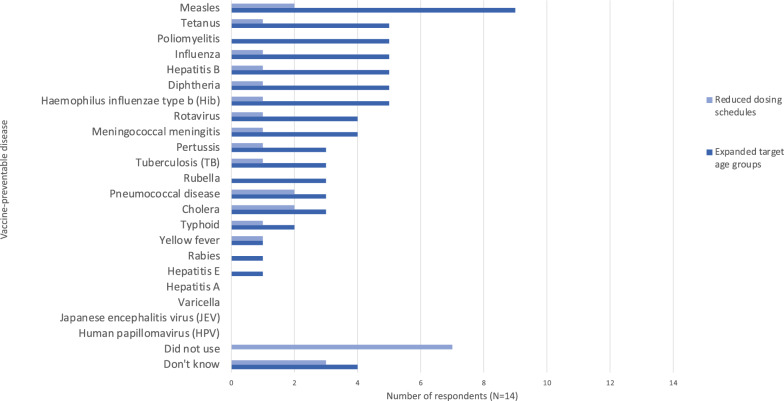
The WHO Framework should be provided in more languages, and vaccination actors at local and national level should be engaged to improve its practicality and increase awareness of its aims. In order to reach zero-dose children, vaccines must be made available for use in expanded age groups, which is sometimes not currently feasible within the Gavi/UNICEF procurement system. Clarifying this policy would allow relevant organisations to reach more zero-dose children. Additionally, security is a key barrier impeding vaccine delivery, including for zero-dose children. Safe operational space for humanitarian actors in conflict must be maintained and global conflict resolution mechanisms improved.
儿童,尤其是那些未接受常规疫苗接种的儿童(零剂量儿童),在人道主义危机环境中面临疫苗可预防疾病的高风险。然而,在此类环境中疫苗干预设计和实施的决策过程却鲜为人知。本研究通过在线调查,对全球人道主义危机环境中参与儿童疫苗接种的组织的决策实践进行了调查。
邀请参与人道主义危机环境中儿童疫苗接种计划设计或实施的个人填写一份自行管理的在线调查问卷。受访者被问及影响干预设计和疫苗接种的因素;技术指南的使用情况,特别是世界卫生组织在急性人道主义紧急情况下的疫苗接种决策框架(世卫组织框架);以及接触零剂量儿童的实践情况。
共收到14份回复。大型国际组织和联合国机构在样本中占比过高。在设计疫苗干预措施时,技术指南被认为非常重要。然而,世卫组织框架没有提供相关语言版本,也没有很好地分发给地方和国家行为体。在我们的样本中,对接触零剂量儿童倡议的知晓度较高,尽管这可能无法准确反映全球知晓情况。安全和资源可用性是疫苗接种以及接触零剂量儿童的关键障碍。我们样本中的疫苗获取问题主要涉及采购系统问题,而非疫苗成本。
应提供更多语言版本的世卫组织框架,并让地方和国家层面的疫苗接种行为体参与进来,以提高其实用性并增强对其目标的认识。为了接触到零剂量儿童,必须使疫苗能够在更广泛的年龄组中使用,而这在目前的全球疫苗免疫联盟/联合国儿童基金会采购系统中有时是不可行的。明确这一政策将使相关组织能够接触到更多的零剂量儿童。此外,安全是阻碍疫苗接种的关键障碍,包括对零剂量儿童的疫苗接种。必须为人道主义行为体在冲突地区维持安全的行动空间,并改进全球冲突解决机制。