Wang Nan, Huang Xin-Yun, Jiang Xu-Feng, Wang Li, Cheng Shu, Xu Peng-Peng, Dong Lei, Ou-Yang Bin-Shen, Mu Rong-Ji, Li Chen, Zhao Yan, Feng Yan, Dou Hong-Jing, Zheng Zhong, Zhao Wei-Li
State Key Laboratory of Medical Genomics, Shanghai Institute of Hematology, National Research Center for Translational Medicine at Shanghai, Ruijin Hospital Affiliated to Shanghai Jiao Tong University School of Medicine, Shanghai, China.
Department of Nuclear Medicine, Shanghai Rui Jin Hospital, Shanghai Jiao Tong University School of Medicine, Shanghai, China.
Hematol Oncol. 2025 Jan;43(1):e70012. doi: 10.1002/hon.70012.
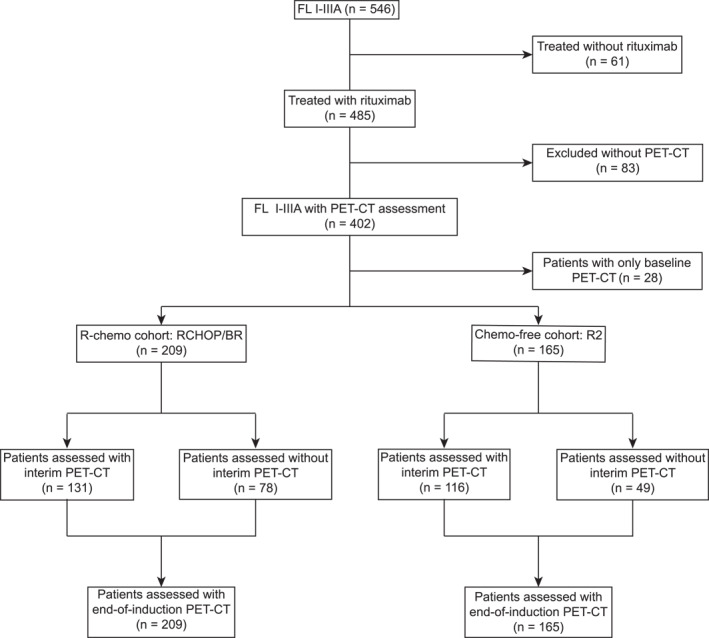
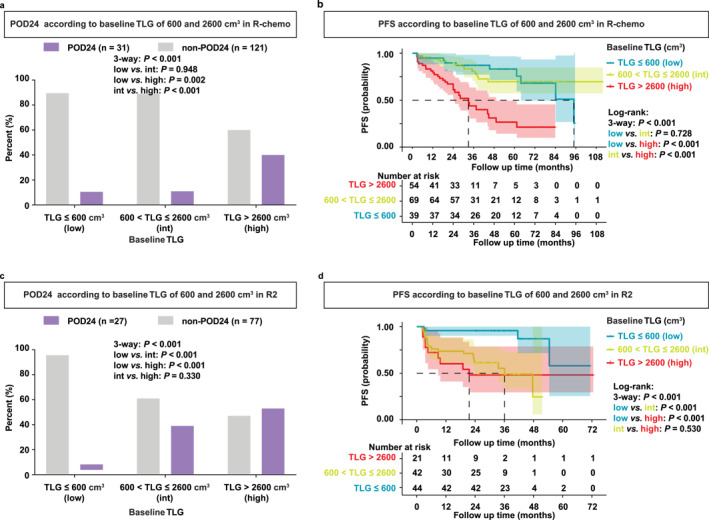
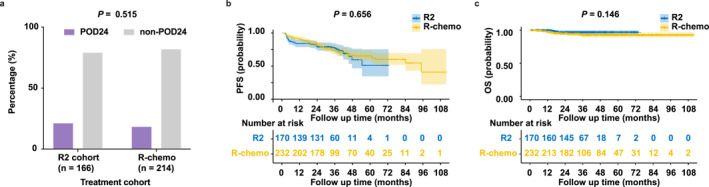
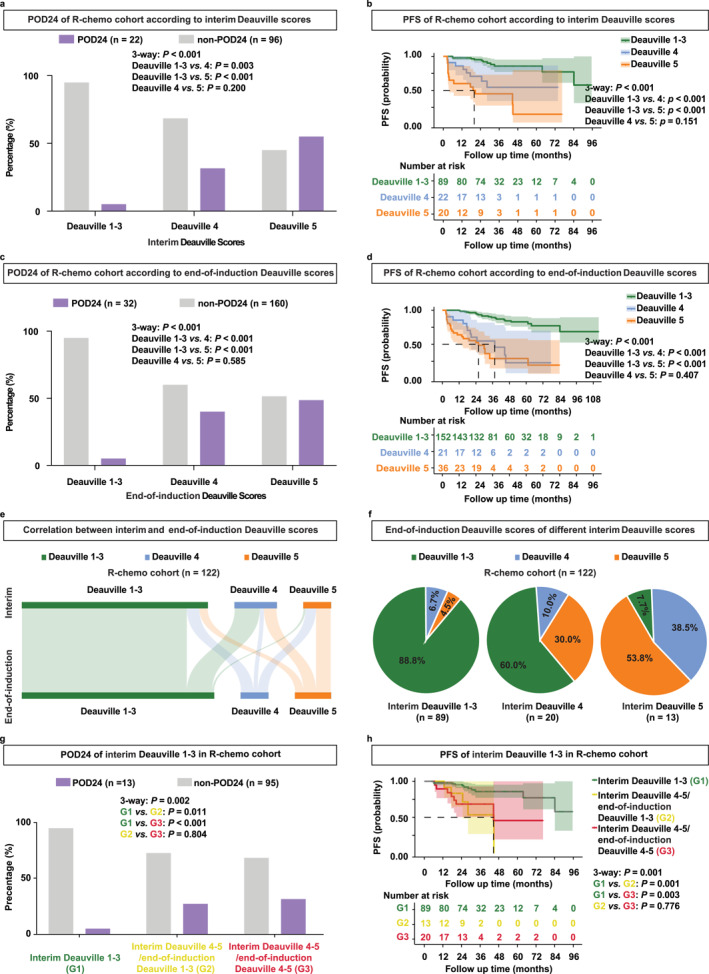
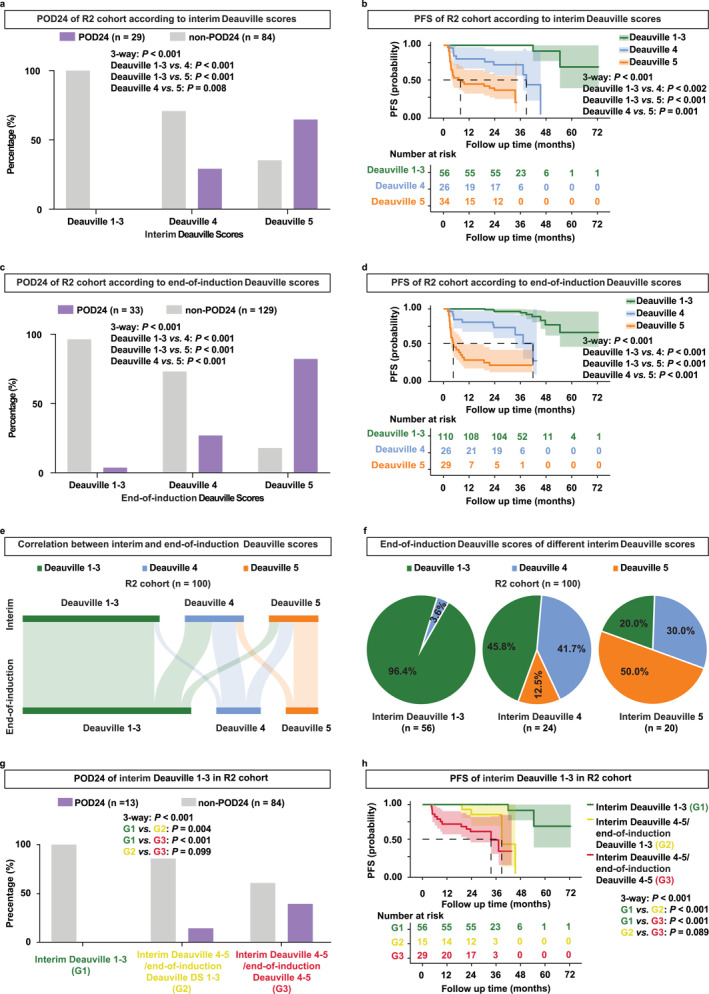
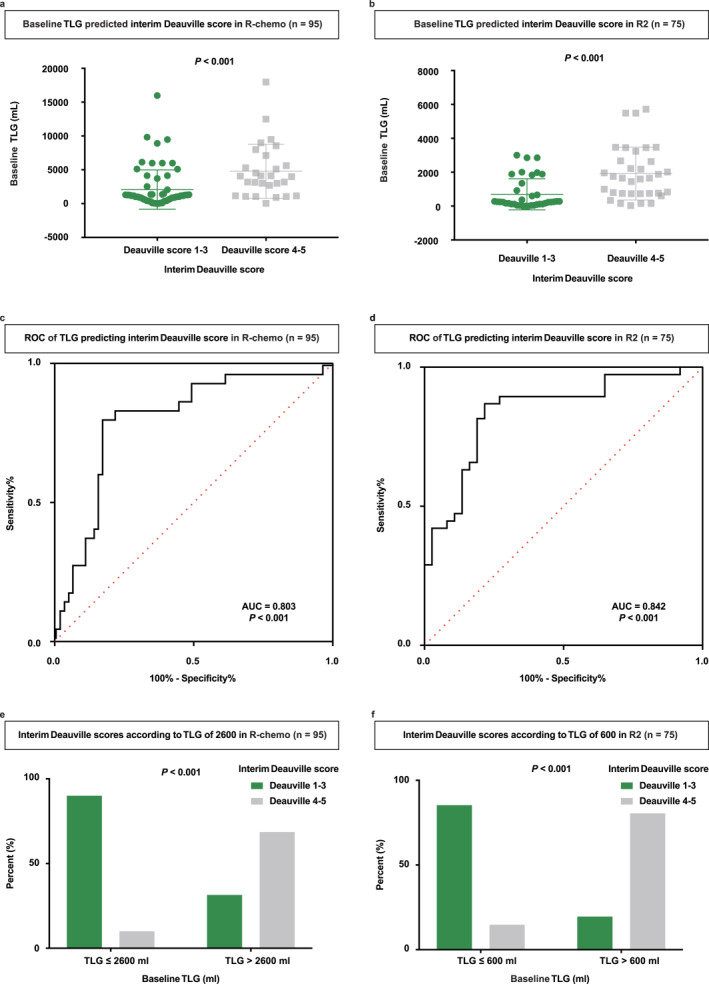
Newly diagnosed follicular lymphoma (FL) patients usually received first-line rituximab-based immunochemotherapy (R-chemo). Recently, rituximab plus lenalidomide (R2) emerged as an alternative chemo-free immunotherapy. We performed a comparative analysis of positron emission tomography/computed tomography (PET/CT) in FL undergoing R-chemo or R2. With data of sequential PET/CT at the baseline, interim, and end-of-induction, treatment responses and survival outcomes were analyzed using Deauville scores at the interim and end-of-induction. Additionally, correlations between interim Deauville scores and baseline PET/CT parameters were explored. Conclusively, we revealed that Deauville 1-3 at the interim and end-of-induction showed lower disease progression within 24 months (POD24) and superior progression-free survival (PFS) in R-chemo and R2 cohorts. Also, patients with interim Deauville 1-3 exhibited reduced POD24 and favorable PFS as compared to those with interim Deauville 4-5/end-of-induction Deauville 1-3. Furthermore, total lesion glycolysis of baseline PET-CT surpassed standardized uptake value and total metabolic tumor volume in predicting interim Deauville 1-3, with different optimal cutoffs of 2600 and 600 mL in the R-chemo and R2 cohort. These findings underscored the potential of PET-CT-adapted strategies to achieve durable remission in FL undergoing rituximab-based immunochemotherapy or immunotherapy.
新诊断的滤泡性淋巴瘤(FL)患者通常接受以利妥昔单抗为基础的一线免疫化疗(R-化疗)。最近,利妥昔单抗联合来那度胺(R2)成为一种替代性的无化疗免疫疗法。我们对接受R-化疗或R2治疗的FL患者进行了正电子发射断层扫描/计算机断层扫描(PET/CT)的比较分析。利用基线、中期和诱导结束时连续PET/CT的数据,使用中期和诱导结束时的多维尔(Deauville)评分分析治疗反应和生存结果。此外,还探讨了中期Deauville评分与基线PET/CT参数之间的相关性。最终,我们发现中期和诱导结束时Deauville 1-3级在R-化疗和R2队列中显示出24个月内较低的疾病进展(POD24)和较好的无进展生存期(PFS)。而且,与中期Deauville 4-5/诱导结束时Deauville 1-3级的患者相比,中期Deauville 1-3级的患者POD24降低且PFS良好。此外,在预测中期Deauville 1-3级方面,基线PET-CT的总病灶糖酵解超过了标准化摄取值和总代谢肿瘤体积,在R-化疗和R2队列中的最佳截断值分别为2600和600 mL。这些发现强调了PET-CT适应性策略在接受以利妥昔单抗为基础的免疫化疗或免疫治疗的FL患者中实现持久缓解的潜力。