Murugesu Sughashini, Grogan Robert James, Meehan Hannah, Cooper Nina, Novak Alex, Bayar Erna, Kasaven Lorraine Sheena, Visvanathan Shankar Dilip, Saso Srdjan, Joash Karen, Bourne Tom
Queen Charlotte's and Chelsea Hospital, Imperial College, London, UK.
Department of Metabolism, Digestion and Reproduction, Imperial College, London, UK.
Adv Med Educ Pract. 2024 Dec 17;15:1231-1242. doi: 10.2147/AMEP.S469745. eCollection 2024.
To determine the level of uptake of telemedicine among postgraduate obstetrics and gynaecology (O&G) trainees in London, and how they perceive its impact on their training.
A mixed-methods survey aimed at exploring trainee perspectives of telemedicine use in clinical practice and its implications for training. Study participants were O&G specialist doctors on the London (UK) training programme. The survey was distributed to the 2022 cohort via Email communication facilitated by Health Education England.
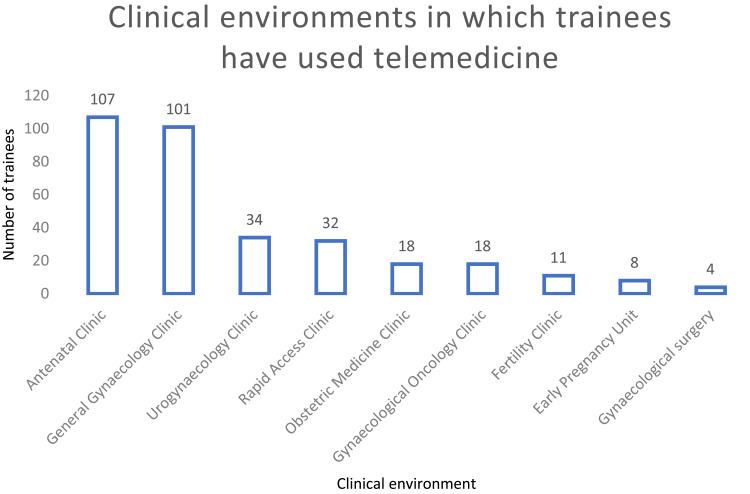
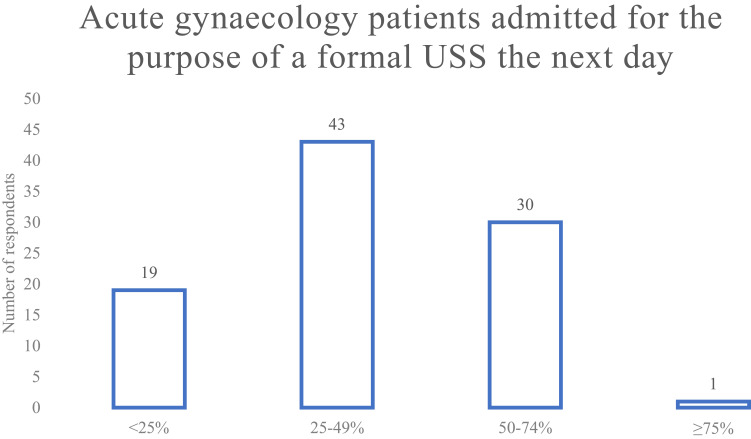
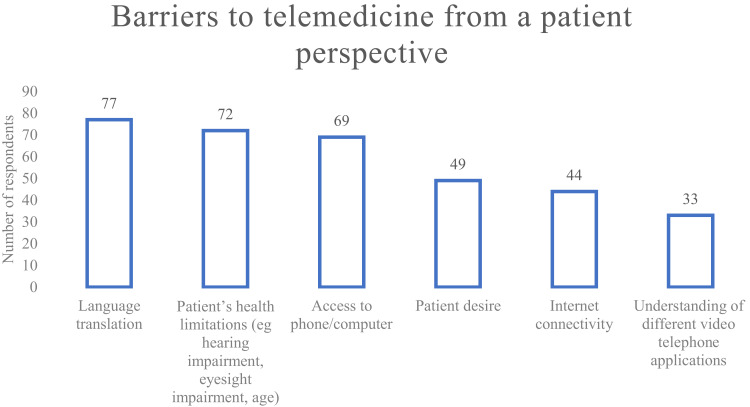
The response rate was 46.3% (118/255). Of respondents, 96% (113/118) had experience of telemedicine, in a range of clinical environments; 91% (106/117) felt telemedicine should become embedded in O&G practice (the most frequent reported advantage was time-saving and a barrier was language translation); 43% of trainees (50/116) stated that they were unable to attain effective clinical training during telemedicine appointments; and 70% (81/116) indicated a preference for remote online teaching. The majority of trainees (75%) had some level of experience in the use of technology in clinical training, encompassing various modalities including surgical and ultrasound simulation, remote real-time training and virtual reality patient consultations. Trainee responses, on the whole, reflected a lack of confidence in their ultrasound skills; 79.5% (74/93) of trainees responsible for acute gynaecology admissions reported that at least 25% of admissions were for deferred ultrasound scanning investigation. Most trainees anticipated that real-time remote supervision for both USS and laparoscopy would enhance training opportunities and expedite time to patient diagnosis and management. Anticipated barriers included concerns regarding the uptake of technology and connectivity issues.
Telemedicine for clinical care has been demonstrated to be well-received by most O&G trainees. However, it is necessary to consider effective O&G training when delivering telemedicine. Technology gives rise to a number of training opportunities, with the development of online teaching, telementoring and simulation. Trainees report both advantages and disadvantages which should be carefully considered to optimise postgraduate O&G training.
确定伦敦妇产科研究生培训学员对远程医疗的接受程度,以及他们如何看待其对培训的影响。
一项混合方法调查,旨在探索学员对临床实践中使用远程医疗的看法及其对培训的影响。研究参与者是英国伦敦培训项目中的妇产科专科医生。该调查通过英国健康教育部门协助的电子邮件通信分发给2022年的学员群体。
回复率为46.3%(118/255)。在受访者中,96%(113/118)有远程医疗经验,涉及一系列临床环境;91%(106/117)认为远程医疗应融入妇产科实践(最常提到的优势是节省时间,障碍是语言翻译);43%的学员(50/116)表示在远程医疗预约期间无法获得有效的临床培训;70%(81/116)表示倾向于远程在线教学。大多数学员(75%)在临床培训中使用技术方面有一定程度的经验,包括各种模式,如手术和超声模拟、远程实时培训和虚拟现实患者咨询。总体而言,学员的回答反映出他们对超声技能缺乏信心;负责急性妇科入院的学员中有79.5%(74/93)报告称,至少25%的入院是为了推迟超声扫描检查。大多数学员预计,超声检查和腹腔镜检查的实时远程监督将增加培训机会,并加快患者诊断和管理的时间。预期的障碍包括对技术采用的担忧和连接问题。
临床护理中的远程医疗已被证明受到大多数妇产科培训学员的欢迎。然而,在提供远程医疗时,有必要考虑有效的妇产科培训。随着在线教学、远程指导和模拟的发展,技术带来了许多培训机会。学员报告了优点和缺点,应仔细考虑这些以优化妇产科研究生培训。