Robbins Travis R, Hegdahl Tiffany R
Department of Biology University of Nebraska Omaha Omaha Nebraska USA.
Ecol Evol. 2024 Dec 23;14(12):e70680. doi: 10.1002/ece3.70680. eCollection 2024 Dec.
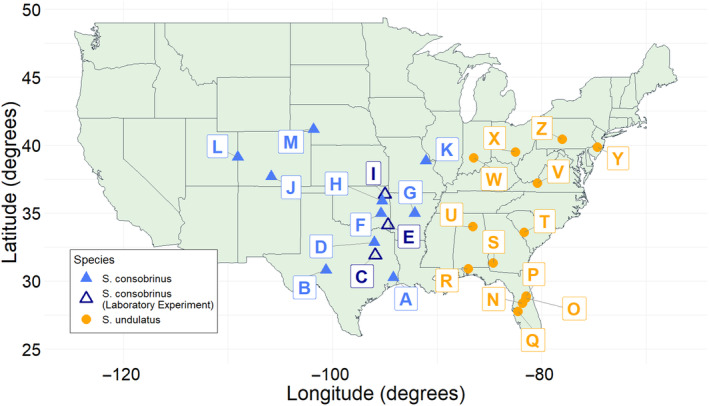
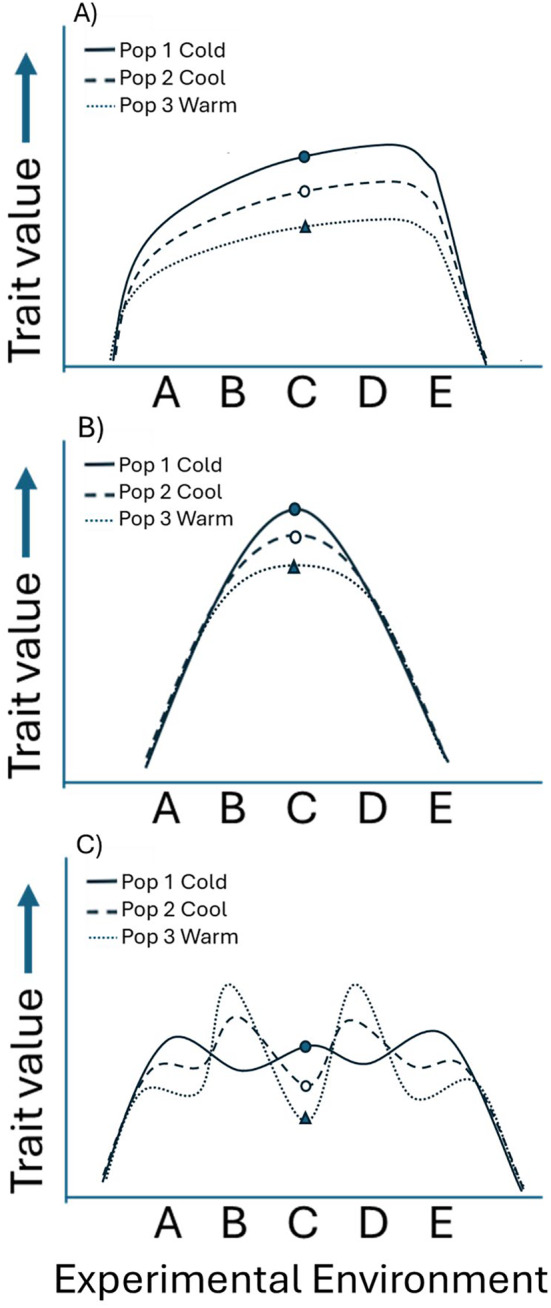
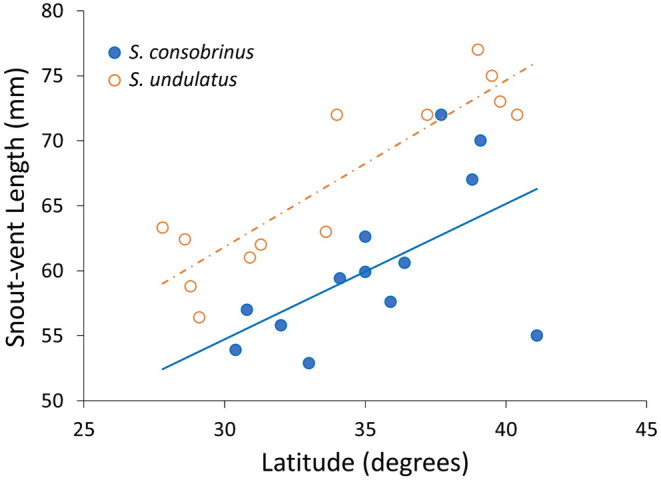
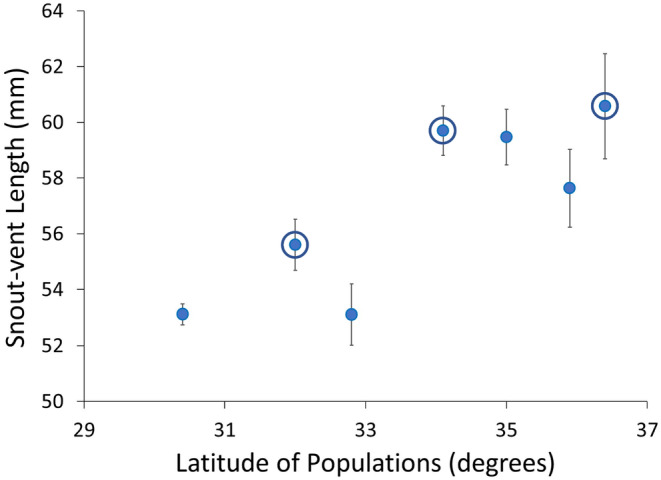
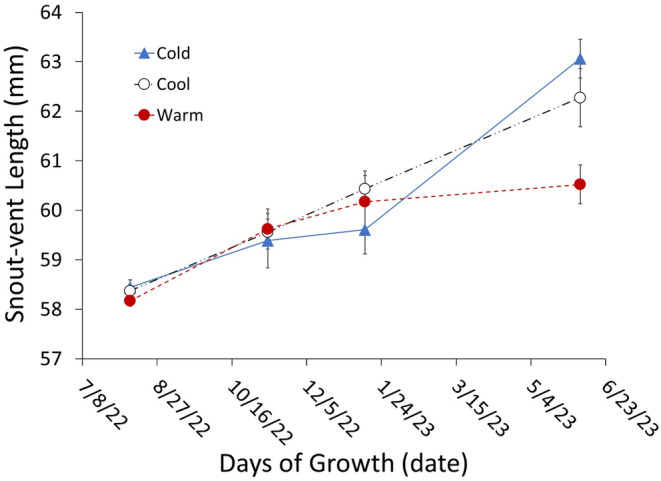
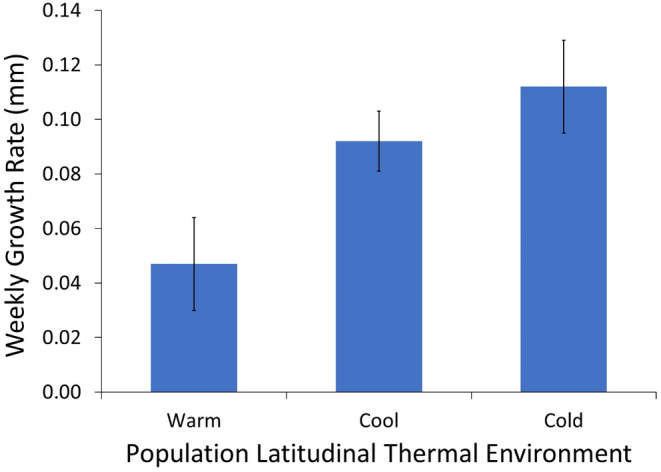
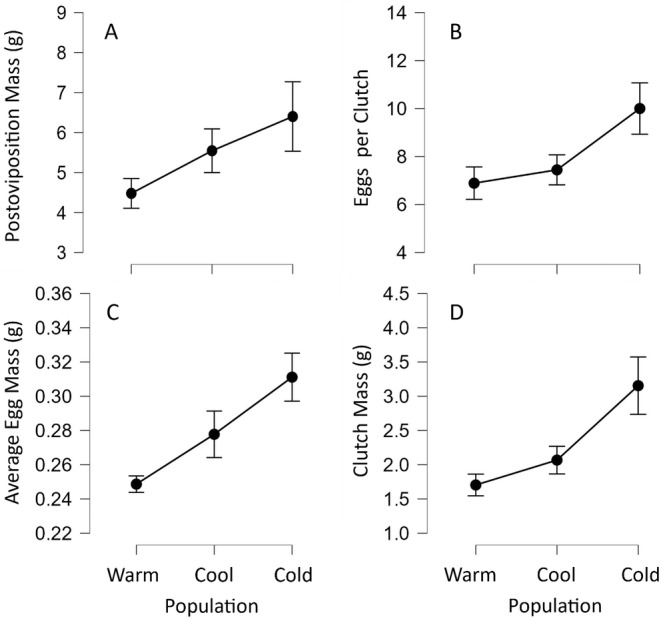
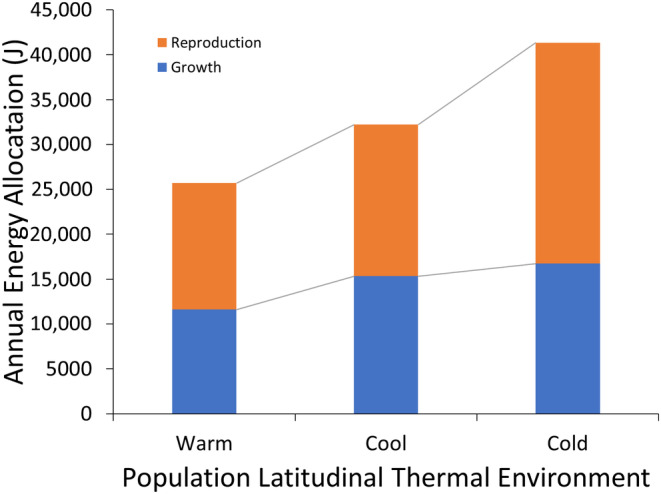
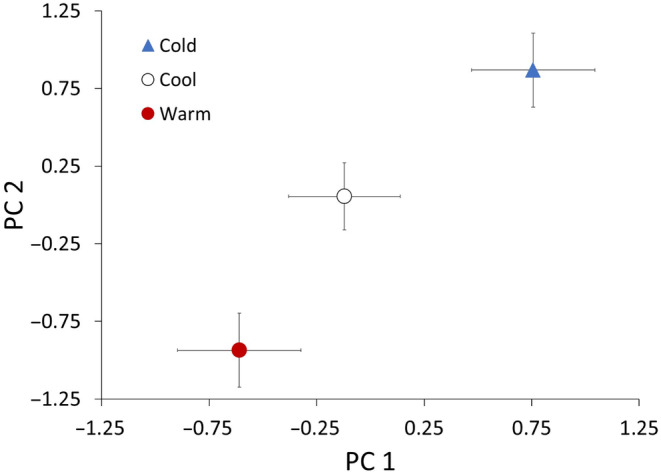
Although we have evidence that many organisms are exhibiting declines in body size in response to climate warming, we have little knowledge of underlying mechanisms or how associated phenotypic suites may coevolve. The better we understand coadaptations among physiology, morphology, and life history, the more accurate our predictions will be of organismal response to changing thermal environments. This is especially salient for ectotherms because they comprise 99% of species worldwide and are key to functioning ecosystems. Here, we assess body size, growth rates, and reproductive traits of a vertebrate ectotherm, the prairie lizard, , for multiple populations along a latitudinal thermal gradient and compare body size clines between and eastern fence lizard () populations. We found that phenotypic values increased as environmental temperatures decreased for all traits examined, resulting in a pattern representative of countergradient variation. The positive covariation of phenotypes across the thermal gradient exemplifies the enigma of "master of all traits." This enigma was further illustrated by the energy expenditure toward growth and reproduction increasing as phenotypic values increased. The evolutionary responses appear to reveal overcompensation because annual energy expenditure toward growth and reproduction increased even as activity periods decreased. Overall, compensatory responses to cooler thermal environments were exhibited by prairie lizards in body size, growth rate, egg size, and clutch size, resulting in cold-adapted populations allocating more energy toward maintenance, growth, and reproduction than lower latitude, warm-adapted populations. If larger body size in ectotherms is a result of intrinsically faster physiological rates compensating for cooler temperatures and shorter activity periods, then smaller body sizes in warmer environments may be a result of greater reliance on available environmental temperatures for physiological rates and time for assimilating resources.
尽管我们有证据表明许多生物因气候变暖而出现体型减小的情况,但我们对其潜在机制或相关表型组合如何协同进化却知之甚少。我们对生理、形态和生活史之间的协同适应理解得越透彻,我们对生物对不断变化的热环境的反应的预测就会越准确。这对外温动物尤为重要,因为它们占全球物种的99%,是生态系统功能的关键。在这里,我们评估了脊椎动物外温动物草原蜥蜴多个种群沿纬度热梯度的体型、生长速率和繁殖特征,并比较了草原蜥蜴与东部围栏蜥蜴种群之间的体型渐变群。我们发现,对于所有检测的性状,表型值随着环境温度的降低而增加,从而形成了一种代表反梯度变化的模式。热梯度上各表型的正协变体现了“所有性状之主”的谜团。随着表型值的增加,生长和繁殖所需的能量消耗也增加,这进一步说明了这个谜团。进化反应似乎显示出过度补偿,因为即使活动期减少,生长和繁殖的年度能量消耗仍在增加。总体而言,草原蜥蜴在体型、生长速率、卵大小和窝卵数方面对较冷的热环境表现出补偿反应,导致适应寒冷的种群比低纬度、适应温暖的种群将更多能量分配到维持、生长和繁殖上。如果外温动物较大的体型是内在更快的生理速率补偿较冷温度和较短活动期的结果,那么在温暖环境中较小的体型可能是生理速率和资源同化时间对可用环境温度依赖更大的结果。