Capitani Sabrina, Brown Liam P, Carrillo Catherine D, Lau Calvin Ho-Fung
Ottawa Laboratory (Carling), Canadian Food Inspection Agency, Ottawa, Ontario, Canada.
Curr Res Food Sci. 2024 Dec 1;10:100944. doi: 10.1016/j.crfs.2024.100944. eCollection 2025.
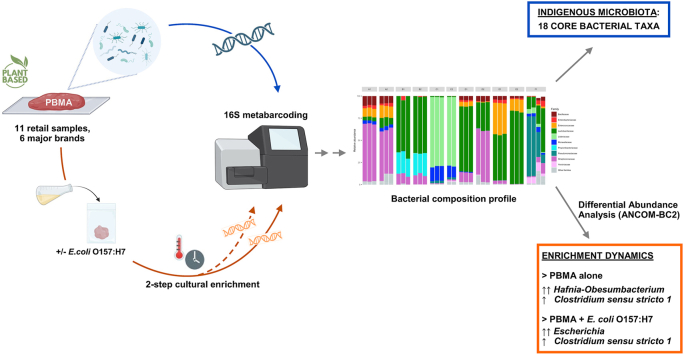
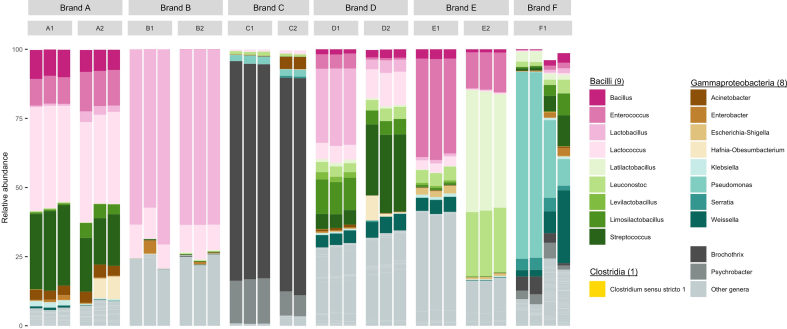
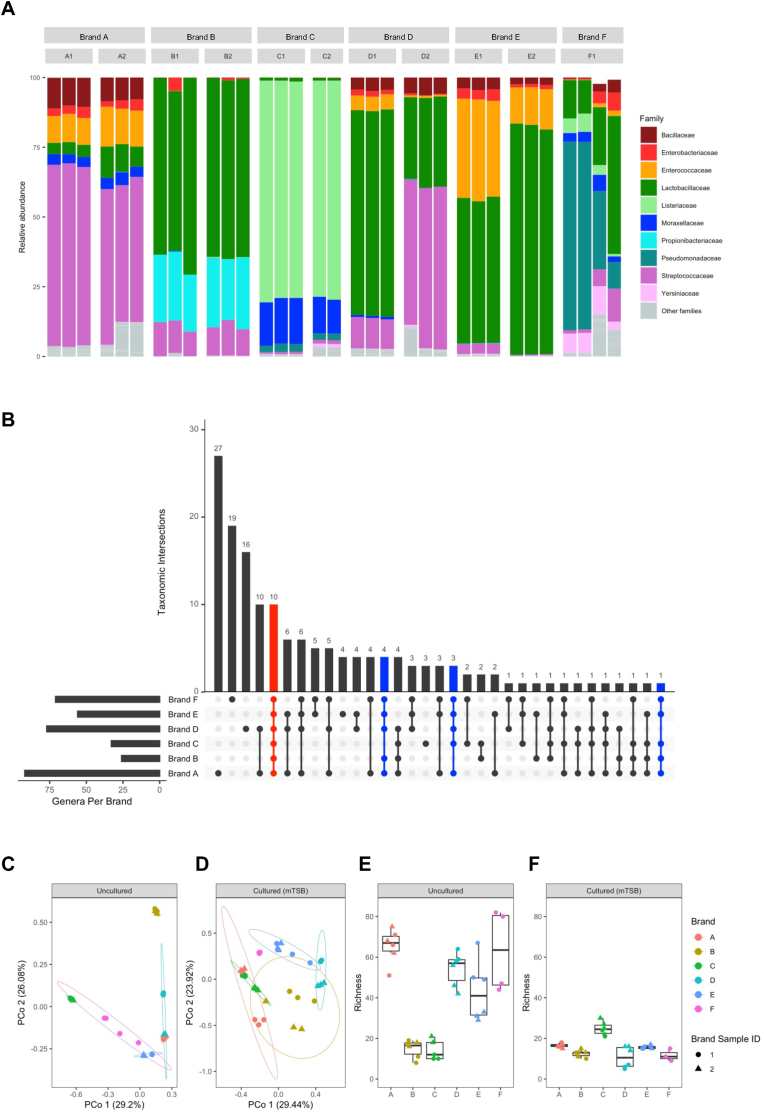
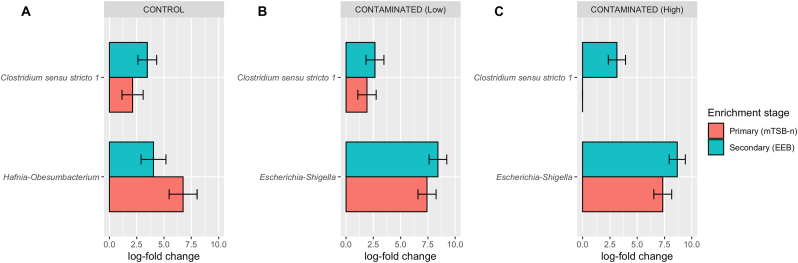
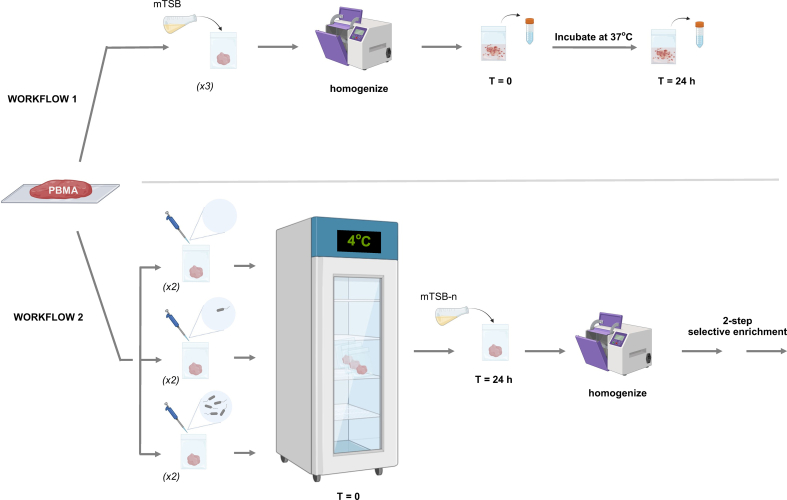
Towards fostering a more sustainable food production system in face of the climate change challenge, alternative protein meat-substitute products that are plant-based and free of animal by-products have been gaining attractions from both food manufacturers and consumers. With these so-called plant-based meat analogues (PBMAs) becoming increasingly available at supermarkets, there is very little known about their microbial properties. In this short report, we characterized the bacterial composition of raw plant-based ground meat imitation retail products using 16S rRNA gene amplicon sequencing. Despite the observed bacterial community dissimilarity between sample brands, a total of 18 shared genera (dominated by Bacilli and Gammaproteobacteria classes) were identified as the core constituents of the bacterial microbiota of these PBMA products. Within the scope of food safety testing, to gain insights on the dynamics of the enrichment process for O157:H7 in accordance with the Health Canada reference method MFHPB-10, bacterial taxonomic analyses were conducted at different stages of the prescribed cultural procedures. Using both control and O157:H7-inoculated PBMA samples it was revealed that, independent of the presence of O157:H7, off-target bacteria of the genus were significantly enriched from the uncultured samples. Additionally, the abundance of bacteria in the PBMA samples was also increased in the enrichment products, but only when O157:H7 was absent. Consistent with the spread-plating results indicating that the inoculated O157:H7 cells were capable of reaching a high density (>10 CFU/ml) in the resultant enrichment cultures, the significant enrichment of bacterial 16S rRNA gene sequences belonging to the targeted genus of but not . This further highlights the competitive nature of the selective enrichment for O157:H7 against specific background bacteria associated with the PBMA products.
面对气候变化挑战,为建立更可持续的食品生产系统,基于植物且不含动物副产品的替代蛋白质肉类替代产品受到了食品制造商和消费者的青睐。随着这些所谓的植物基肉类替代品(PBMA)在超市中越来越常见,人们对其微生物特性却知之甚少。在本简短报告中,我们使用16S rRNA基因扩增子测序对零售的生植物基碎肉仿制品的细菌组成进行了表征。尽管各样本品牌间观察到细菌群落存在差异,但共鉴定出18个共有属(以芽孢杆菌纲和γ-变形菌纲为主)为这些PBMA产品细菌微生物群的核心成分。在食品安全检测范围内,为依据加拿大卫生部参考方法MFHPB - 10深入了解O157:H7富集过程的动态变化,在规定培养程序的不同阶段进行了细菌分类分析。使用对照和接种了O157:H7的PBMA样本发现,无论是否存在O157:H7,该属的非目标细菌在未培养样本中均显著富集。此外,PBMA样本中的细菌丰度在富集产物中也有所增加,但仅在不存在O157:H7时。与平板涂布结果一致,即接种的O157:H7细胞能够在最终富集培养物中达到高密度(>10 CFU/ml),属于目标属但不属于该属的细菌16S rRNA基因序列显著富集。这进一步凸显了针对O157:H7的选择性富集相对于与PBMA产品相关的特定背景细菌的竞争性。