DST-NRF Centre of Excellence for Biomedical Tuberculosis Research, South African Medical Research Councilgrid.415021.3 Centre for Tuberculosis Research, Division of Molecular Biology and Human Genetics, Faculty of Medicine and Health Sciences, Stellenbosch Universitygrid.11956.3a, Cape Town, South Africa.
Confocal and Light Microscopy Imaging Facility, University of Cape Towngrid.7836.a, Cape Town, South Africa.
mSphere. 2021 Aug 25;6(4):e0055221. doi: 10.1128/mSphere.00552-21. Epub 2021 Jul 21.
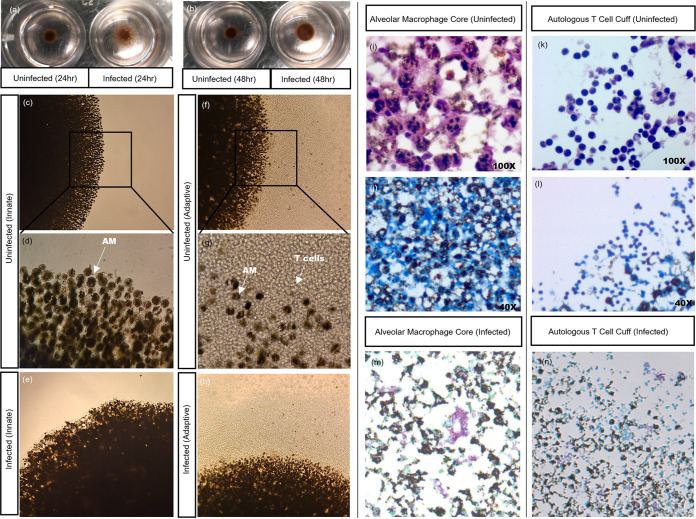
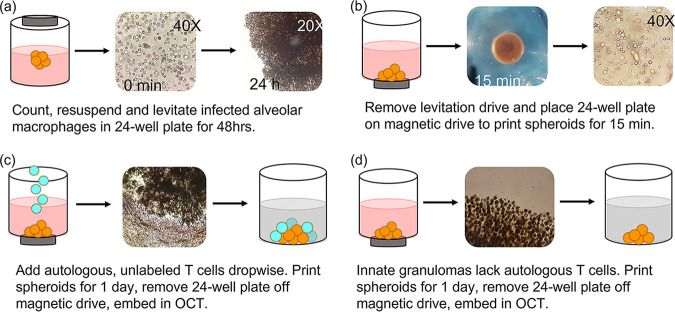
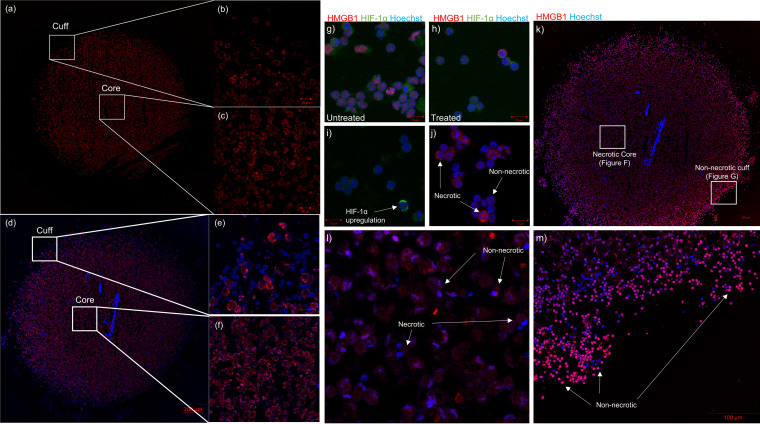
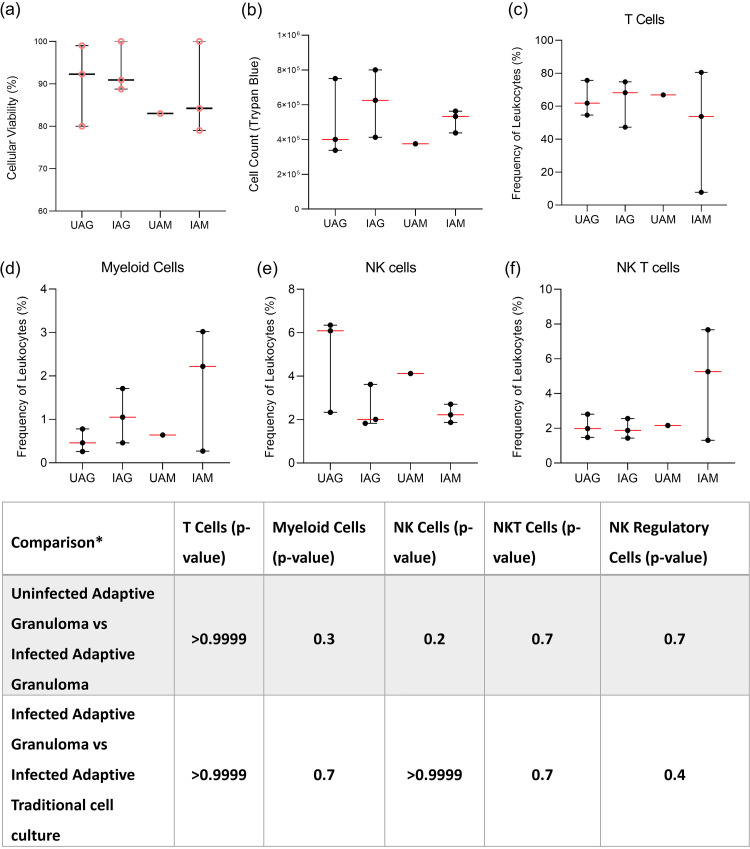
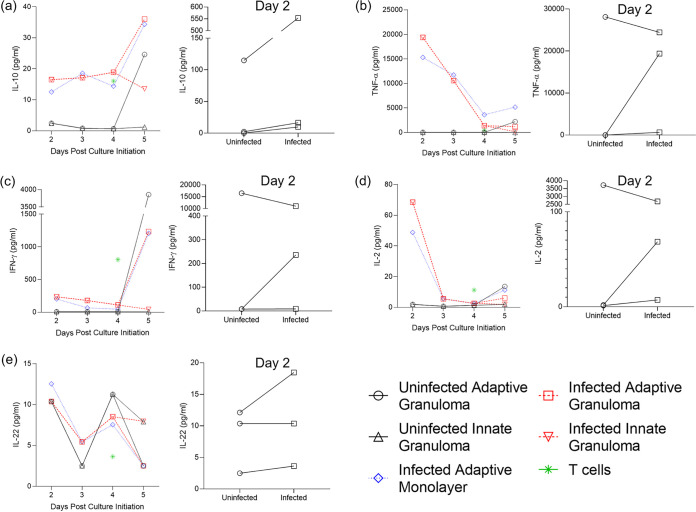
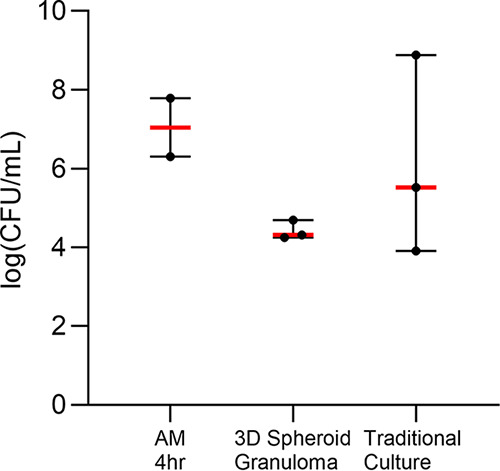
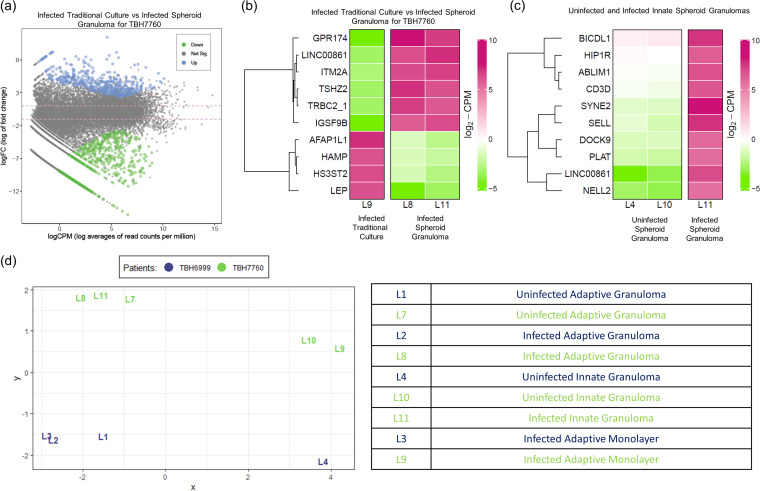
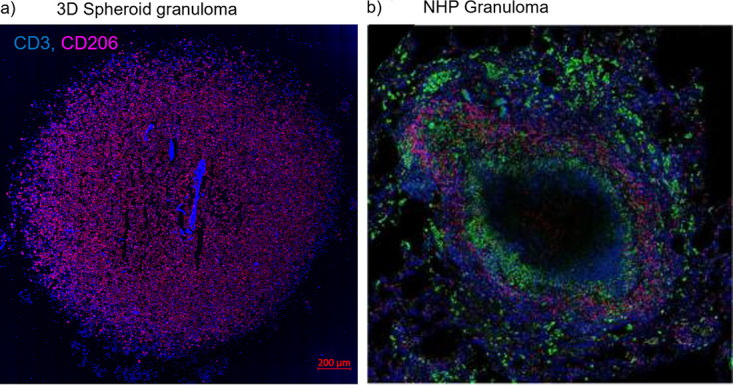
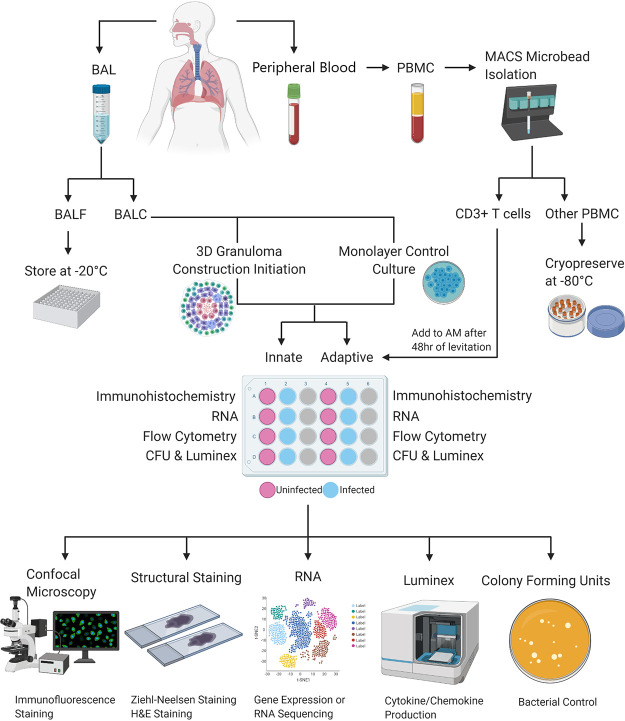
Tuberculous granulomas that develop in response to Mycobacterium tuberculosis (M. tuberculosis) infection are highly dynamic entities shaped by the host immune response and disease kinetics. Within this microenvironment, immune cell recruitment, polarization, and activation are driven not only by coexisting cell types and multicellular interactions but also by M. tuberculosis-mediated changes involving metabolic heterogeneity, epigenetic reprogramming, and rewiring of the transcriptional landscape of host cells. There is an increased appreciation of the complexity, versatility, and heterogeneity of the cellular compartment that constitutes the tuberculosis (TB) granuloma and the difficulty in translating findings from animal models to human disease. Here, we describe a novel biomimetic three-dimensional (3D) human lung spheroid granuloma model, resembling early "innate" and "adaptive" stages of the TB granuloma spectrum, and present results of histological architecture, host transcriptional characterization, mycobacteriological features, cytokine profiles, and spatial distribution of key immune cells. A range of manipulations of immune cell populations in these spheroid granulomas will allow the study of host/pathogen pathways involved in the outcome of infection, as well as pharmacological interventions. TB is a highly infectious disease, with granulomas as its hallmark. Granulomas play an important role in the control of M. tuberculosis infection and as such are crucial indicators for our understanding of host resistance to TB. Correlates of risk and protection to M. tuberculosis are still elusive, and the granuloma provides the perfect environment in which to study the immune response to infection and broaden our understanding thereof; however, human granulomas are difficult to obtain, and animal models are costly and do not always faithfully mimic human immunity. In fact, most TB research is conducted on immortalized or primary immune cells and cultured in two dimensions on flat, rigid plastic, which does not reflect characteristics. We have therefore conceived a 3D, human spheroid granuloma model which allows researchers to study features of granuloma-forming diseases in a 3D structural environment resembling granuloma architecture and cellular orientation.
结核分枝杆菌(Mycobacterium tuberculosis,M. tuberculosis)感染引起的结核肉芽肿是高度动态的实体,由宿主免疫反应和疾病动力学塑造。在这个微环境中,免疫细胞的募集、极化和激活不仅受到共存细胞类型和多细胞相互作用的驱动,还受到 M. tuberculosis 介导的代谢异质性、表观遗传重编程和宿主细胞转录景观重排的影响。人们越来越认识到构成结核(TB)肉芽肿的细胞成分的复杂性、多功能性和异质性,以及将动物模型中的发现转化为人类疾病的困难。在这里,我们描述了一种新颖的仿生三维(3D)人肺球体肉芽肿模型,类似于 TB 肉芽肿谱的早期“先天”和“适应性”阶段,并介绍了组织学结构、宿主转录特征、分枝杆菌特征、细胞因子谱以及关键免疫细胞的空间分布的结果。对这些球体肉芽肿中免疫细胞群体的一系列操作将允许研究宿主/病原体途径在感染结局中的作用,以及药物干预。TB 是一种高度传染性疾病,肉芽肿是其标志。肉芽肿在控制 M. tuberculosis 感染中起着重要作用,因此是我们理解宿主对 TB 抵抗力的关键指标。与 M. tuberculosis 相关的风险和保护因素仍然难以捉摸,而肉芽肿为研究感染的免疫反应并拓宽我们对此的理解提供了绝佳的环境;然而,人类肉芽肿难以获得,动物模型昂贵且并不总是忠实地模拟人类免疫。事实上,大多数 TB 研究都是在永生或原代免疫细胞上进行的,并在二维平面上在坚硬的塑料上培养,这不能反映特征。因此,我们设计了一种 3D 人球体肉芽肿模型,允许研究人员在类似于肉芽肿结构和细胞取向的 3D 结构环境中研究形成肉芽肿的疾病的特征。