Liu Pei-Sheng, An Xue, Zhou Qing-Sheng, Sun Xu-Ri, Wang Hui-Min, Xu Xiao-Dan, Li Min
Department of Spinal Surgery, Yantaishan Hospital Affiliated to Binzhou Medical University, Yantai, 264003, China.
Yantai Key Laboratory of Repair and Reconstruction of Bone & Joint, Yantaishan Hospital Affiliated to Binzhou Medical University, Yantai, 264003, China.
Neurochem Res. 2024 Dec 24;50(1):65. doi: 10.1007/s11064-024-04310-w.
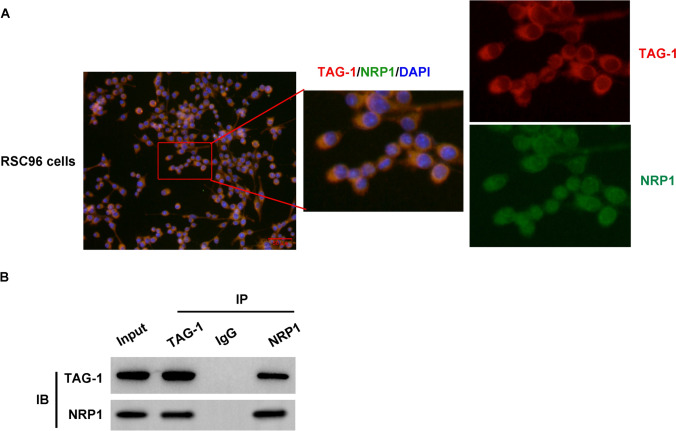
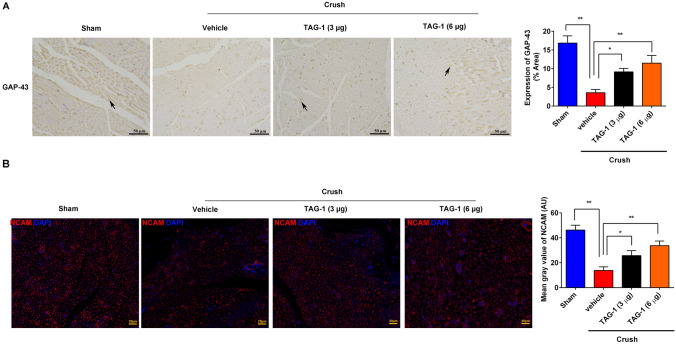
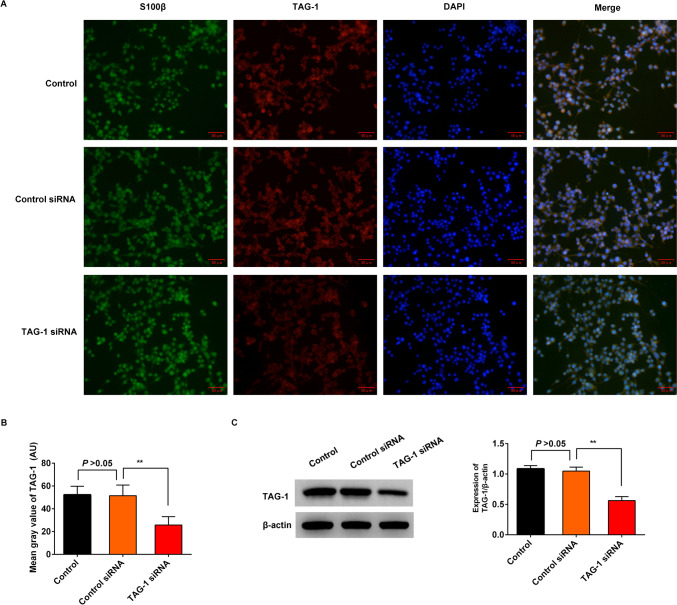
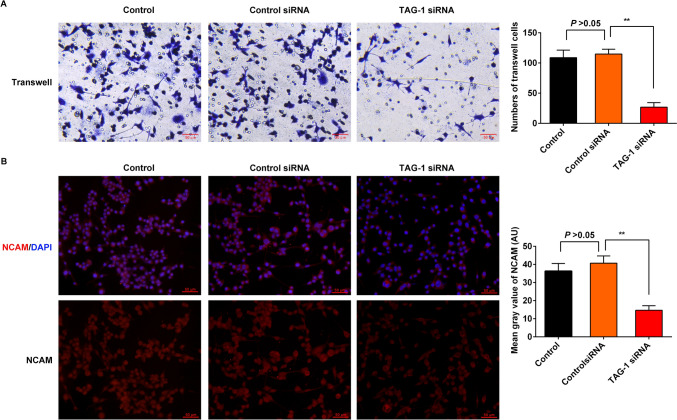
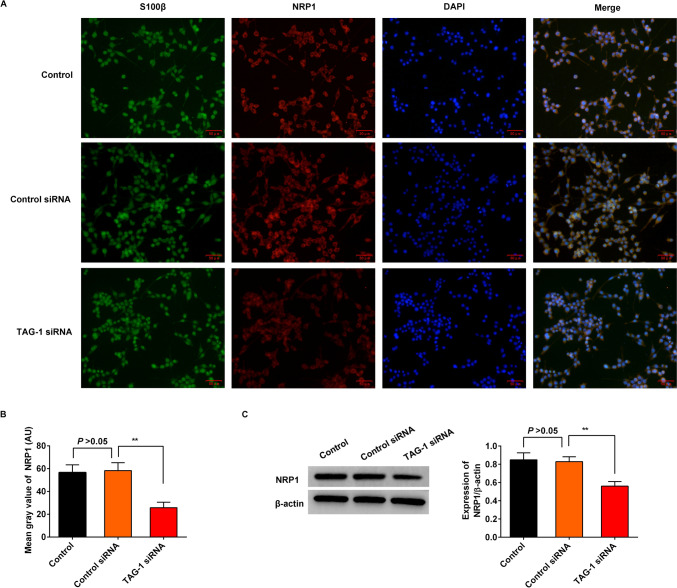
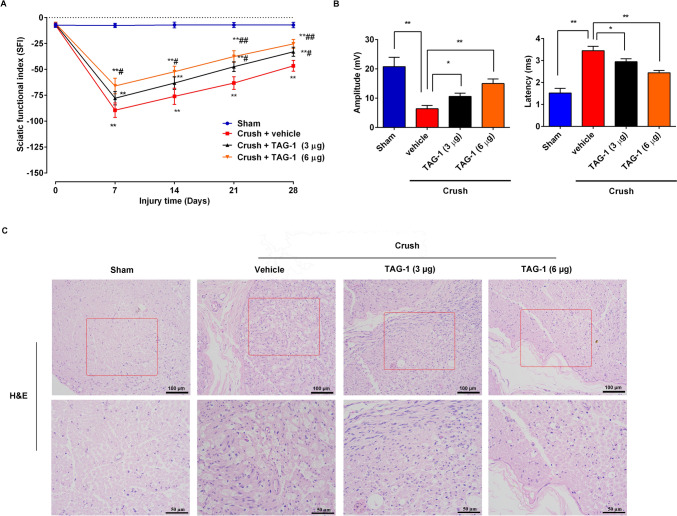
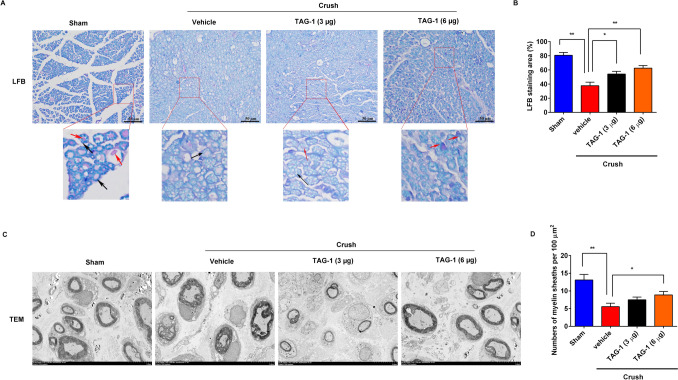
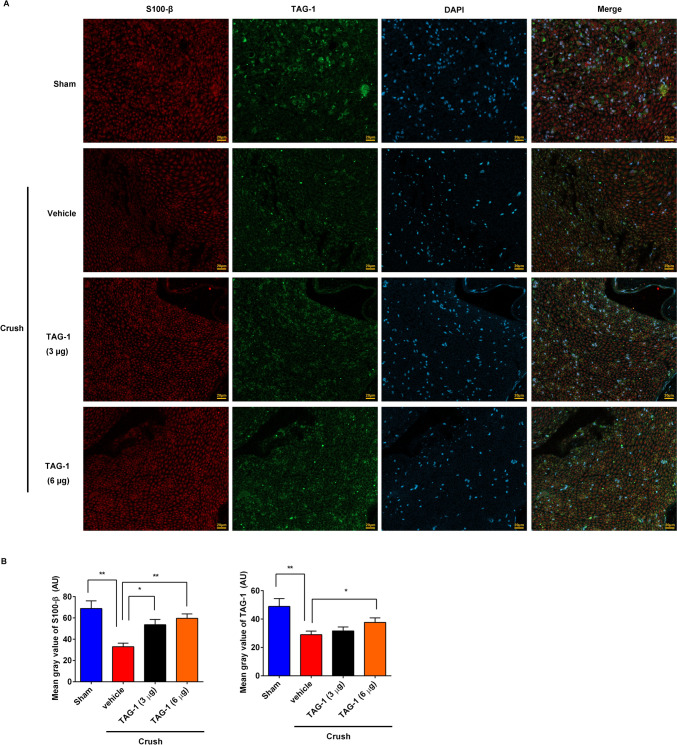
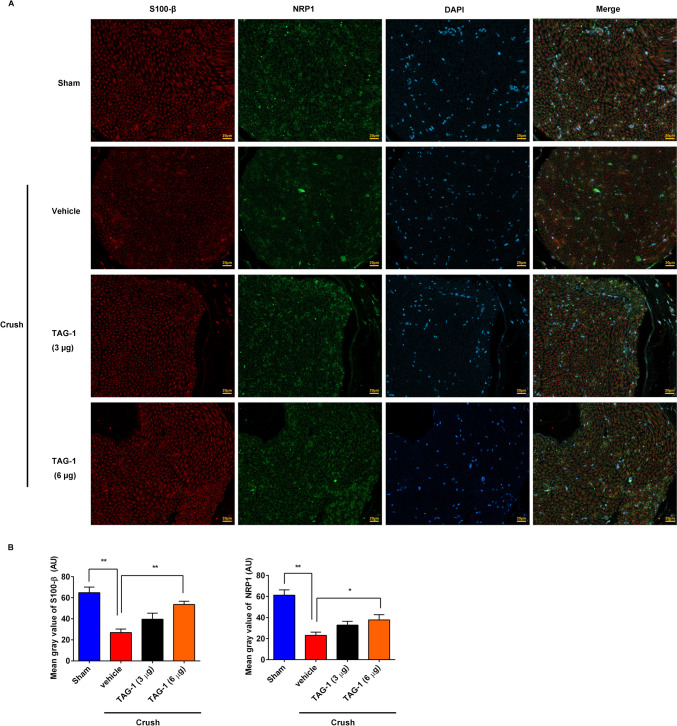
Schwann cells (SCs) are necessary for peripheral nerve regeneration due to their plasticity and trophic supply after sciatic nerve injury (SNI). However, the multiple adaptations of SCs are still poorly understood. This study explored the effects of transient axonal glycoprotein type-1 (TAG-1) on cell migration and neuropilin1 (NRP1) expression in SCs and examined the impact of TAG-1 on nerve regeneration in rats with SNI. The expression of TAG-1 and NRP1 in SCs, RSC96 cells, was measured using co-immunoprecipitation and immunofluorescence. TAG-1 silence in RSC96 cells was established by TAG-1 siRNA transfection. The effects of TAG-1 silence on cell migration and NRP1 expression were measured in cells. Male adult Wistar rats suffered sciatic nerve crush injury and were treated with exogenous TAG-1 protein. The sciatic function was observed every week. The histological changes of sciatic nerves and expressions of S100β, NRP1, GAP43, and NCAM in the nerves were observed after injury 28 days. The TAG-1 and NRP1 were expressed in the RSC96 cells, and there was an interaction between TAG-1 and NRP1. TAG-1 silence suppressed the cell migration and NRP1 expression in cells. In rats with SNI, the TAG-1 treatment improved the sciatic function and promoted nerve regeneration by increasing the expressions of S100β, NRP1, GAP-43, and NCAM in the nerves. This study showed that TAG-1 regulated cell migration and NRP1 expression in SCs, and TAG-1 treatment might be a strategy for nerve regeneration after the SNI.
雪旺细胞(SCs)因其在坐骨神经损伤(SNI)后的可塑性和营养供应,对于周围神经再生至关重要。然而,雪旺细胞的多种适应性仍知之甚少。本研究探讨了瞬时轴突糖蛋白1型(TAG-1)对雪旺细胞迁移和神经纤毛蛋白1(NRP1)表达的影响,并研究了TAG-1对SNI大鼠神经再生的作用。采用免疫共沉淀和免疫荧光法检测雪旺细胞RSC96中TAG-1和NRP1的表达。通过TAG-1 siRNA转染建立RSC96细胞中TAG-1沉默模型。检测TAG-1沉默对细胞迁移和NRP1表达的影响。成年雄性Wistar大鼠遭受坐骨神经挤压伤,并给予外源性TAG-1蛋白治疗。每周观察坐骨神经功能。损伤28天后,观察坐骨神经的组织学变化以及神经中S100β、NRP1、GAP43和NCAM的表达。TAG-1和NRP1在RSC96细胞中表达,且TAG-1与NRP1之间存在相互作用。TAG-1沉默抑制细胞迁移和细胞中NRP1的表达。在SNI大鼠中,TAG-1治疗通过增加神经中S100β、NRP1、GAP-43和NCAM的表达改善坐骨神经功能并促进神经再生。本研究表明,TAG-1调节雪旺细胞的迁移和NRP1表达,TAG-1治疗可能是SNI后神经再生的一种策略。