Shojaee Barjoee Saeed, Gendler Semyon
Department of Industrial Safety, Faculty of Mining, St. Petersburg Mining University, St. Petersburg, Russia.
Yazd University, Yazd, Iran.
Heliyon. 2024 Nov 30;10(24):e40745. doi: 10.1016/j.heliyon.2024.e40745. eCollection 2024 Dec 30.
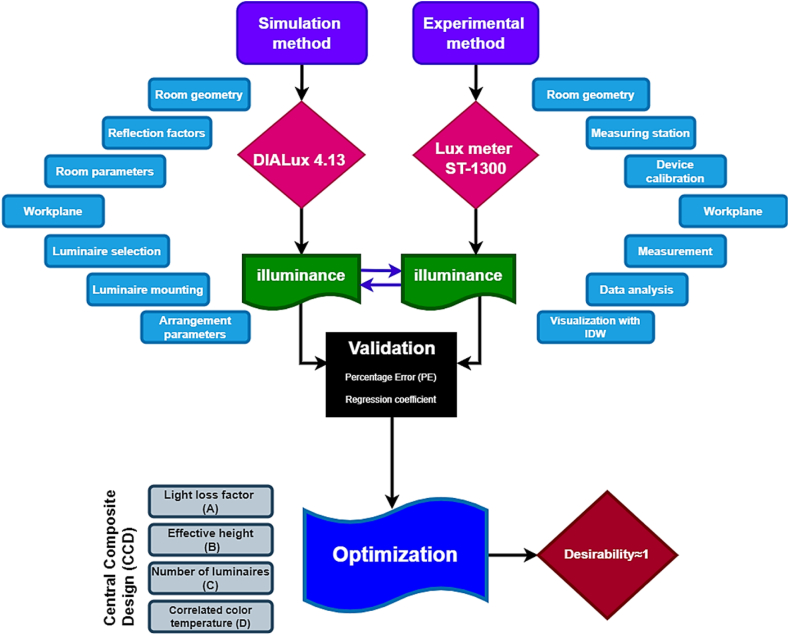
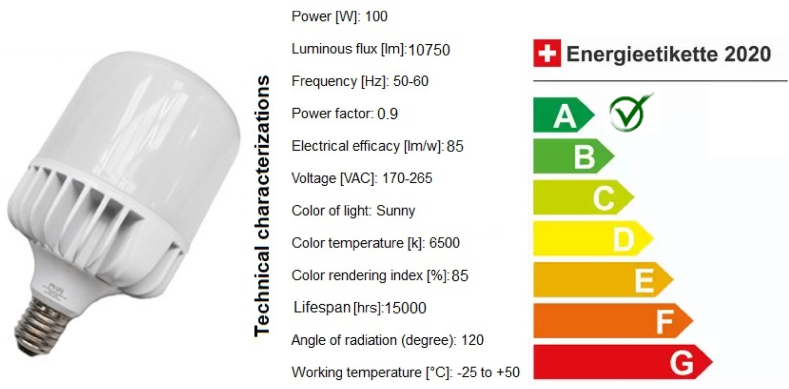
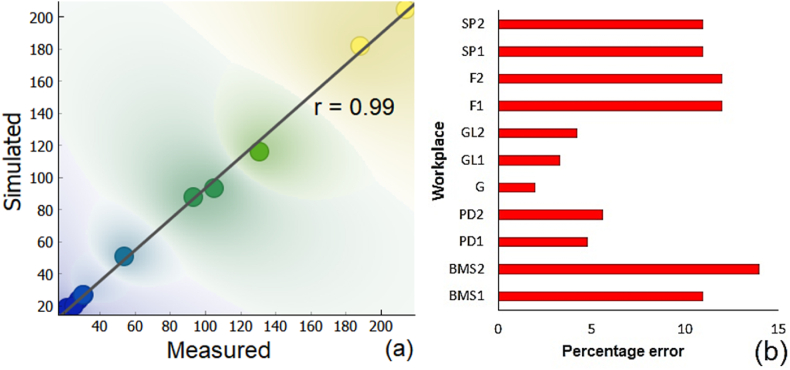
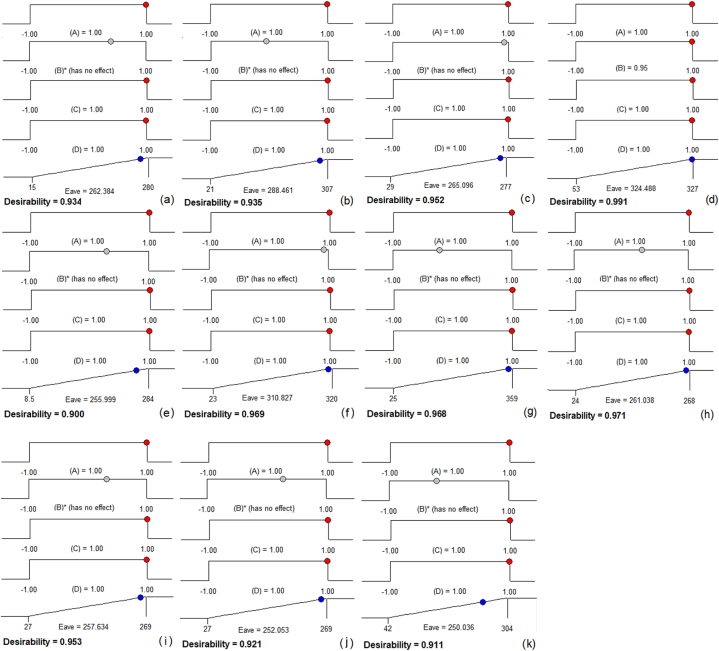
Incorporating an illumination optimization plan into the worker safety management process in industrials is essential since the quality of workplace illumination has a significant impact on workers' well-being. The purpose of this study was to optimize illumination conditions in industrial workspaces using light-emitting diode (LED) technology with a color temperature of 6500 K and a CRI of 85 %. To accomplish this, the DIALux illumination simulation tool was utilized. It was validated using measured illumination data from a lux meter (ST-1300 model 1308). Four factors-the number of luminaires, the effective height of the luminaires, the illumination technology, and the light loss factor-were applied to configure sixteen simulation scenarios. Subsequently, eleven quadratic polynomial equations were proposed for estimating the changes in the average illumination in eleven workplaces using the multiple regression analysis technique on the simulatively prepared dataset. The final step was assessing the desirability degree of the suitable illumination scenario. It was discovered that the DIALux software's illumination simulation error percentage fell within an acceptable range. The illumination technology factor had the greatest impact on the average illumination of workplaces. The most impactful interaction terms of the factors were illumination technology and the number of luminaires. For every workplace, the optimized illumination's desirability degree was expected to be more than 0.9. The proposed approach yields promising results and can be a valuable tool for improving the illumination conditions of workers in industries.
将照明优化计划纳入工业工人安全管理流程至关重要,因为工作场所照明质量对工人的健康有重大影响。本研究的目的是使用色温为6500K、显色指数为85%的发光二极管(LED)技术优化工业工作空间的照明条件。为此,使用了DIALux照明模拟工具。它通过来自勒克斯计(ST - 1300型号1308)的实测照明数据进行验证。应用灯具数量、灯具有效高度、照明技术和光损失因子这四个因素来配置十六个模拟场景。随后,使用多元回归分析技术对模拟准备的数据集提出了十一个二次多项式方程,用于估计十一个工作场所的平均照明变化。最后一步是评估合适照明场景的合意度。发现DIALux软件的照明模拟误差百分比在可接受范围内。照明技术因素对工作场所的平均照明影响最大。各因素中最具影响力的交互项是照明技术和灯具数量。对于每个工作场所,优化照明的合意度预计超过0.9。所提出的方法产生了有前景的结果,并且可以成为改善工业工人照明条件的有价值工具。