Nilmart Patcharin, Vongsirinavarat Mantana, Khawsuwan Pimpaka, Chumthong Kiatrada, Tadein Russareeta, Komalasari Dwi Rosella
Faculty of Physical Therapy, Srinakharinwirot University, Ongkharak, Nakhonnayok, Thailand.
Faculty of Physical Therapy, Mahidol University, Salaya, Nakhon Pathom, Thailand.
BMJ Open Sport Exerc Med. 2024 Dec 18;10(4):e001939. doi: 10.1136/bmjsem-2024-001939. eCollection 2024.
This study aimed to evaluate the effectiveness of a telehealth-based therapeutic exercise (TTE) programme with real-time video conference supervision for young adult females with patellofemoral pain (PFP).
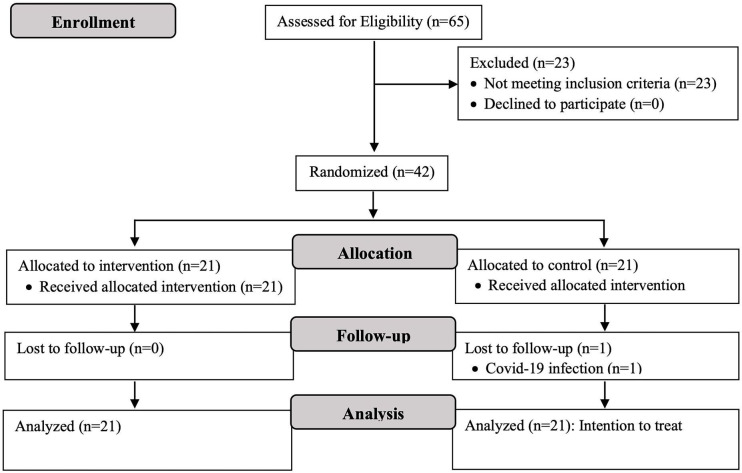
The study design was a randomised controlled trial. Forty-two participants with PFP were allocated to either the TTE group or the control (C) group. The TTE group received a 4-week telehealth-based exercise programme supervised through real-time video conferencing, while the C group followed a self-guided stretching exercise. Pain intensity was assessed using the Visual Analogue Scale, while functional performance was evaluated with hop tests and the step-down test. Dynamic knee valgus was measured by the frontal plane projection angle during a single-leg squat. In addition, the study used a specific health questionnaire which evaluated knee pain and function, including the self-administered Kujala Patellofemoral Questionnaire (KPQ). All outcomes were assessed both before and after the intervention.
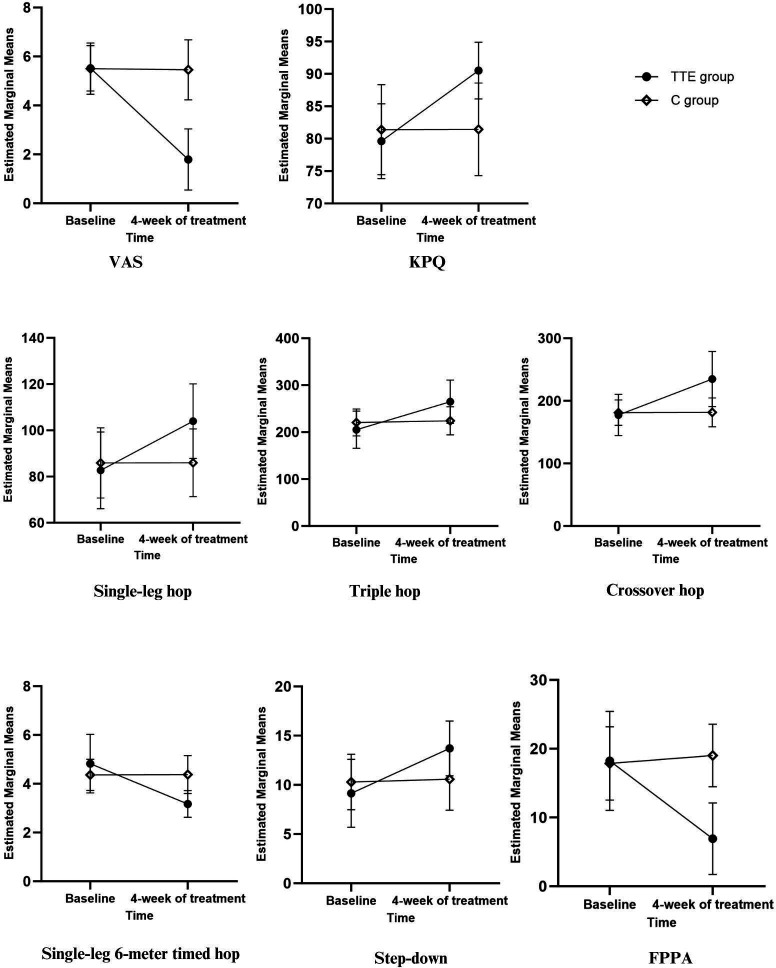
After the 4-week interventions, the results showed a significant interaction between the group and the time of pain intensity, functional performance and dynamic knee valgus (p<0.001). The TTE group demonstrated significant pain reduction (p<0.001) and improved KPQ score (p<0.001), while the C group showed no significant changes. TTE participants also exhibited improved functional performance in the hop and step-down tests. Additionally, dynamic knee valgus was significantly decreased in the TTE group.
The telehealth-based exercise programmes offer a convenient and effective alternative for managing PFP symptoms, providing remotely accessible and specialised care.
本研究旨在评估一项基于远程医疗的治疗性运动(TTE)计划对患有髌股疼痛(PFP)的年轻成年女性的有效性,该计划采用实时视频会议监督。
研究设计为随机对照试验。42名患有PFP的参与者被分配到TTE组或对照组(C组)。TTE组接受为期4周的基于远程医疗的运动计划,通过实时视频会议进行监督,而C组则进行自我指导的伸展运动。使用视觉模拟量表评估疼痛强度,通过单腿跳测试和下台阶测试评估功能表现。在单腿深蹲过程中,通过额面投影角度测量动态膝外翻。此外,该研究使用了一份特定的健康问卷来评估膝关节疼痛和功能,包括自我管理的库贾拉髌股问卷(KPQ)。所有结果在干预前后均进行评估。
经过4周的干预后,结果显示在疼痛强度、功能表现和动态膝外翻方面,组间和时间存在显著交互作用(p<0.001)。TTE组疼痛显著减轻(p<0.001),KPQ评分改善(p<0.001),而C组无显著变化。TTE组的参与者在单腿跳和下台阶测试中的功能表现也有所改善。此外,TTE组的动态膝外翻显著降低。
基于远程医疗的运动计划为管理PFP症状提供了一种方便有效的替代方法,提供了可远程获取的专业护理。