Crane Joseph, Bino Gilad, Jordan Neil R, Hawke Tahneal, O'Brien Justine K
Platypus Conservation Initiative, Centre for Ecosystem Science, School of Biological, Earth & Environmental Sciences University of New South Wales Sydney New South Wales Australia.
Taronga Institute of Science and Learning Taronga Conservation Society Australia Dubbo New South Wales Australia.
Ecol Evol. 2024 Dec 24;14(12):e70347. doi: 10.1002/ece3.70347. eCollection 2024 Dec.
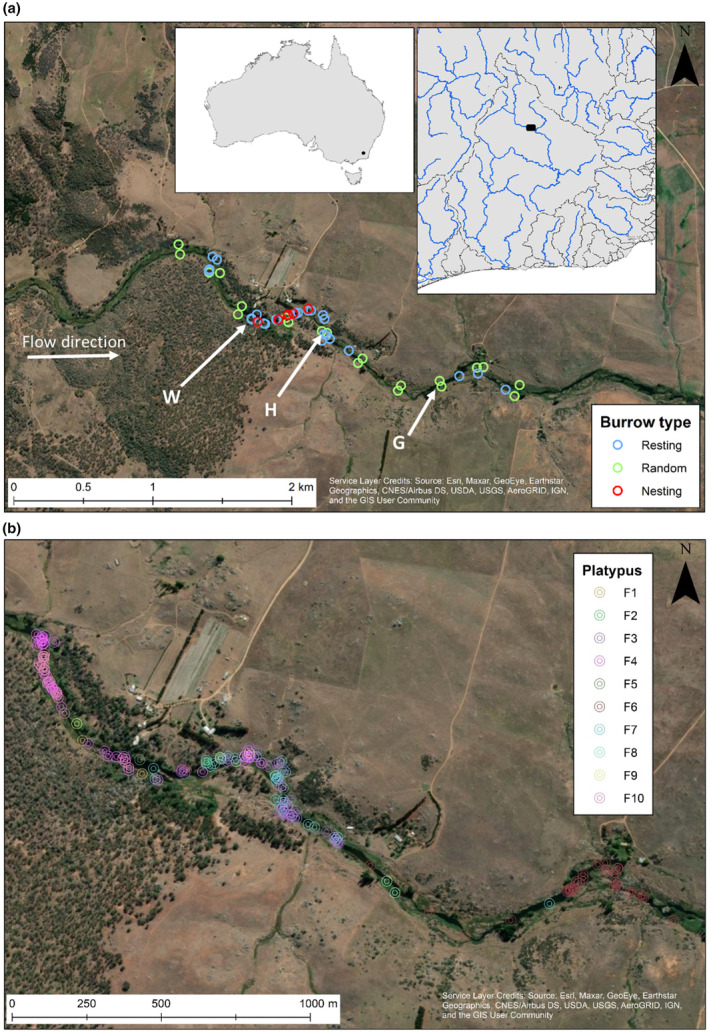
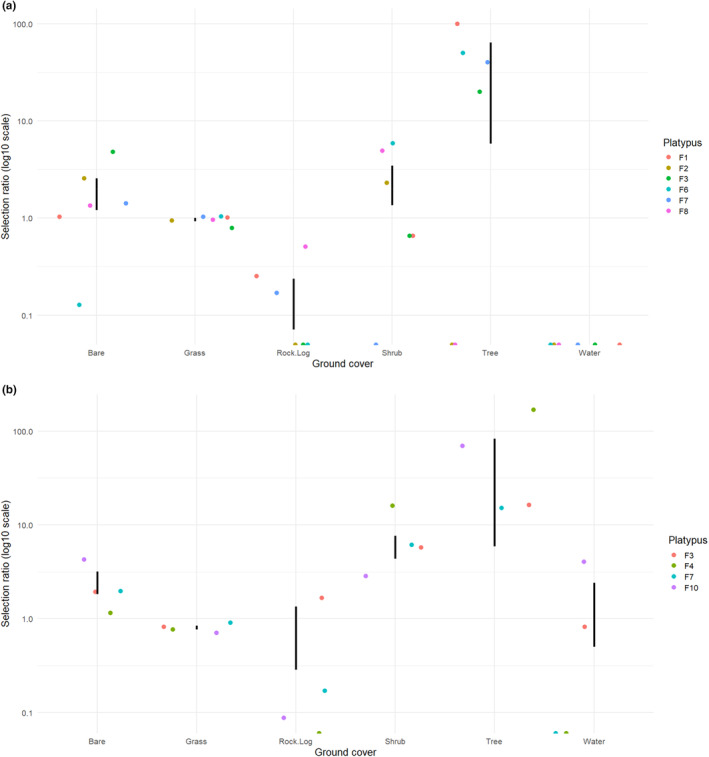
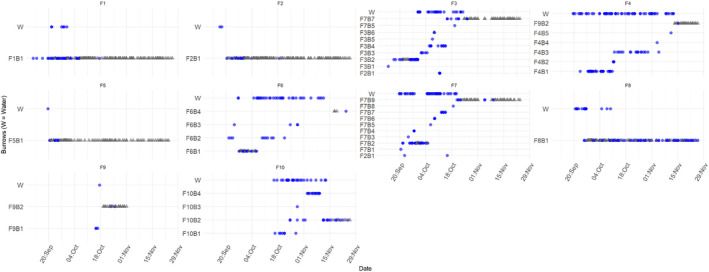
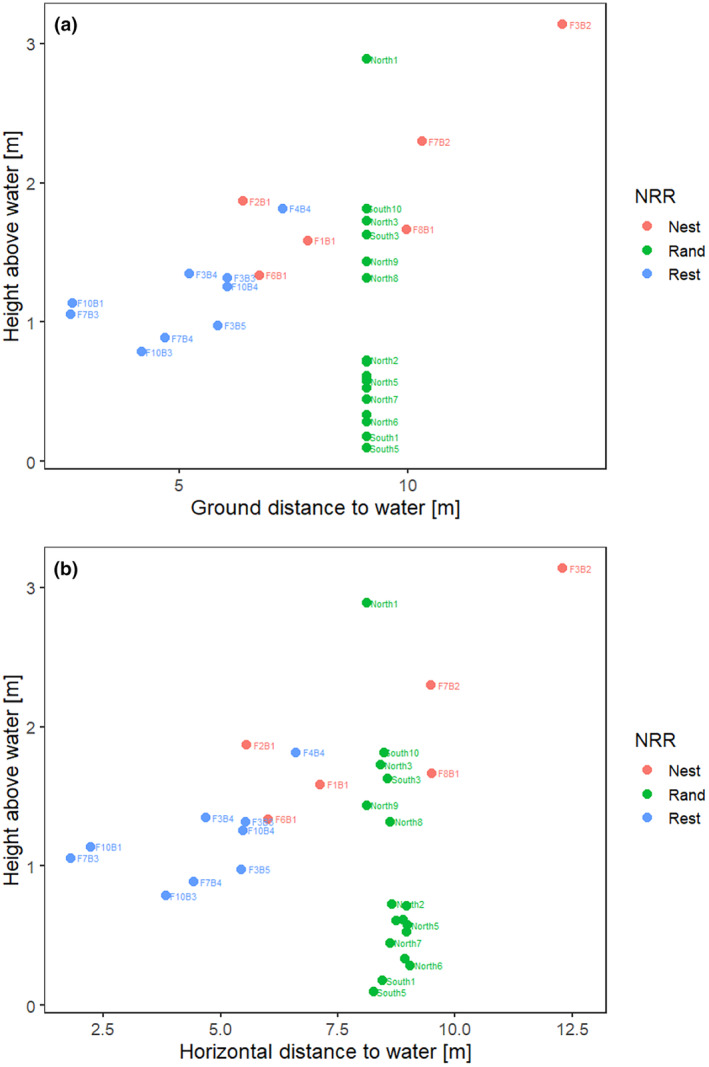
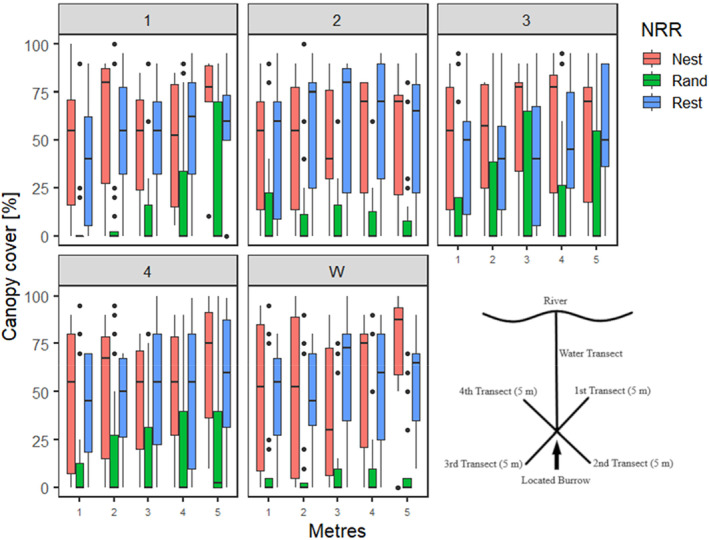
Platypuses are a unique freshwater mammal native to eastern Australia. They are semi-aquatic, predominantly nocturnal, and nest in burrows dug into the banks of waterbodies. Quantifying nesting burrow characteristics is challenging due to the species' cryptic nature. We radio-tagged 11 female platypuses during their breeding season (September to November) on the Snowy River, located their resting and nesting burrows by radiotracking, and assessed plasma triglyceride concentration as a biomarker of egg production. We quantified and tested for differences in height and distance from water of resting and nesting burrows, as well as for differences in both canopy and ground cover in the vicinity of resting and nesting burrows in comparison with background control sites in the area. Female platypuses displayed a strong selection for trees and shrubs, placing both their resting and nesting burrows within 5 m of these features. Compared with resting females, nesting females selected to dig nesting burrows higher above the river (nesting 1.98 m ± 0.27 SE vs. resting 1.15 m ± 0.10 SE) that were also further away from water (9.10 m ± 1.08 SE vs. 4.77 m ± 0.53 SE). Camera trap footage captured mice () and black rats () entering two confirmed nesting tunnels on numerous occasions. During the first 3 weeks following the onset of nesting behaviour in two platypuses, rats entered the nesting tunnel a total of eight times and 31 times. Whether this is a previously unconsidered predator by invasive species remains to be evaluated. Synthesis: Riparian vegetation is a critical component of platypus habitat, providing stability for burrows, protection from predators, retaining high bank necessary to avoid inundation of burrows, and providing organic matter for nesting material and for abundant macroinvertebrate communities. Given ongoing declines and habitat degradation across their range, riparian habitat must be conserved and restored to promote breeding and population persistence.
鸭嘴兽是一种原产于澳大利亚东部的独特淡水哺乳动物。它们半水生,主要在夜间活动,并在水体岸边挖掘的洞穴中筑巢。由于该物种的隐秘性,量化筑巢洞穴特征具有挑战性。我们在雪河的繁殖季节(9月至11月)对11只雌性鸭嘴兽进行了无线电标记,通过无线电追踪定位它们的休息和筑巢洞穴,并评估血浆甘油三酯浓度作为产卵的生物标志物。我们量化并测试了休息和筑巢洞穴的高度和距水距离的差异,以及与该地区背景对照地点相比,休息和筑巢洞穴附近的树冠和地面覆盖的差异。雌性鸭嘴兽对树木和灌木有强烈的偏好,将它们的休息和筑巢洞穴都安置在这些特征物5米范围内。与休息的雌性相比,筑巢的雌性选择在离河流更高的地方挖掘筑巢洞穴(筑巢洞穴高度为1.98米±0.27标准误差,而休息洞穴高度为1.15米±0.10标准误差),且离水更远(9.10米±1.08标准误差,而休息洞穴为4.77米±0.53标准误差)。相机陷阱拍摄到小家鼠()和黑家鼠()多次进入两条已确认的筑巢隧道。在两只鸭嘴兽开始筑巢行为后的前3周内,大鼠分别进入筑巢隧道8次和31次。这是否是一种此前未被考虑到的外来入侵捕食者还有待评估。综述:河岸植被是鸭嘴兽栖息地的关键组成部分,为洞穴提供稳定性,保护其免受捕食者侵害,保持避免洞穴被淹没所需的高岸,并为筑巢材料和丰富的大型无脊椎动物群落提供有机物质。鉴于其分布范围内鸭嘴兽数量持续下降和栖息地退化,必须保护和恢复河岸栖息地,以促进繁殖和种群的持续生存。