Huang Peisen, Xu Jun, Keepers Benjamin, Xie Yifang, Near David, Xu Yangxi, Hua James Rock, Spurlock Brian, Ricketts Shea, Liu Jiandong, Wang Li, Qian Li
McAllister Heart Institute, University of North Carolina at Chapel Hill, Chapel Hill, NC 27599, USA.
Department of Pathology and Laboratory Medicine, University of North Carolina at Chapel Hill, Chapel Hill, NC 27599, USA.
Mol Ther Nucleic Acids. 2024 Nov 15;35(4):102390. doi: 10.1016/j.omtn.2024.102390. eCollection 2024 Dec 10.
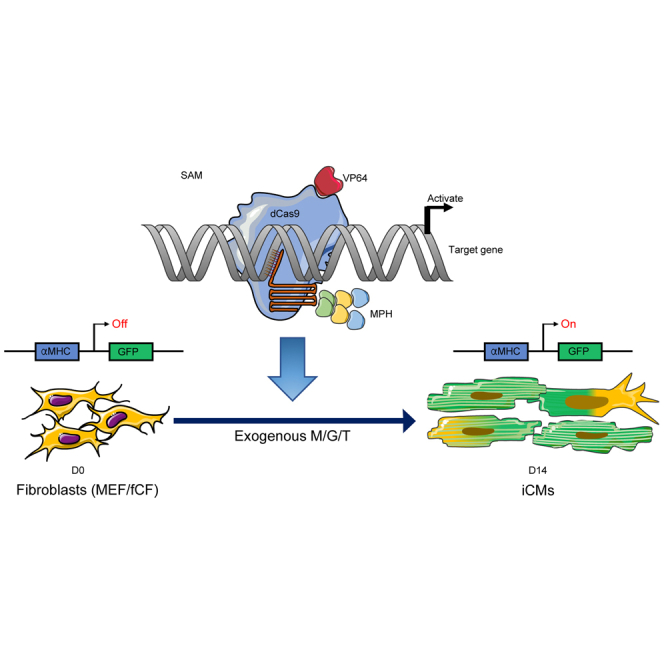
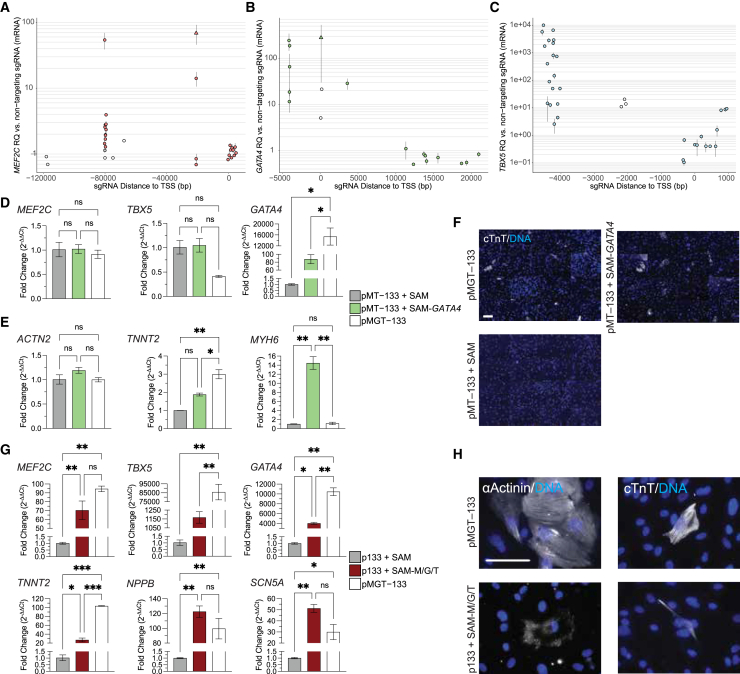
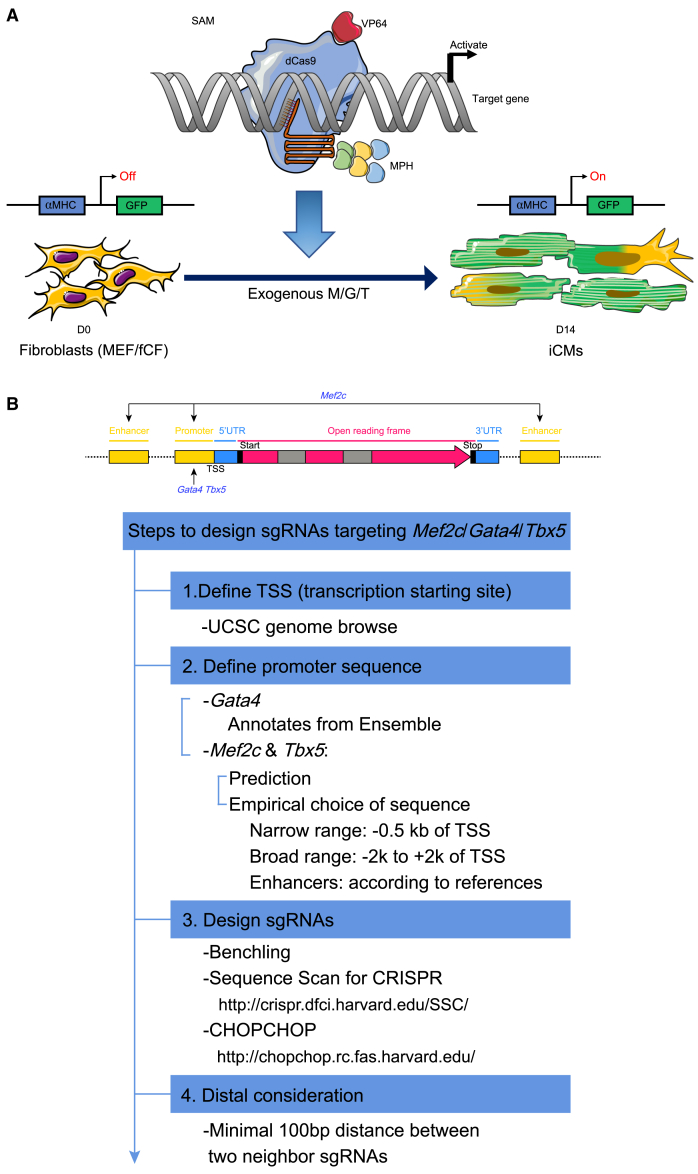
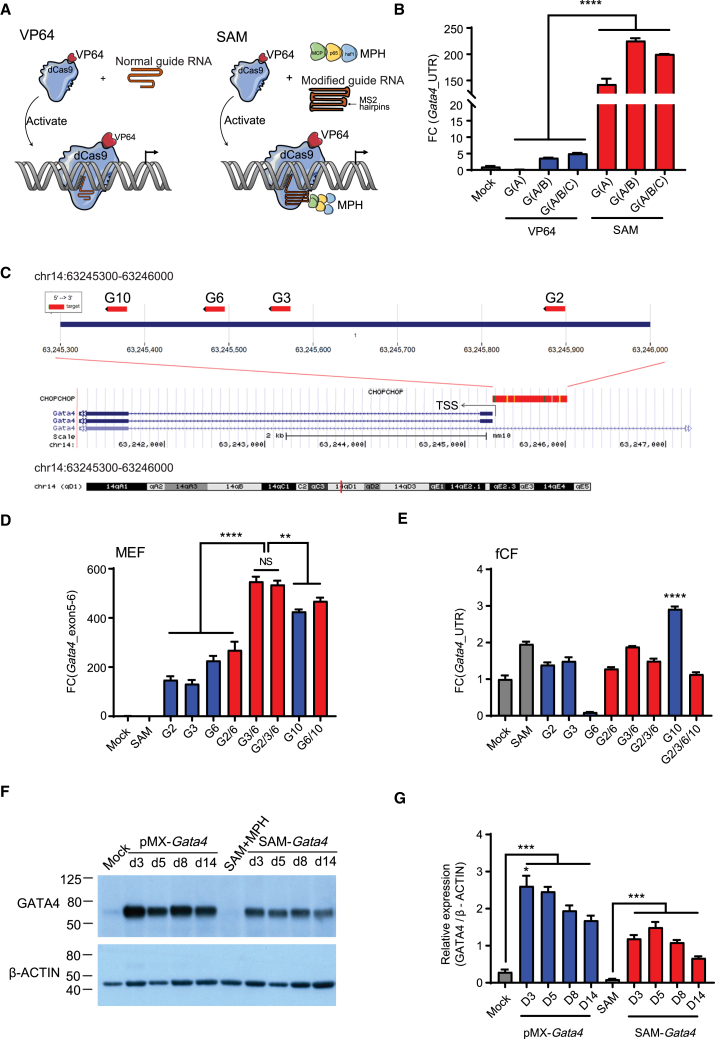
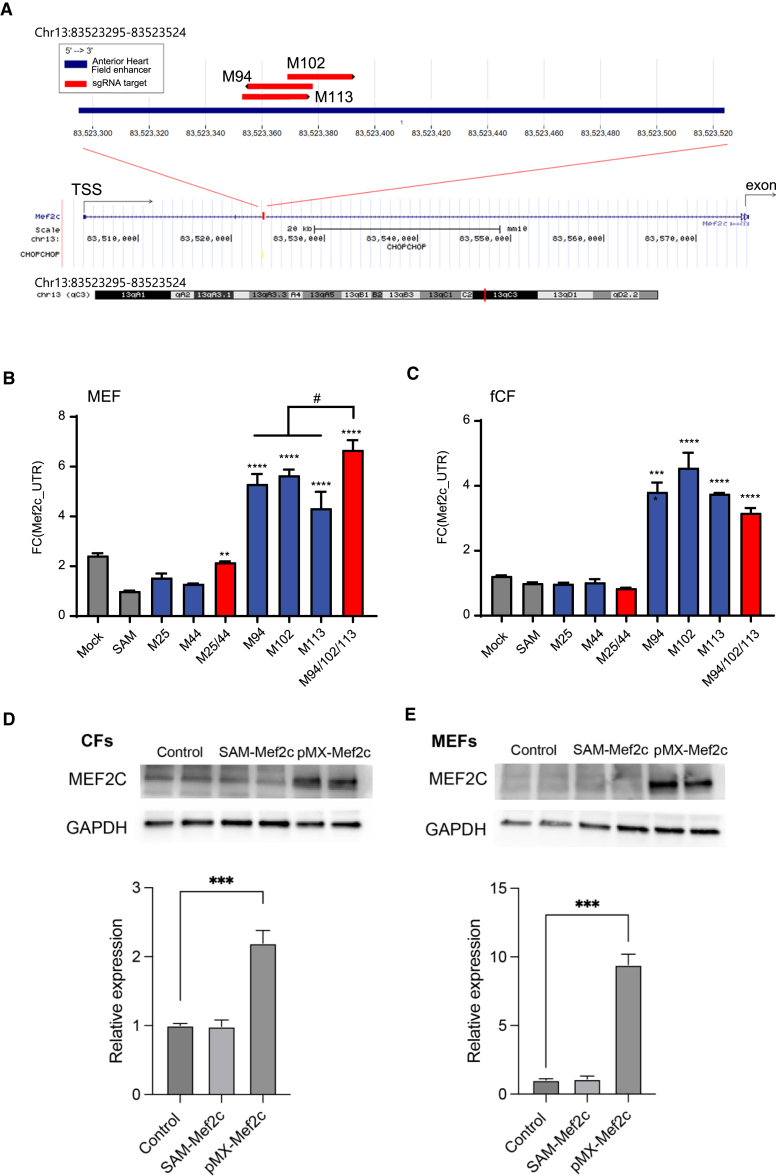
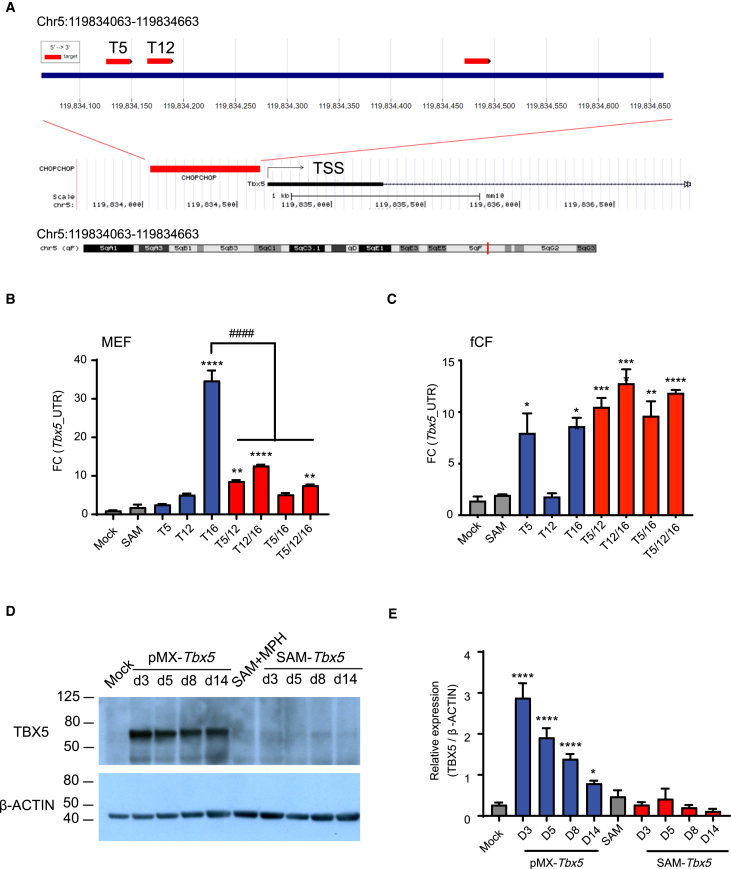
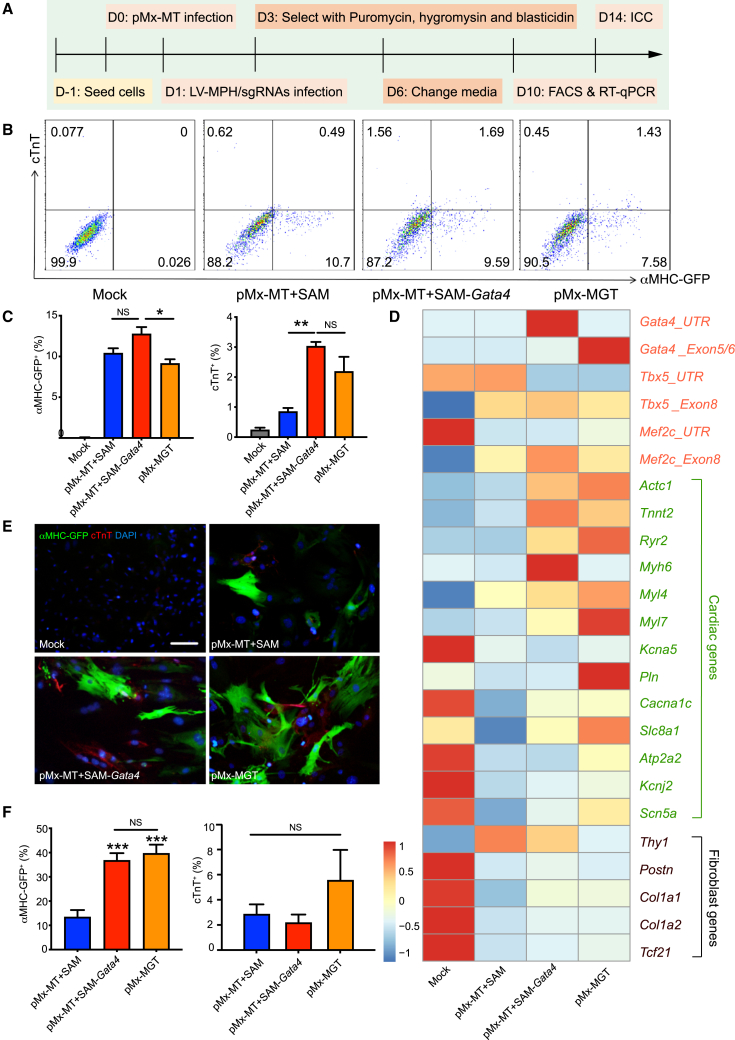
Direct cardiac reprogramming of fibroblasts into induced cardiomyocytes (iCMs) can be achieved by ectopic expression of cardiac transcription factors (TFs) via viral vectors. However, risks like genomic mutations, viral toxicity, and immune response limited its clinical application. Transactivation of endogenous TFs emerges as an alternative approach that may partially mitigate some of the risks. In this study, we utilized a modified CRISPRa/dCas9 strategy to transactivate endogenous reprogramming factors MEF2C, GATA4, and TBX5 (MGT) to induce iCMs from both mouse and human fibroblasts. We identified single-guide RNAs (sgRNAs) targeting promoters and enhancers of the TFs capable of activating various degrees of endogenous gene expression. CRISPRa-mediated activation, combined with exogenous expression of and successfully converted fibroblasts into iCMs. Despite extensive sgRNA screening, transactivation of and via CRISPRa remained less effective, potentially due to epigenetic barriers. While future work and refined technologies are needed to determine whether cardiac reprogramming could be achieved solely through CRISPRa activation of endogenous factors, our findings provide proof of concept that reliance on exogenous TFs for reprogramming can be reduced through CRISPRa-mediated activation of endogenous factors, particularly , offering a novel strategy to convert scar-forming fibroblasts into iCMs for regenerative purposes.
通过病毒载体异位表达心脏转录因子(TFs)可将成纤维细胞直接重编程为诱导性心肌细胞(iCMs)。然而,诸如基因组突变、病毒毒性和免疫反应等风险限制了其临床应用。内源性TFs的反式激活成为一种可部分降低某些风险的替代方法。在本研究中,我们利用一种改良的CRISPRa/dCas9策略来反式激活内源性重编程因子MEF2C、GATA4和TBX5(MGT),以从小鼠和人成纤维细胞诱导生成iCMs。我们鉴定了靶向这些TFs启动子和增强子的单向导RNA(sgRNA),其能够激活不同程度的内源性基因表达。CRISPRa介导的激活,结合 和 的外源性表达,成功地将成纤维细胞转化为iCMs。尽管进行了广泛的sgRNA筛选,但通过CRISPRa对 和 的反式激活仍然效果较差,这可能是由于 表观遗传障碍所致。虽然需要未来的工作和改进技术来确定是否仅通过CRISPRa激活内源性因子就能实现心脏重编程,但我们的研究结果提供了概念验证,即通过CRISPRa介导的内源性因子激活,尤其是 ,可以减少重编程对外源性TFs的依赖,为将形成瘢痕的成纤维细胞转化为用于再生目的的iCMs提供了一种新策略。