Kaley Nicholas E, Liveris Zachary J, Moore Maxwell, Reidl Cory T, Wawrzak Zdzislaw, Becker Daniel P, Liu Dali
Department of Chemistry and Biochemistry, Loyola University Chicago, Chicago, Illinois, USA.
Synchrotron Research Center, Life Sciences Collaborative Access Team, Northwestern University, Argonne, Illinois, USA.
Protein Sci. 2025 Jan;34(1):e70014. doi: 10.1002/pro.70014.
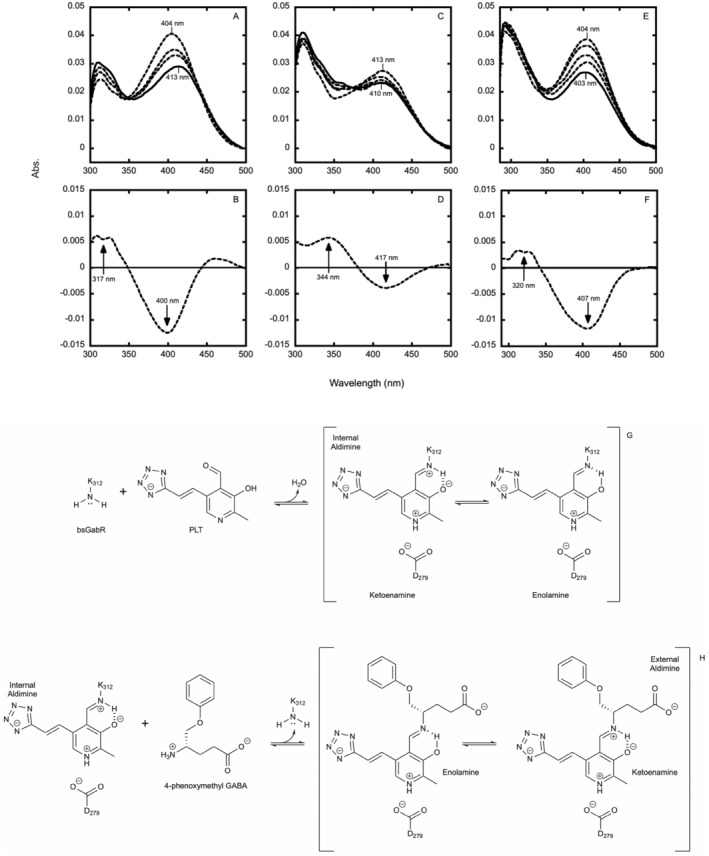
Antimicrobial resistance is a significant cause of mortality globally due to infections, a trend that is expected to continue to rise. As existing treatments fail and new drug discovery slows, the urgency to develop novel antimicrobial therapeutics grows stronger. One promising strategy involves targeting bacterial systems exclusive to pathogens, such as the transcription regulator protein GabR. Expressed in diverse bacteria including Escherichia coli, Bordetella pertussis, and Klebsiella pneumoniae, GabR has no homolog in eukaryotes, making it an ideal therapeutic target. Bacillus subtilis GabR (bsGabR), the most studied variant, regulates its own transcription and activates genes for GABA aminotransferase (GabT) and succinic semialdehyde dehydrogenase (GabD). This intricate regulatory system presents a compelling antimicrobial target with the potential for agonistic intervention to disrupt bacterial gene expression and induce cellular dysfunction, especially in bacterial stress responses. To explore manipulation of this system and the potential of this protein as an antimicrobial target, an in-depth understanding of the unique PLP-dependent transcription regulation is critical. Herein, we report the successful structural modification of the cofactor PLP and demonstrate the biochemical reactivity of the PLP analog pyridoxal-5'-tetrazole (PLT). Through both spectrophotometric and X-ray crystallographic analyses, we explore the interaction between bsGabR and PLT, together with a synthesized GABA derivative (S)-4-amino-5-phenoxypentanoate (4-phenoxymethyl-GABA or 4PMG). Most notably, we present a crystal structure of the condensed, external aldimine complex within bsGabR. While PLT alone is not a drug candidate, it can act as a probe to study the detailed mechanism of GabR-mediated function. PLT employs a tetrazole moiety as a bioisosteric replacement for phosphate in PLP. In addition, the PLP-4PMG adduct observed in the structure may serve as a novel chemical scaffold for subsequent structure-based antimicrobial design.
抗菌耐药性是全球范围内因感染导致死亡的一个重要原因,且这一趋势预计将持续上升。随着现有治疗方法失效以及新药研发放缓,开发新型抗菌疗法的紧迫性日益增强。一种有前景的策略是针对病原体特有的细菌系统,比如转录调节蛋白GabR。GabR在包括大肠杆菌、百日咳博德特氏菌和肺炎克雷伯菌在内的多种细菌中表达,在真核生物中没有同源物,这使其成为一个理想的治疗靶点。枯草芽孢杆菌GabR(bsGabR)是研究最多的变体,它调节自身转录并激活γ-氨基丁酸转氨酶(GabT)和琥珀酸半醛脱氢酶(GabD)的基因。这个复杂的调节系统是一个极具吸引力的抗菌靶点,具有通过激动剂干预来破坏细菌基因表达并诱导细胞功能障碍的潜力,尤其是在细菌应激反应中。为了探索对这个系统的操控以及该蛋白作为抗菌靶点的潜力,深入了解独特的依赖磷酸吡哆醛(PLP)的转录调控至关重要。在此,我们报告了辅因子PLP的成功结构修饰,并展示了PLP类似物吡哆醛-5'-四氮唑(PLT)的生化反应性。通过分光光度法和X射线晶体学分析,我们探究了bsGabR与PLT以及合成的γ-氨基丁酸衍生物(S)-4-氨基-5-苯氧基戊酸(4-苯氧基甲基-γ-氨基丁酸或4PMG)之间的相互作用。最值得注意的是,我们展示了bsGabR内缩合的外部醛亚胺复合物的晶体结构。虽然PLT本身不是候选药物,但它可以作为研究GabR介导功能详细机制的探针。PLT采用四氮唑部分作为PLP中磷酸的生物电子等排体替代物。此外,在结构中观察到的PLP-4PMG加合物可能作为后续基于结构的抗菌设计的新型化学支架。