Yuan Ke-Yu, Xiong Jun, Yuan Bi-Feng
School of Public Health, Wuhan University, Wuhan 430071, China.
Se Pu. 2025 Jan;43(1):13-21. doi: 10.3724/SP.J.1123.2024.07002.
Industrialization has led to significant increases in the types and quantities of pollutants, with environmental pollutants widely present in various media, including the air, food, and everyday items. These pollutants can enter the human body via multiple pathways, including ingestion through food and absorption through the skin; this intrusion can disrupt the production, release, and circulation of hormones in the body, resulting in a range of illnesses that affect the reproductive, endocrine, and nervous systems. Consequently, these pollutants pose substantial risks to human health. In particular, fetuses are highly sensitive to environmental pollutants during critical stages of development, and exposure during periods of growth and development can result in more-obvious and severe health hazards that can lead to preterm birth, low birth weight, and fetal malformations. The placenta acts as a barrier between the mother and fetus, and selectively filters certain pollutants. While some pollutants remain in the maternal bloodstream, others cross the placental barrier into the fetal umbilical blood through passive diffusion, placental transport proteins, or endocytosis. The transplacental transfer efficiency (TTE) is the ratio of the level of the pollutant in the umbilical blood to that in the maternal blood, and is a valuable metric for evaluating the ability of a pollutant to breach the placental barrier. A higher TTE implies that a larger proportion of pollutants are transferred from the mother to the fetus, thereby amplifying the potential risks to the fetus. Mass spectrometry-based detection methods are extensively used in the chemical and environmental sciences because they are exceptionally sensitive and highly resolving. This analytical technique involves ionizing compounds within a sample and identifying them based on their distinct mass-to-charge ratios; it enables both qualitative and quantitative analyses of various environmental pollutants. Current methodologies for examining the TTE of a pollutant include in-vitro experiments, animal studies, epidemiologic studies, and model calculation; these approaches help to evaluate the transfer of pollutants from mother to fetus via the placenta. Analyzing the TTEs of different chemicals enables high-risk pollutants to be identified and provides an understanding of their abilities to cross the placenta. Research on the transplacental transfer of environmental pollutants has focused mainly on per- and polyfluoroalkyl substances (PFASs), polybrominated diphenyl ethers (PBDEs), polychlorinated biphenyls (PCBs), and organochlorine pesticides (OCPs), with relatively few studies on the TTEs of other pollutants reported. Pollutant transfer through the placenta is a complex process that is influenced by factors that include the physical and chemical properties of the pollutant (e.g., molecular mass, solubility, and lipophilicity), maternal factors (e.g., maternal health and lifestyle, maternal genetics, environmental conditions, and socioeconomic status), and placental characteristics (e.g., placental maturity, placental blood flow, transport proteins, and metabolic enzymes). This review summarizes recent advances in research on the TTEs of environmental pollutants, focusing on analytical methods, the TTEs of PFASs, PBDEs, PCBs, and OCPs, and the pivotal factors that influence TTEs. Studying the TTEs of pollutants enables their characteristics to be elucidated, thereby providing support data for research on the exposure, transfer, and accumulation of pollutants in the human body, as well as a theoretical framework for understanding the mechanism of transplacental transfer of environmental pollutants. This research is expected to play a vital role in assessing the impact of environmental pollutants on the health of pregnant women and their fetuses.
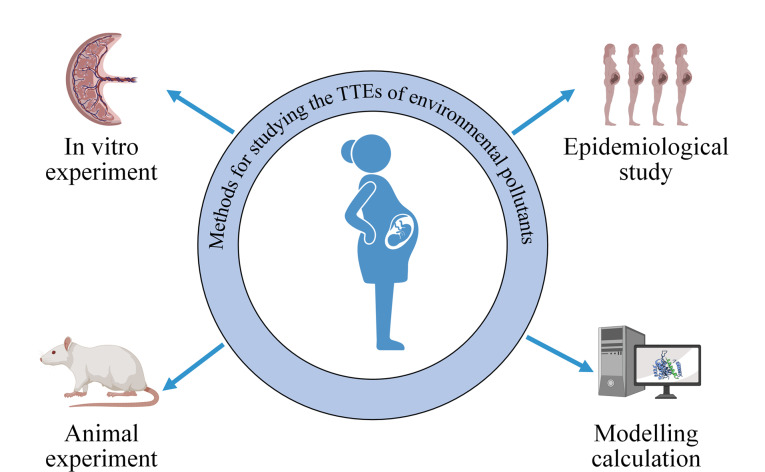
工业化导致污染物的种类和数量显著增加,环境污染物广泛存在于各种介质中,包括空气、食物和日常用品。这些污染物可通过多种途径进入人体,包括经食物摄入和经皮肤吸收;这种侵入会扰乱体内激素的产生、释放和循环,导致一系列影响生殖、内分泌和神经系统的疾病。因此,这些污染物对人类健康构成重大风险。特别是,胎儿在发育的关键阶段对环境污染物高度敏感,在生长发育期间接触污染物会导致更明显和严重的健康危害,可能导致早产、低出生体重和胎儿畸形。胎盘是母亲和胎儿之间的屏障,可选择性地过滤某些污染物。虽然一些污染物留在母体血液中,但其他污染物通过被动扩散、胎盘转运蛋白或内吞作用穿过胎盘屏障进入胎儿脐血。经胎盘转移效率(TTE)是脐血中污染物水平与母体血液中污染物水平的比值,是评估污染物突破胎盘屏障能力的一个重要指标。较高的TTE意味着更大比例的污染物从母亲转移到胎儿,从而放大了对胎儿的潜在风险。基于质谱的检测方法在化学和环境科学中被广泛使用,因为它们极其灵敏且分辨率高。这种分析技术涉及将样品中的化合物离子化,并根据其独特的质荷比进行识别;它能够对各种环境污染物进行定性和定量分析。目前用于检测污染物TTE的方法包括体外实验、动物研究、流行病学研究和模型计算;这些方法有助于评估污染物通过胎盘从母亲转移到胎儿的情况。分析不同化学物质的TTE能够识别高风险污染物,并了解它们穿过胎盘的能力。环境污染物经胎盘转移的研究主要集中在全氟和多氟烷基物质(PFASs)、多溴二苯醚(PBDEs)、多氯联苯(PCBs)和有机氯农药(OCPs)上,关于其他污染物TTE的研究报道相对较少。污染物通过胎盘的转移是一个复杂的过程,受到多种因素的影响,包括污染物的物理和化学性质(如分子量、溶解度和亲脂性)、母体因素(如母体健康和生活方式、母体遗传学、环境条件和社会经济地位)以及胎盘特征(如胎盘成熟度、胎盘血流量、转运蛋白和代谢酶)。本综述总结了环境污染物TTE研究的最新进展,重点关注分析方法、PFASs、PBDEs、PCBs和OCPs的TTE以及影响TTE的关键因素。研究污染物的TTE能够阐明其特性,从而为污染物在人体中的暴露、转移和积累研究提供支持数据,以及为理解环境污染物经胎盘转移的机制提供理论框架。这项研究有望在评估环境污染物对孕妇及其胎儿健康的影响方面发挥至关重要的作用。