Ezigbo Eyiuche D, Enitan Seyi S, Adejumo Esther N, Durosinmi Abiodun E, Akele Richard Y, Dada Michael O, Itodo Grace E, Idoko Abah M, Edafetanure-Ibeh Okeoghene M, Okafor Edwin N, Abdulsalam Adedeji A, Oyedoyin Oyekan I, Yelpoji Polit U, Opeyemi Ogunwola O, Nmesomachi Ogbuji S, Oyekale Adesola O, Onyeji Chisom B
Haemostasis and Thrombosis Unit, Department of Medical Laboratory Sciences, University of Nigeria, Enugu Campus, Enugu, EN 400241, Nigeria.
Department of Medical Laboratory Science, School of Public and Allied Health, Babcock University, Ilishan-Remo, OG 121109, Nigeria.
World J Virol. 2024 Dec 25;13(4):98551. doi: 10.5501/wjv.v13.i4.98551.
Vaccine hesitancy is a major challenge in the fight against the coronavirus disease 2019 (COVID-19) pandemic. Identifying the sociodemographic factors associated with vaccine acceptance among Nigerians is crucial for improving vaccine uptake.
To assess the acceptance rate of COVID-19 vaccine and its related determinants among Nigerians.
An online cross-sectional survey (observational study) was conducted between February 2021 and May 2021, using a questionnaire hosted on SurveyMonkey. The invitation to take part in the poll was sent out to participants through social networking platforms. A logistic regression was used to determine which sociodemographic factors were associated with vaccine acceptance constructs.
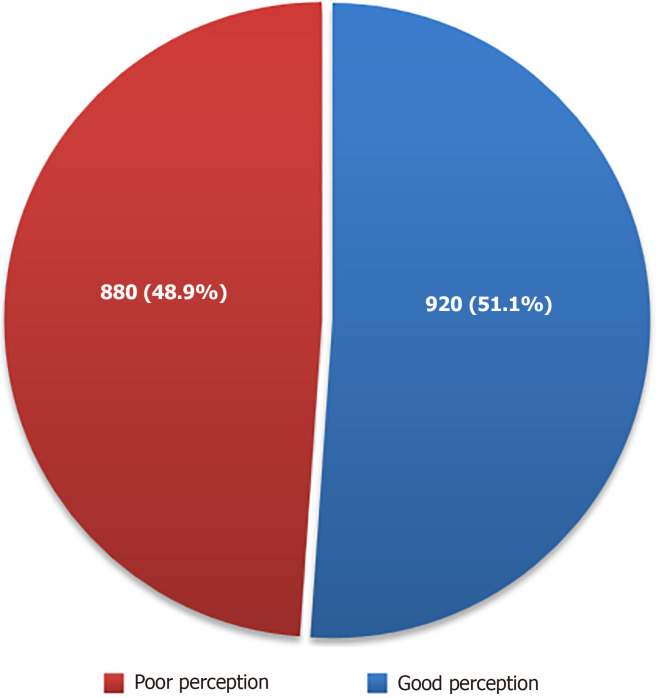
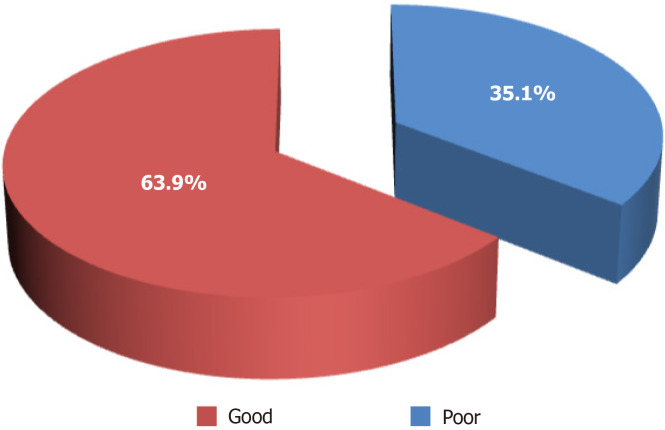
A total of 1800 persons responded to the survey, a larger proportion of whom were males (53.9%) and within the age group of 21-30 years (29.4%) and earned an average income of less than $500 per month (43.3%). Only 0.56% of participants had a high perceived risk of COVID-19 infection, while only 1.11% had a perceived risk of dying from COVID-19. The perception rate of the COVID-19 vaccine among participants was 51.1%, while the acceptance rate was 63.9%. There was no significant association between the COVID-19 vaccine acceptance rate and related determinants assessed, particularly age (² = 3.049, = 0.550), sex (² = 0.102, = 0.749), average income (² = 3.802, = 0.875), and religion (² = 2.819, = 0.420). Participants with chronic conditions demonstrated a higher acceptance rate compared to the general population.
Despite the positive perception observed and substantial vaccine acceptance rate among the study participants, more public health interventions are still needed to enhance vaccine acceptability in Nigeria.
疫苗犹豫是抗击2019冠状病毒病(COVID-19)大流行的一项重大挑战。确定尼日利亚人当中与疫苗接受度相关的社会人口因素对于提高疫苗接种率至关重要。
评估尼日利亚人对COVID-19疫苗的接受率及其相关决定因素。
于2021年2月至2021年5月期间开展了一项在线横断面调查(观察性研究),使用的是托管在SurveyMonkey上的一份问卷。参与投票的邀请通过社交网络平台发送给参与者。采用逻辑回归来确定哪些社会人口因素与疫苗接受度构成相关。
共有1800人回复了该调查,其中较大比例为男性(53.9%),年龄在21至30岁之间(29.4%),平均月收入低于500美元(43.3%)。只有0.56%的参与者认为感染COVID-19的风险很高,而只有1.11%的人认为有死于COVID-19的风险。参与者对COVID-19疫苗的认知率为51.1%,而接受率为63.9%。所评估的COVID-19疫苗接受率与相关决定因素之间无显著关联,尤其是年龄(χ² = 3.049,P = 0.550)、性别(χ² = 0.102,P = 0.749)、平均收入(χ² = 3.802,P = 0.875)和宗教信仰(χ² = 2.819,P = 0.420)。与普通人群相比,患有慢性病的参与者表现出更高的接受率。
尽管在研究参与者中观察到了积极的认知以及较高的疫苗接受率,但仍需要更多的公共卫生干预措施来提高尼日利亚的疫苗可接受性。