Li Yuying, Jiang Kexin, Mao Qian, Zhao Qi
Department of Food Science and Engineering, College of Light Industry Liaoning University Shenyang China.
Department of Information, College of Medicine and Biological Information Engineering Northeastern University Shenyang China.
Food Sci Nutr. 2024 Dec 1;12(12):10848-10858. doi: 10.1002/fsn3.4622. eCollection 2024 Dec.
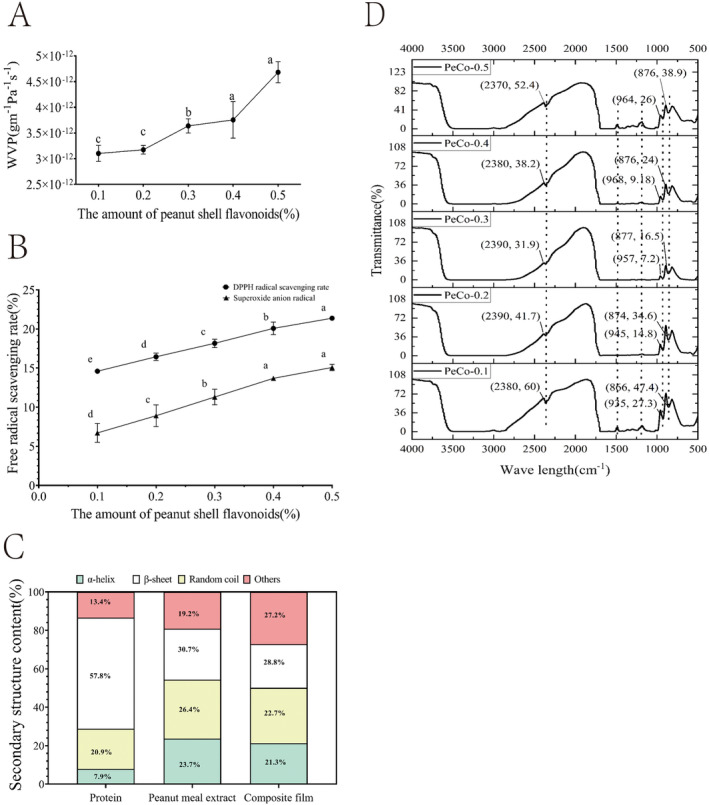
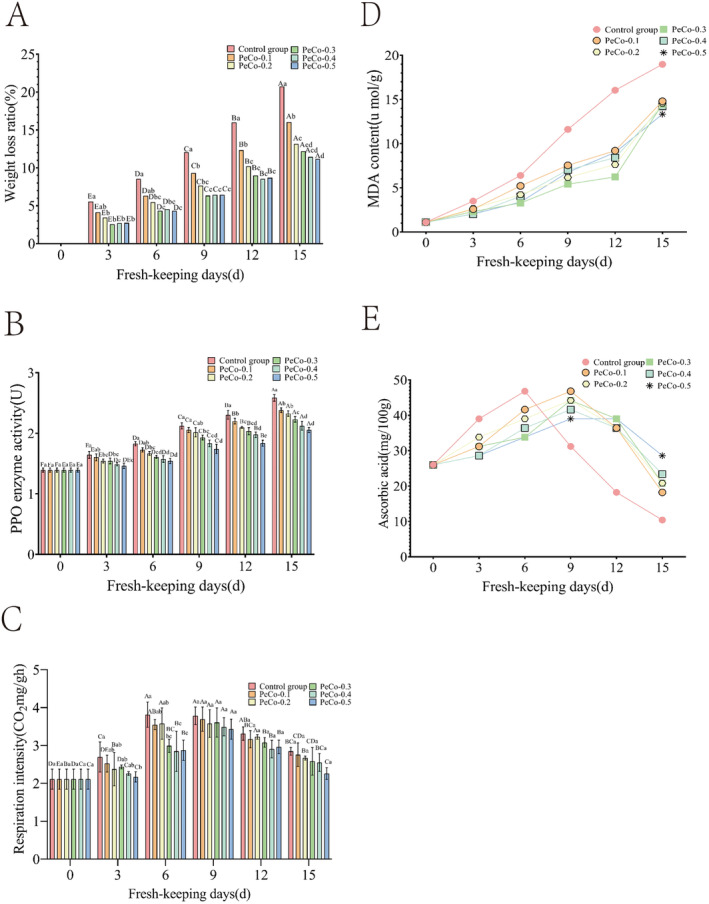
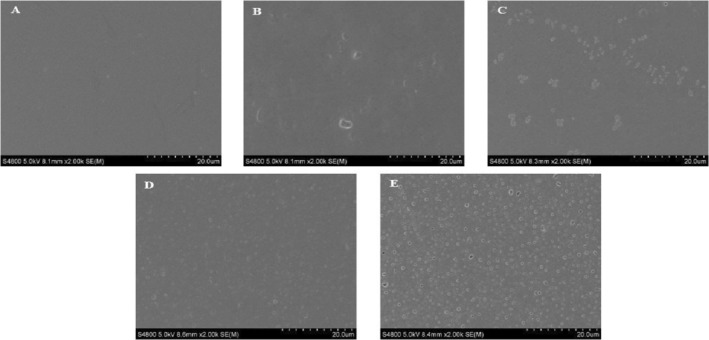
This study investigated the effects of varying concentrations of peanut shell flavonoids (PSFs) on the properties of peanut meal extract-tilapia skin protein composite films and their impact on cherry tomatoes preservation. Peanut meal alcohol extract (Pe) and tilapia skin protein (Co) were used as base materials, combined with PSFs to prepare composite films with excellent antioxidant properties. The results demonstrated that the optimized composite films exhibited superior mechanical properties, with a tensile strength of 9.83 MPa and an elongation at break of 204.04%. Increased flavonoid content enhanced the films' antioxidant capacity, achieving superoxide anion and DPPH radical scavenging rates of 15.08% and 21.37%, respectively. The microstructure, IR spectra, and circular dichroism spectra of the composite films are also significantly different with the change of flavonoid content. In the cherry tomato preservation experiment, the PeCo-0.5 composite film treatment group maintained a low weight loss rate (11.18%) and malondialdehyde content (13.33 μmol/g) after 15 days, delayed the peak respiration rate, and significantly reduced the peak respiration intensity (3.43 mgCO∙ mg∙gh). At the same time, the activity of polyphenol oxidase in the tissue of Cherry Tomatoes was significantly inhibited, and the decrease rate of Vc content was also significantly decreased, which effectively preserving the bright color, smooth appearance, and good aroma of the cherry tomatoes. This study not only provides new insights into the comprehensive utilization of tilapia skin and peanut by-products but also opens new avenues for the development and application of fruit and vegetable preservation films.
本研究考察了不同浓度花生壳黄酮(PSFs)对花生粕提取物-罗非鱼皮蛋白复合膜性能的影响及其对樱桃番茄保鲜的作用。以花生粕乙醇提取物(Pe)和罗非鱼皮蛋白(Co)为基材,与PSFs复合制备具有优异抗氧化性能的复合膜。结果表明,优化后的复合膜具有优异的力学性能,拉伸强度为9.83 MPa,断裂伸长率为204.04%。黄酮含量的增加提高了复合膜的抗氧化能力,超氧阴离子和DPPH自由基清除率分别达到15.08%和21.37%。复合膜的微观结构、红外光谱和圆二色光谱也随黄酮含量的变化而有显著差异。在樱桃番茄保鲜实验中,PeCo-0.5复合膜处理组在15天后保持较低的失重率(11.18%)和丙二醛含量(13.33 μmol/g),延迟了呼吸速率峰值,并显著降低了呼吸强度峰值(3.43 mgCO₂·mg⁻¹·g⁻¹·h⁻¹)。同时,樱桃番茄组织中的多酚氧化酶活性受到显著抑制,Vc含量的下降速率也显著降低,有效保持了樱桃番茄的鲜艳色泽、光滑外观和良好香气。本研究不仅为罗非鱼皮和花生副产物的综合利用提供了新的思路,也为果蔬保鲜膜的开发应用开辟了新途径。