Yang Jinsong, Zhao Songsong, Zhi Wenbo, Lu Tianyu, Qiao Huahua, Liu Wei, Dou Ying, Tan Haisheng, Zhou Hanlin
College of Food Science and Engineering, Hainan University, Haikou, Hainan, China.
College of Materials Science and Engineering, Hainan University, Haikou, Hainan, China.
Front Microbiol. 2024 Dec 11;15:1468577. doi: 10.3389/fmicb.2024.1468577. eCollection 2024.
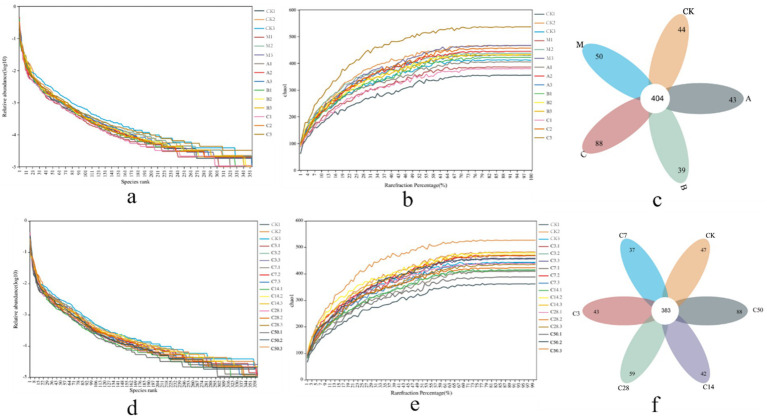
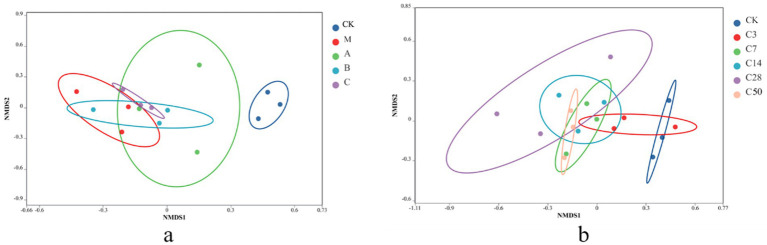
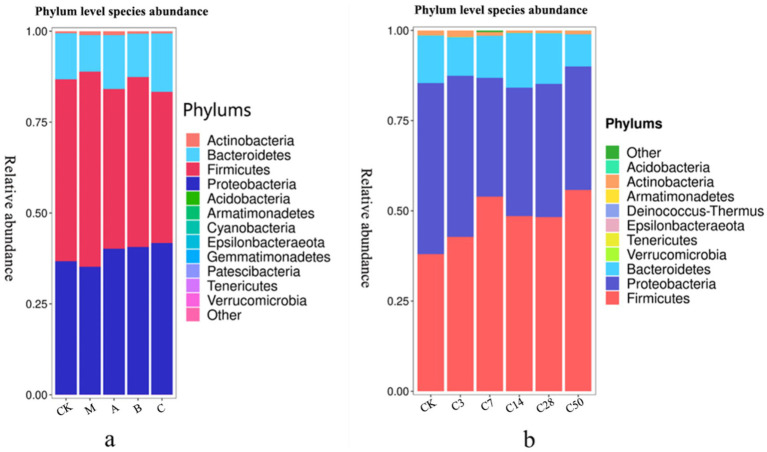
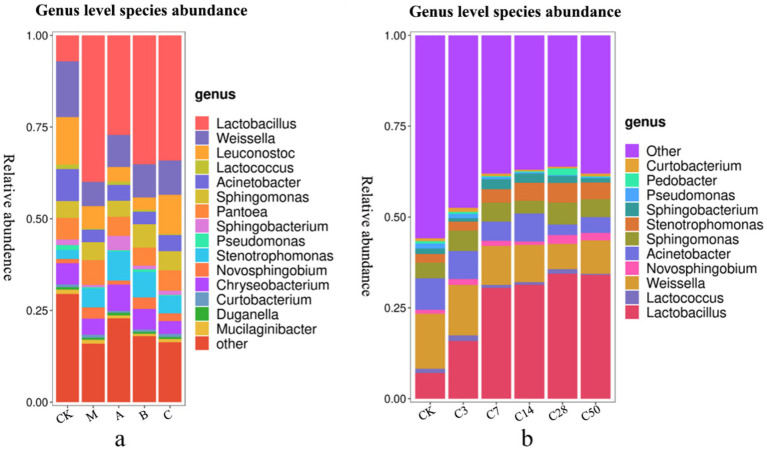
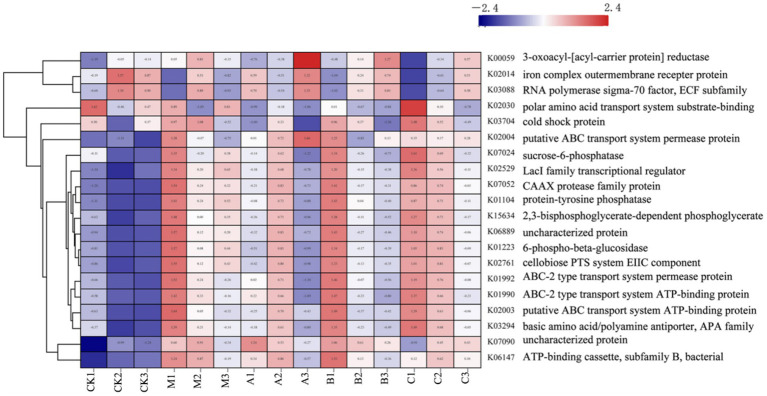
The effect of HMC4 produced by protoplast fusion on silage was studied. The silage formula was composed of heterozygote HMC4 (Group C), parent Lactobacillus (Group A) and a combination of two parents (Group B). The fermentation quality and microbial composition of each batch of silage were evaluated. The results showed that the propionic acid concentration in group C was the lowest, but the organic acid content in feed was significantly increased. Groups B and C had slightly lower crude fiber levels than group A, while groups A and C had higher levels of soluble sugars. The dynamic observation of C group showed that the nutrient composition of feed changed gradually with the extension of silage period. High-throughput sequencing revealed fluctuations in microbial composition before and after silage. Over time, Lactobacillus became the dominant strain and its numbers steadily increased.
研究了原生质体融合产生的HMC4对青贮饲料的影响。青贮饲料配方由杂合子HMC4(C组)、亲本乳酸杆菌(A组)和双亲组合(B组)组成。对每批青贮饲料的发酵品质和微生物组成进行了评估。结果表明,C组丙酸浓度最低,但饲料中有机酸含量显著增加。B组和C组的粗纤维水平略低于A组,而A组和C组的可溶性糖水平较高。对C组的动态观察表明,随着青贮期的延长,饲料的营养成分逐渐变化。高通量测序揭示了青贮前后微生物组成的波动。随着时间的推移,乳酸杆菌成为优势菌株,其数量稳步增加。