Zhang Yu, Deng Wei, Wang Minjian, Luo Siying, Li Song
Department of Hospital Infection Control, Chongqing Mental Health Center, Chongqing, China.
Nursing Department, Chongqing Mental Health Center, Chongqing, China.
Front Pharmacol. 2024 Dec 11;15:1438661. doi: 10.3389/fphar.2024.1438661. eCollection 2024.
Neuroleptic malignant syndrome (NMS) is a rare but potentially life-threatening adverse drug reaction. This study aims to identify the most prevalent drugs associated with the risk of NMS according to the United States Food and Drug Administration (FDA) Adverse Event Reporting System (FAERS) database.
Analyses were performed using data from the FAERS database from January 2004 to June 2024. Single-drug signals were evaluated using the reporting odds ratio (ROR), proportional reporting ratio (PRR), information component (IC), and empirical Bayes geometric mean (EBGM). Meanwhile, comparisons were performed with drug labels. Additionally, subgroup analysis was conducted, focusing on adverse drug reaction signals among populations of different genders and age groups.
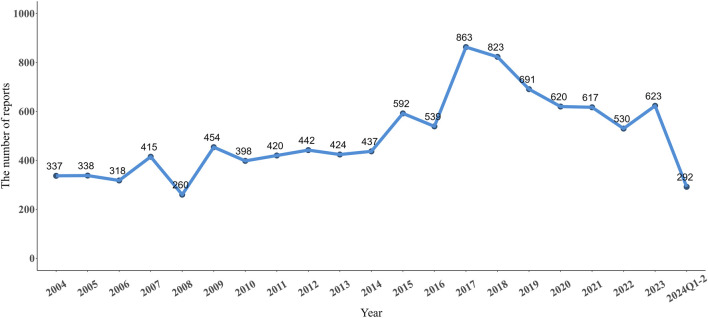
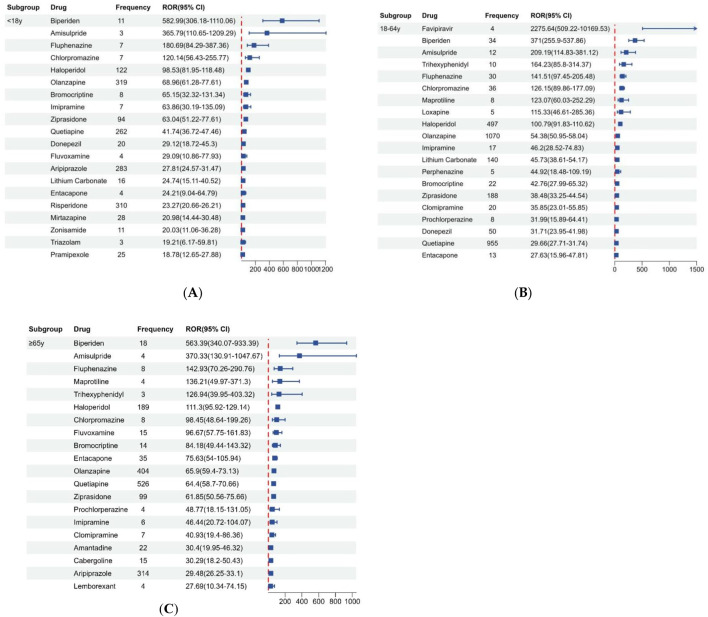
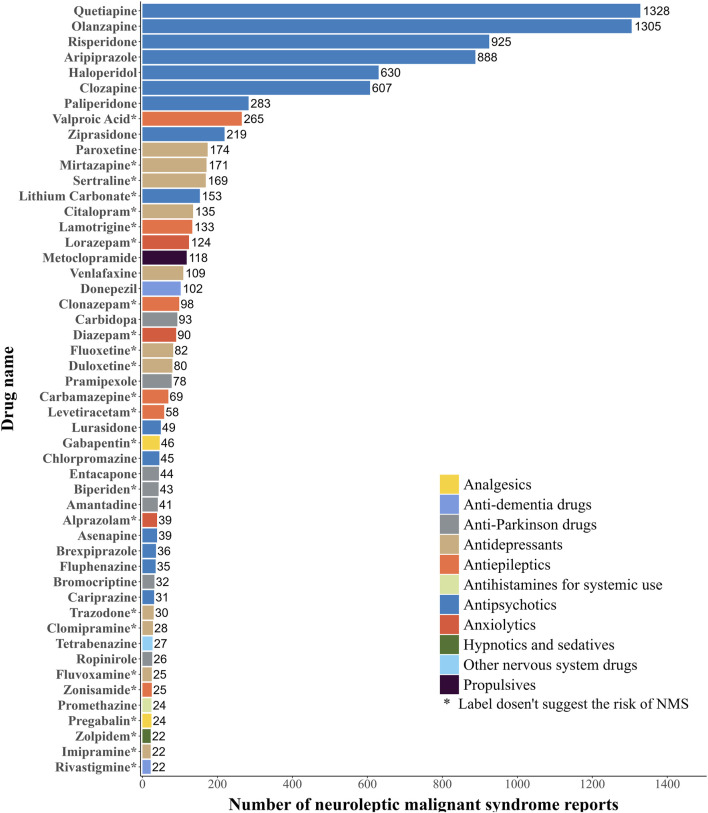
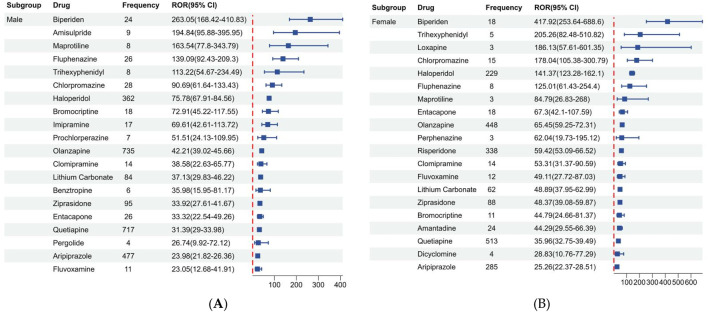
A total of 10,433 adverse event reports related to NMS were identified, with the top 50 drugs ranked by ROR mainly involving antipsychotics (18, 36%), antiparkinson drugs (10, 20%), antidepressants (7, 14%), antiepileptics (3, 6%), anxiolytics (3, 6%), as well as hypnotics and sedatives (3, 6%). NMS is more prevalent in males (5,713, 54.76%). Among the top 20 drugs with the strongest signal strength, the pediatric group showed an additional presence of benzodiazepines and antiepileptic drugs compared to the adult group.
The current comprehensive pharmacovigilance study identified more drugs associated with NMS and provides references to clinicians for clinical practice. Also, further research is needed to investigate the causal relationship between these drugs and NMS.
抗精神病药恶性综合征(NMS)是一种罕见但可能危及生命的药物不良反应。本研究旨在根据美国食品药品监督管理局(FDA)不良事件报告系统(FAERS)数据库,确定与NMS风险相关的最常见药物。
使用2004年1月至2024年6月FAERS数据库中的数据进行分析。使用报告比值比(ROR)、比例报告比值比(PRR)、信息成分(IC)和经验贝叶斯几何均值(EBGM)评估单药信号。同时,与药物标签进行比较。此外,进行亚组分析,重点关注不同性别和年龄组人群中的药物不良反应信号。
共识别出10433份与NMS相关的不良事件报告,按ROR排名前50的药物主要涉及抗精神病药(18种,36%)、抗帕金森病药物(10种,20%)、抗抑郁药(7种,14%)、抗癫痫药(3种,6%)、抗焦虑药(3种,6%)以及催眠药和镇静药(3种,6%)。NMS在男性中更为普遍(5713例,54.76%)。在信号强度最强的前20种药物中,与成人组相比,儿科组还出现了苯二氮䓬类药物和抗癫痫药。
当前的综合药物警戒研究识别出了更多与NMS相关的药物,并为临床医生的临床实践提供了参考。此外,还需要进一步研究来调查这些药物与NMS之间的因果关系。