Seiler Johannes P-H, Dan Ohad
Focus Program Translational Neurosciences, Institute of Physiology, University Medical Center of the Johannes Gutenberg University Mainz, Mainz, Germany.
Department of Comparative Medicine, Yale School of Medicine, New Haven, CT, United States.
Front Psychol. 2024 Dec 11;15:1514348. doi: 10.3389/fpsyg.2024.1514348. eCollection 2024.
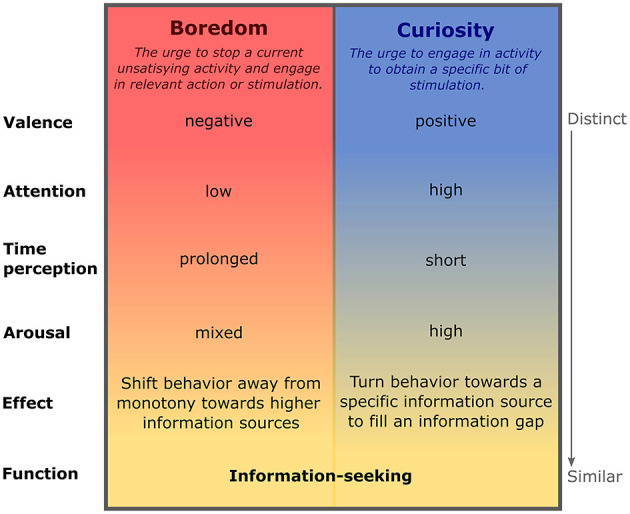
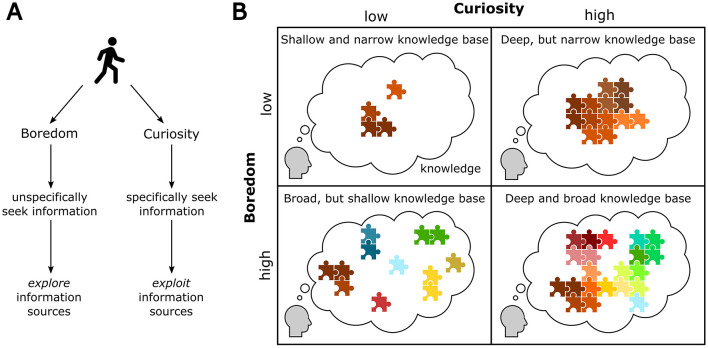
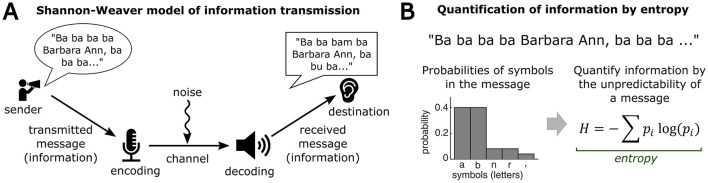
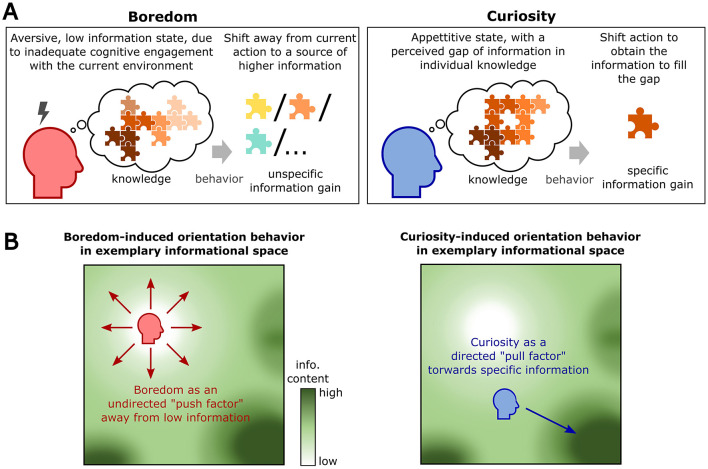
Boredom and curiosity are common everyday states that drive individuals to seek information. Due to their functional relatedness, it is not trivial to distinguish whether an action, for instance in the context of a behavioral experiment, is driven by boredom or curiosity. Are the two constructs opposite poles of the same cognitive mechanism, or distinct states? How do they interact? Can they co-exist and complement each other? Here, we systematically review similarities and dissimilarities of boredom and curiosity with respect to their subjective experience, functional role, and neurocognitive implementation. We highlight the usefulness of Information Theory for formalizing information-seeking in the context of both states and provide guidelines for their experimental investigation. Our emerging view is that despite their distinction on an experiential level, boredom and curiosity are closely related on a functional level, providing complementary drives on information-seeking: boredom, similar to hunger, arises from a lack of information and drives individuals to avoid contexts with low information yield, whereas curiosity constitutes a mechanism similar to appetite, pulling individuals toward specific sources of information. We discuss predictions arising from this perspective, concluding that boredom and curiosity are independent, but coalesce to optimize behavior in environments providing varying levels of information.
无聊和好奇是促使个体寻求信息的常见日常状态。由于它们在功能上的相关性,要区分一个行为(例如在行为实验的背景下)是由无聊还是好奇驱动并非易事。这两种概念是同一认知机制的相反两极,还是不同的状态?它们如何相互作用?它们能否共存并相互补充?在这里,我们系统地回顾了无聊和好奇在主观体验、功能作用和神经认知实现方面的异同。我们强调信息论在形式化这两种状态下的信息寻求方面的有用性,并为它们的实验研究提供指导方针。我们新形成的观点是,尽管无聊和好奇在体验层面有所不同,但在功能层面密切相关,为信息寻求提供互补驱动力:无聊类似于饥饿,源于信息匮乏,驱使个体避开信息产出低的情境,而好奇则构成一种类似于食欲的机制,将个体引向特定的信息源。我们讨论了从这一角度产生的预测,得出结论:无聊和好奇是相互独立的,但会结合起来以优化在提供不同信息水平的环境中的行为。